Home · Eating & Drinking
What to order
The Catalan table
Eating & Drinking
In full
A cuisine of the Mediterranean and the mountains
Catalan cuisine rests on Mediterranean staples: tomatoes, garlic, eggplant, artichokes, olive oil from the Arbequina olive, legumes, wild mushrooms and nuts, with pork products, seafood such as sardines, anchovies, tuna and cod, and local wines. It has written roots, in the fourteenth-century cookbook Llibre de Sent Soví and in the Llibre del Coch of 1520, whose sauces used ginger, mace, cinnamon, saffron, cloves, wine and honey.
A few ideas recur. Sauces carry the cooking, so look for romesco, allioli and samfaina on a menu. And the cuisine is happy to mix: sea and mountain, or mar i muntanya, combines meat and seafood in a single dish. Older layers survive in the written record: a seventeenth-century manuscript from the Carthusian monastery of Escaladei, the Llibre de la Cuina de Scala-Dei, includes cereal porridges that trace back to Roman times, and a medieval sauce called mirraust finished half-roasted poultry in a sauce of egg yolk and almonds. Almonds, in other words, have been at the center of Catalan sauces for a very long time.
Bread, vegetables and sauces
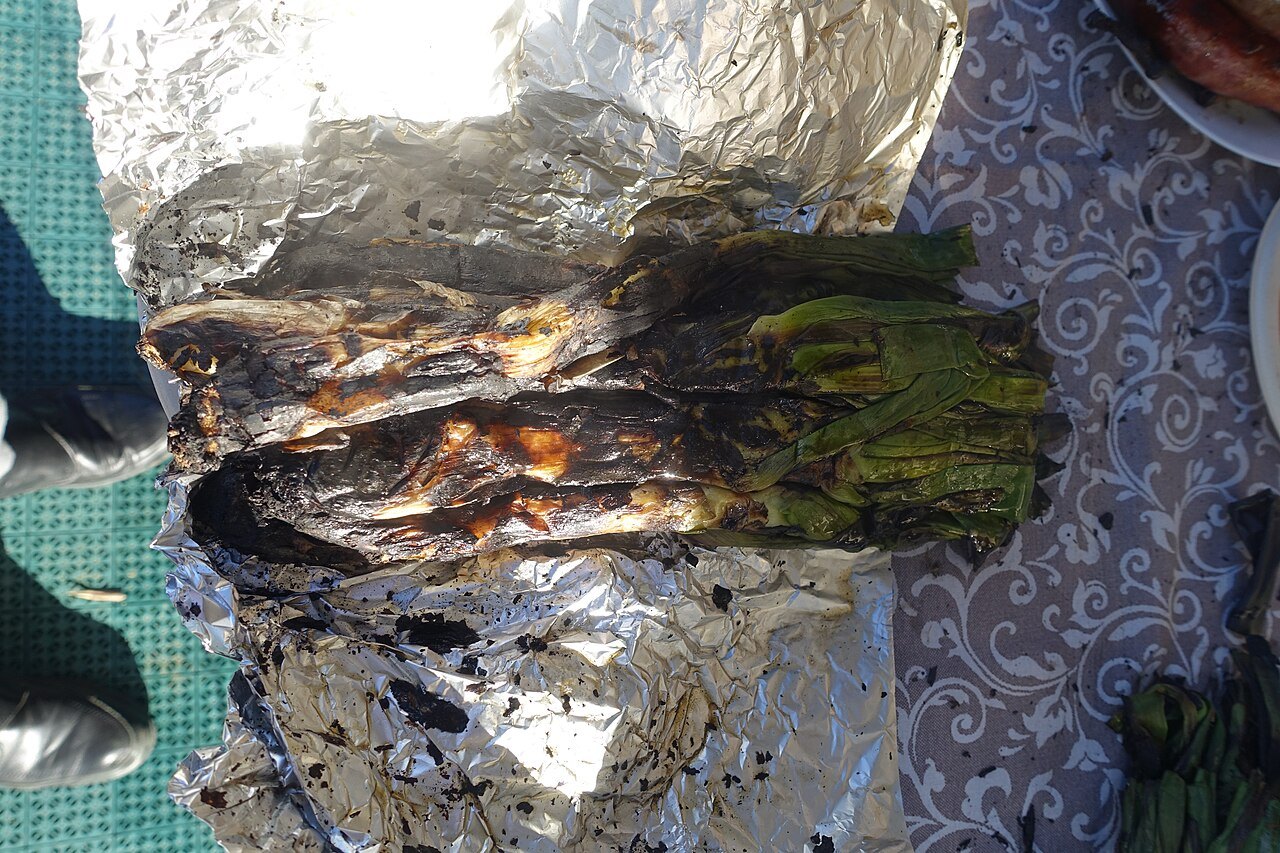
The most emblematic dish is pa amb tomàquet, bread smeared with tomato and oil and sometimes garlic. It appears at nearly every table, as a side or the base of a snack. Escalivada, grilled vegetables, and calçots, special onions grilled and eaten in a calçotada with romesco, show how much of the cuisine is built on vegetables cooked over fire.
Romesco is made from almonds, hazelnuts, garlic, bread, vinegar, tomatoes, olive oil and dried red peppers, with the same sauce made without tomato known as xató. Allioli is a thick sauce of garlic and olive oil for grilled meat and vegetables, and samfaina is the regional ratatouille of peppers and tomatoes.
Meat, fish and rice
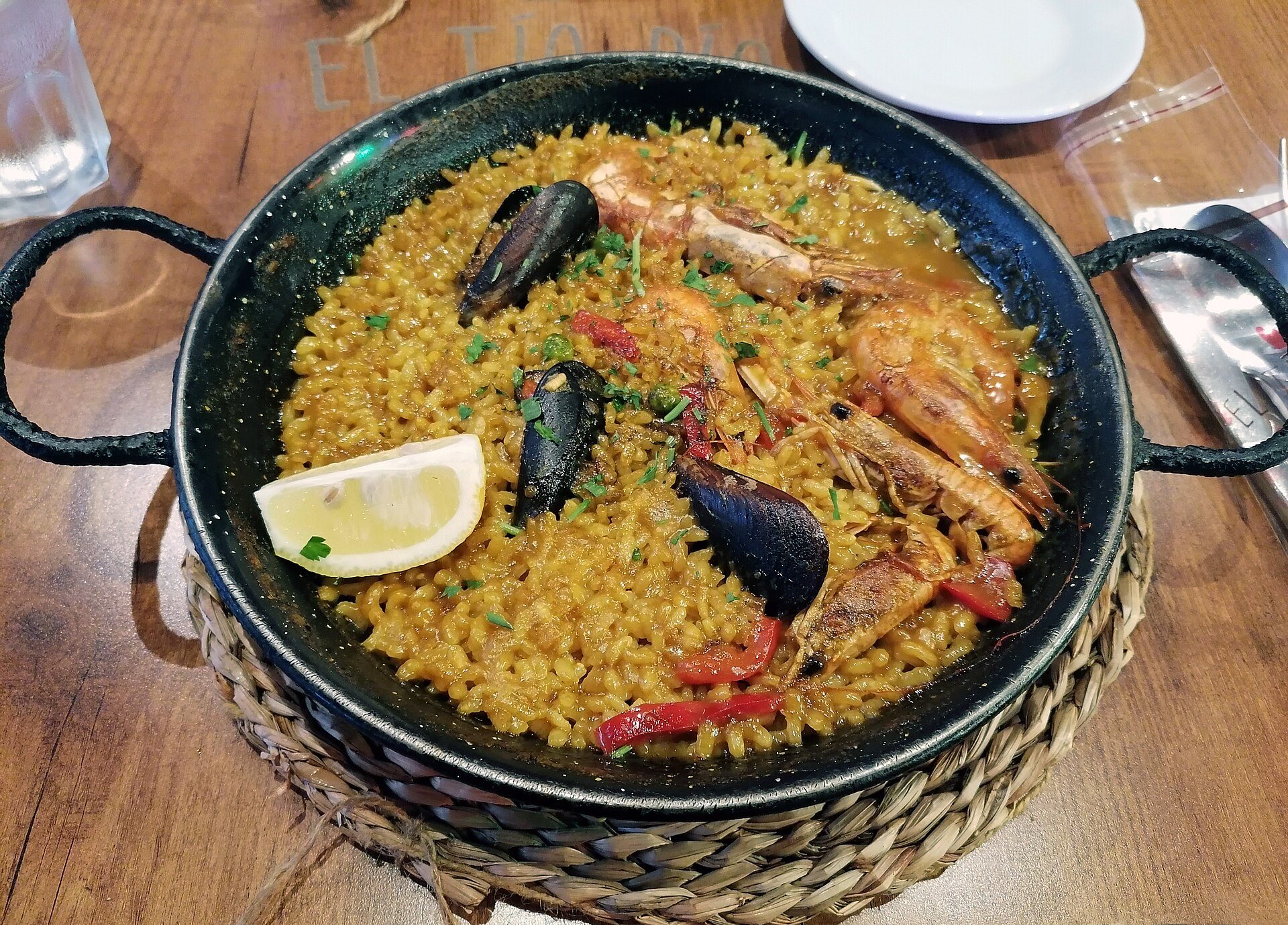
Botifarra, the pork sausage, is common in stews and in dishes that mix meat and seafood. On the coast the stews, such as suquet, and the fideuà, a seafood casserole that uses noodles instead of rice, are the dishes that belong to the sea.
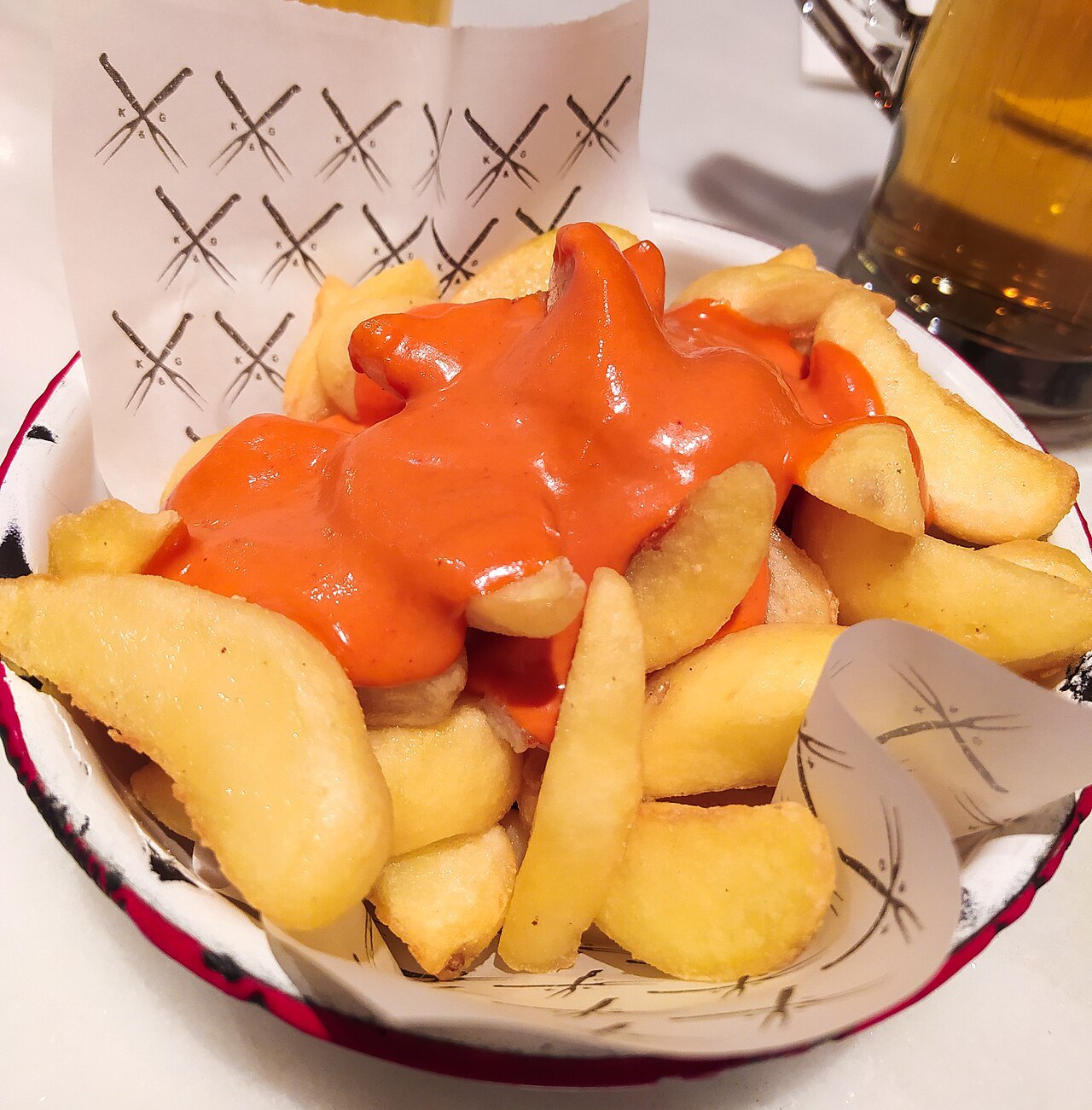
La Barceloneta is regarded as one of the best places in Barcelona to try fresh fish or paella, and tapas appear on any menu there. The most typical tapa of the neighborhood is the bomba, a potato ball stuffed with meat and served with a spicy sauce or aioli, together with a caña, a small glass of draft beer.
Tapas
Tapas are appetizers or snacks in Spanish cuisine, served cold, such as olives and cheese, or hot, such as fried squid or spiced potatoes, and are often combined into a full meal. The word comes from the Spanish verb tapar, to cover, and several legends explain it, from a medieval king to a waiter who covered a glass of wine with a slice of ham.
In Barcelona the custom sits alongside Catalan dishes. A common way to eat is to order several small plates to share, with bread with tomato, one or two cooked dishes and something fried.
Markets and where the food is bought
The city's markets are the best place to see the ingredients. The Boqueria, with its entrance on the Rambla, has stalls of fish, meat and produce under an iron roof from 1914, and a market has stood on the site since 1217. The Barceloneta markets were designed by Antoni Rovira i Trias in 1873.
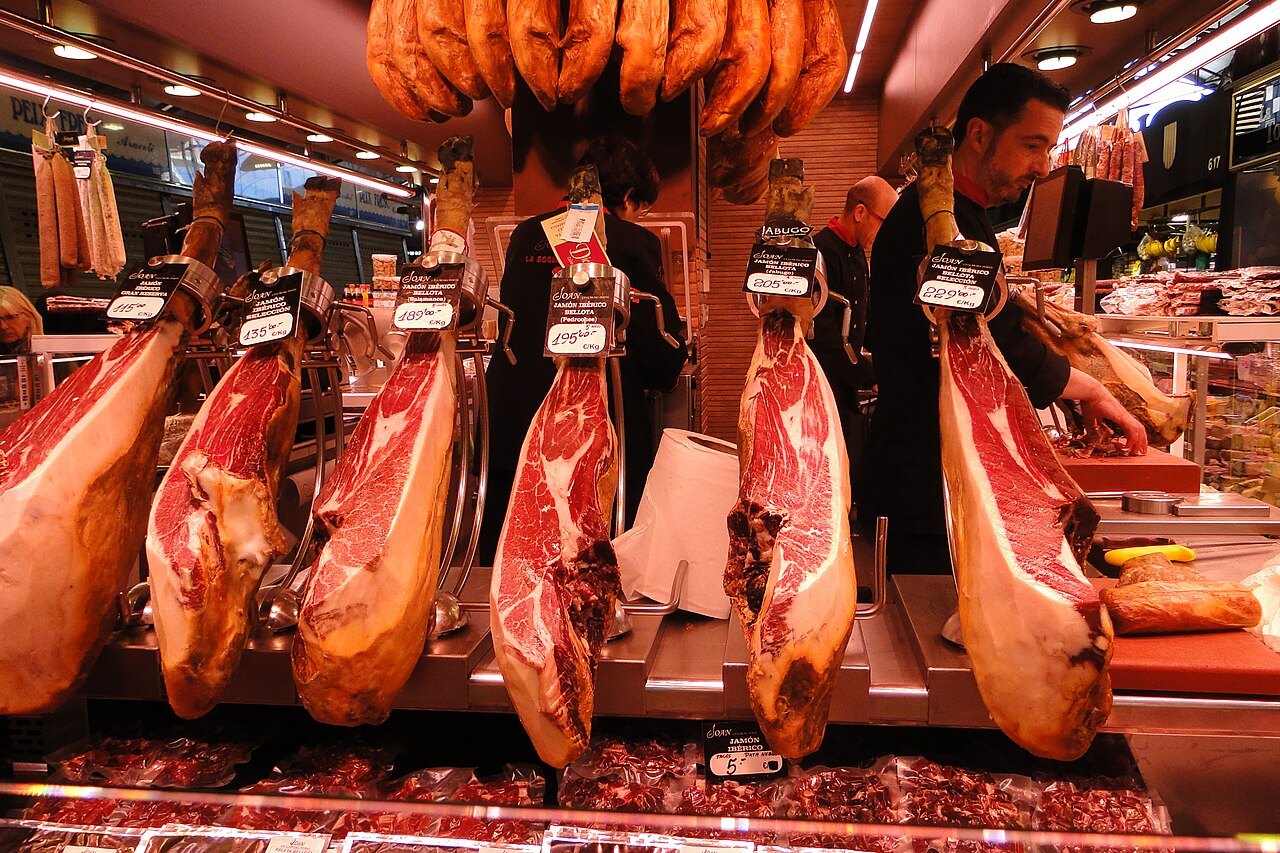
Most of the markets planned by Ildefons Cerdà for the Eixample remain open on their original sites, and a market stall is often the best place to understand what is in season.
Sweet things and drinks
The best-known dessert is crema catalana, a yellow cream made with egg yolk, milk and sugar, similar to French pastry cream but denser. Sweet wine is also traditional: moscatell, from the Empordà, is drunk after meals with dessert.
Cava, the sparkling wine of the Penedès and Anoia regions, is Catalonia's answer to champagne. It appears at celebrations and at ordinary meals, and a glass of cava is a normal accompaniment to a plate of tapas. Wines of the other regions of Catalonia, from the Priorat to the Empordà, turn up alongside it, and a sweet moscatell with dessert is a good way to end a long lunch. When in doubt, ask the person serving which Catalan wine they would pour with the dish you have chosen.
Eating well as a visitor
Look beyond the busiest streets: a street a block or two from the Rambla or the beach is often where a menu is written for the neighborhood.
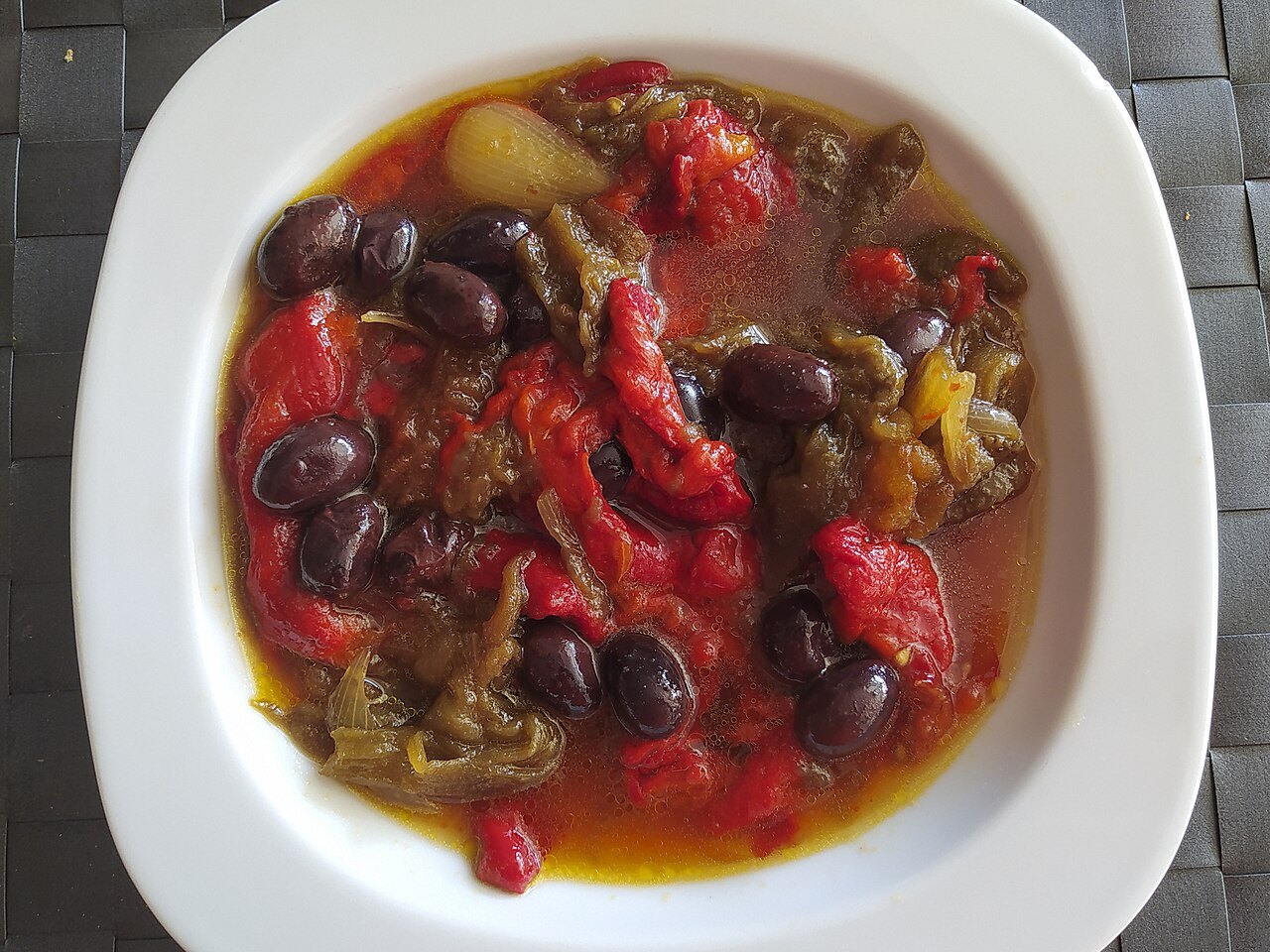
Try a few dishes on this page rather than the same plate twice, ask what is in season, and leave room for crema catalana. Els Quatre Gats, in the Gothic Quarter, was a historic restaurant and a hangout for artists, among them Pablo Picasso, a reminder that Modernista Barcelona ate and talked in cafés as well as building them. For a view of the sea, the terrace of the cafeteria in the Palau de Mar overlooks the harbor and Barceloneta. The guide to neighborhoods suggests where to base yourself for good eating, and Barceloneta and the Born are the best places for the dishes named here.
Techniques worth knowing
A technique that appears in many Catalan stews is the picada, a paste of ground almonds, hazelnuts and pine nuts used at the end to thicken and flavor the pot. It is one reason the stews taste richer than their simple ingredients suggest, and it connects the cuisine to the romesco on the side of the table.
The cuisine also has a long memory. The Llibre del Coch of 1520 is described as one of the most influential cookbooks of Renaissance Spain, with spiced sauces, and medieval dishes included a peacock sauce for poultry at Christmas and a spiced wine called hippocras, flavored with cinnamon, cloves, ginger and honey.
The wine regions
Catalonia has eleven qualified wine regions, among them Priorat, Penedès, Montsant, Alella, Tarragona, Empordà and Terra Alta. Cava is made mainly in the Penedès and Anoia areas, so a bottle on the table was probably made not far from the city.
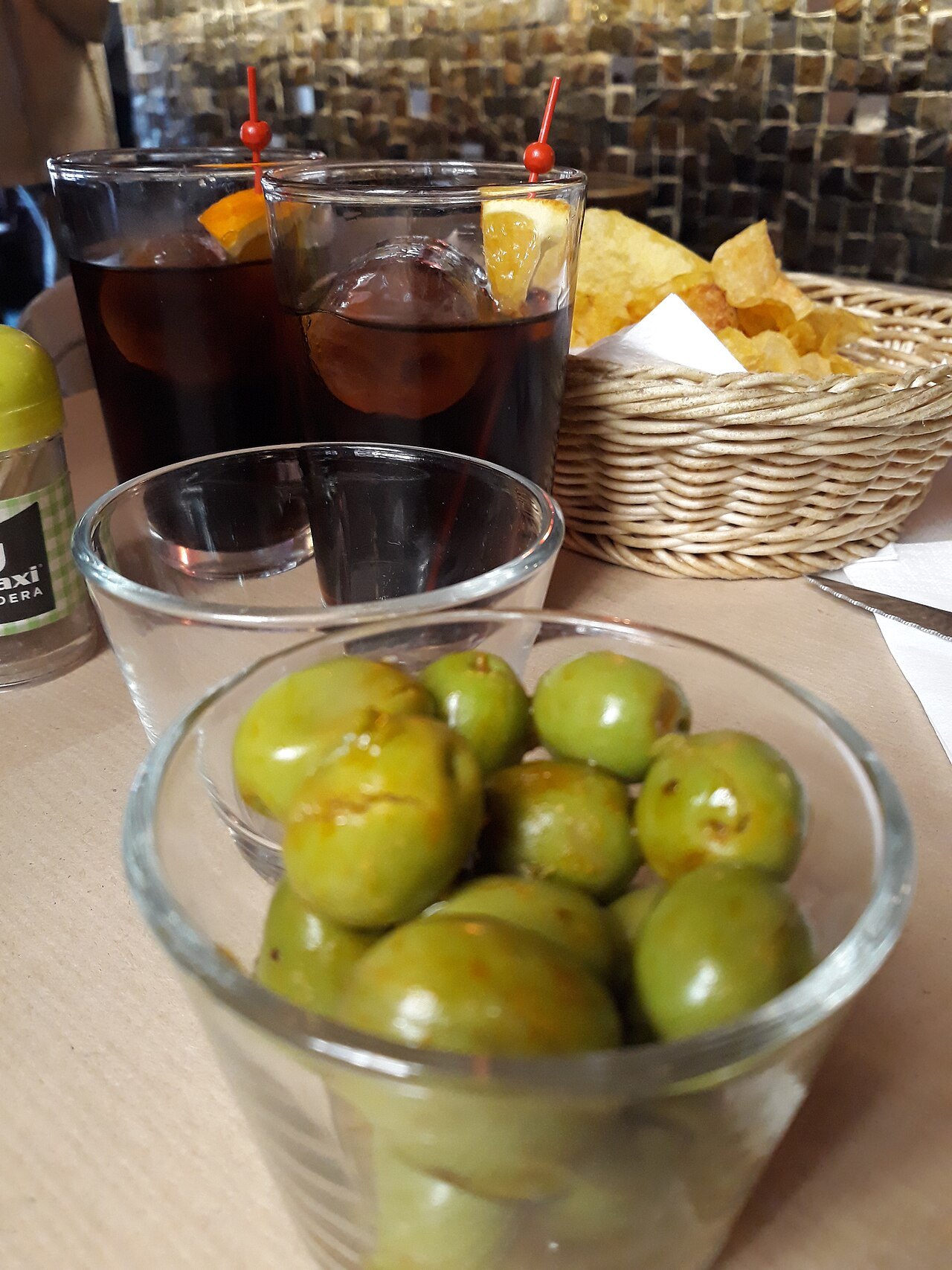
The wine list in most restaurants will include several of these, and asking for a Catalan wine by region is an easy way to taste the map.
More photographs
Seen on the way
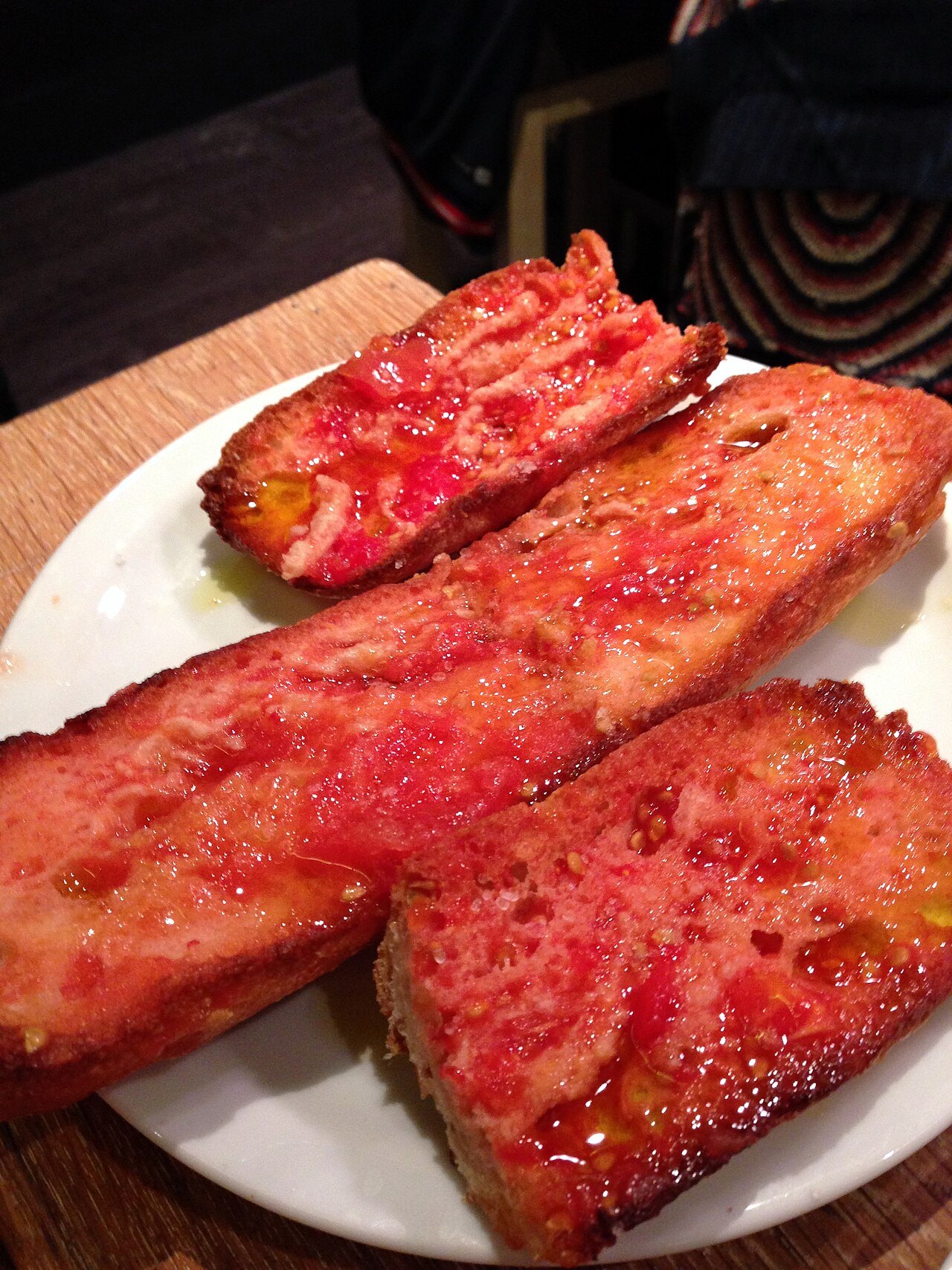
Toasted bread rubbed with tomato, served on a plate.David Berkowitz from New York, NY, USA www.marketersstudio.com / www.about.me/dberkowitz, Wikimedia Commons, CC BY 2.0 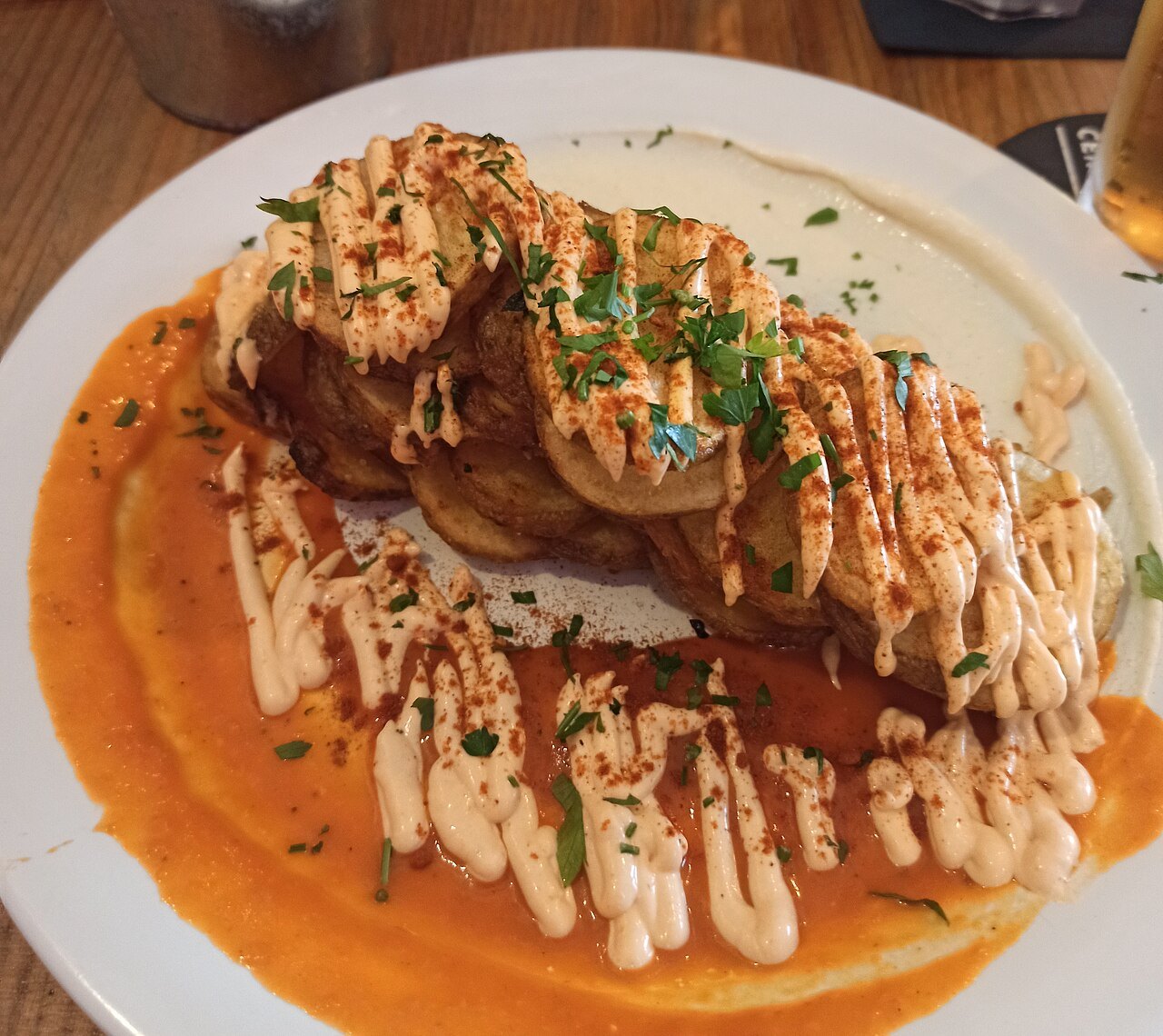
Fried potatoes under a red sauce and a drizzle of aioli.Jtorquy, Wikimedia Commons, CC BY-SA 4.0 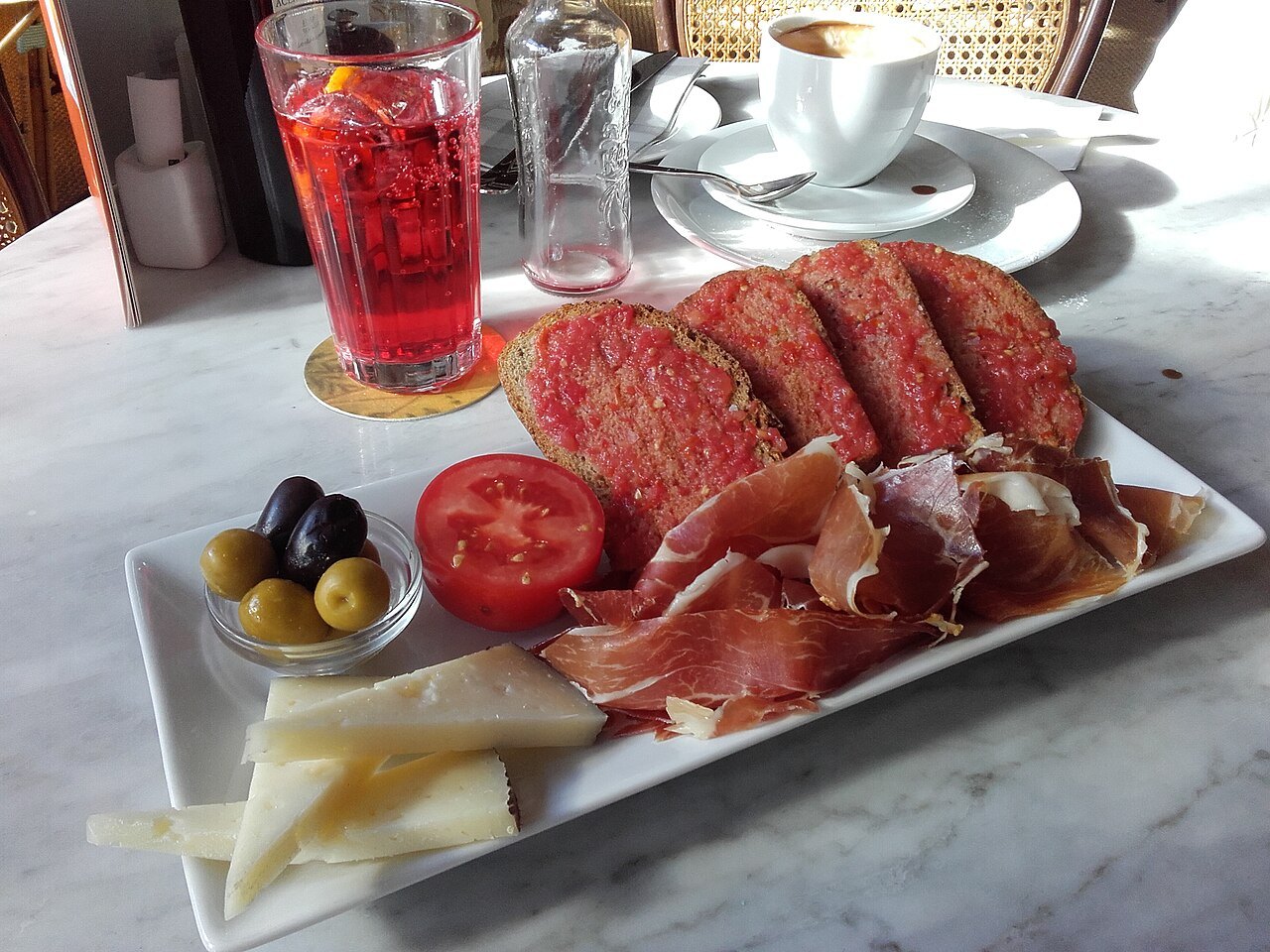
Bread rubbed with tomato, served with cured ham, cheese, olives and a glass of vermouth.Rafael Ortega Díaz, Wikimedia Commons, CC BY-SA 4.0