Home · The Beaches
The coast, west to east
Seven beaches
- Sant Sebastià
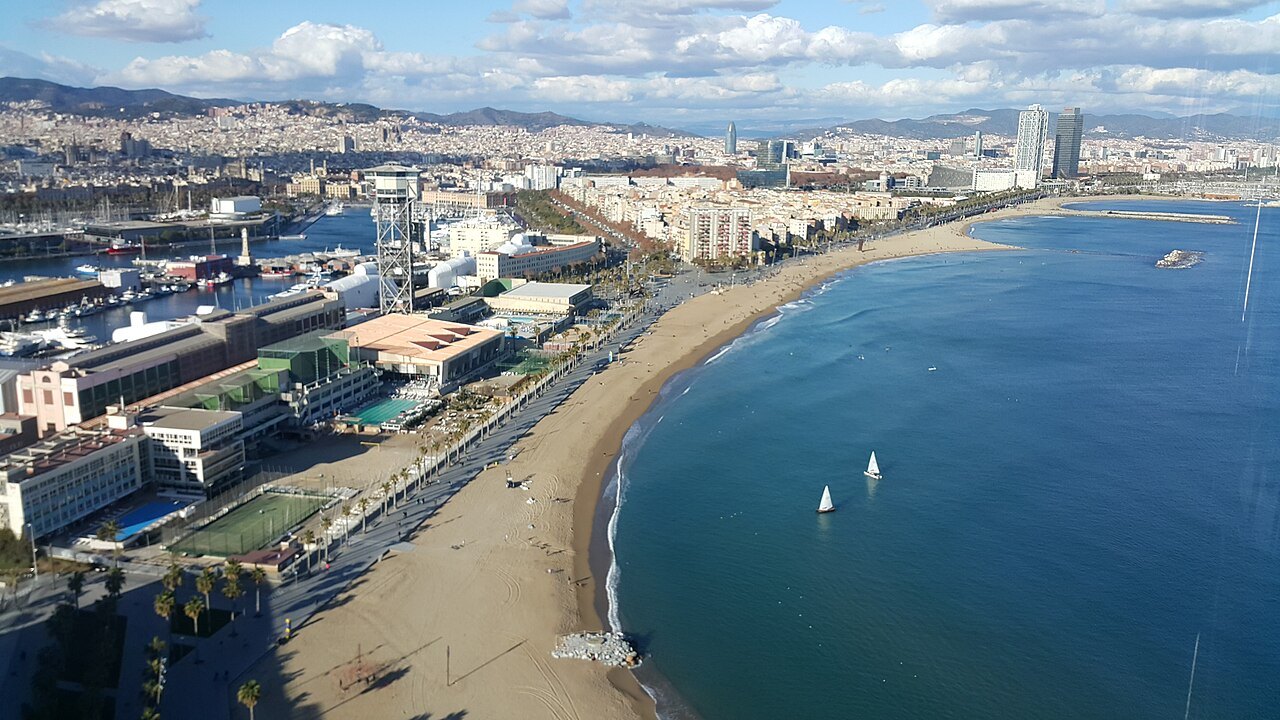
One of the three oldest and most-visited beaches, about eleven hundred meters long counted together with Barceloneta and Somorrostro, at the southwest end beside the harbor.
- Barceloneta
The classic city beach, the liveliest from dawn to dusk in summer, with the neighborhood's fish restaurants and bars behind its boardwalk.
- Somorrostro
The third of the oldest beaches, one of the three oldest, between Barceloneta and the Olympic Harbor.
- Nova Icària
One of the five beaches opened for the 1992 Games, beside the Olympic Village, between 400 and 640 meters like its neighbors.
- Bogatell
A beach of the Olympic generation, along the Poblenou waterfront.
- Mar Bella and Nova Mar Bella
Two further Olympic-era beaches, farther northeast, with the Rambla del Poblenou reaching down to the sand.
- Llevant
The easternmost of the seven, near the Fòrum, and the first beach in the city to admit dogs in the summer season.
The Beaches
In full
A city that turned to the sea
Barcelona's beaches were not always a feature of the city. For centuries the waterfront was a harbor and an industrial edge, and the sand that now draws crowds was largely absent. The beaches of Barceloneta grew on the sand that the harbor works left behind in the eighteenth century, and the other beaches came from the city's restructuring for the 1992 Summer Olympics, when a great number of industrial buildings along the sea front were demolished.
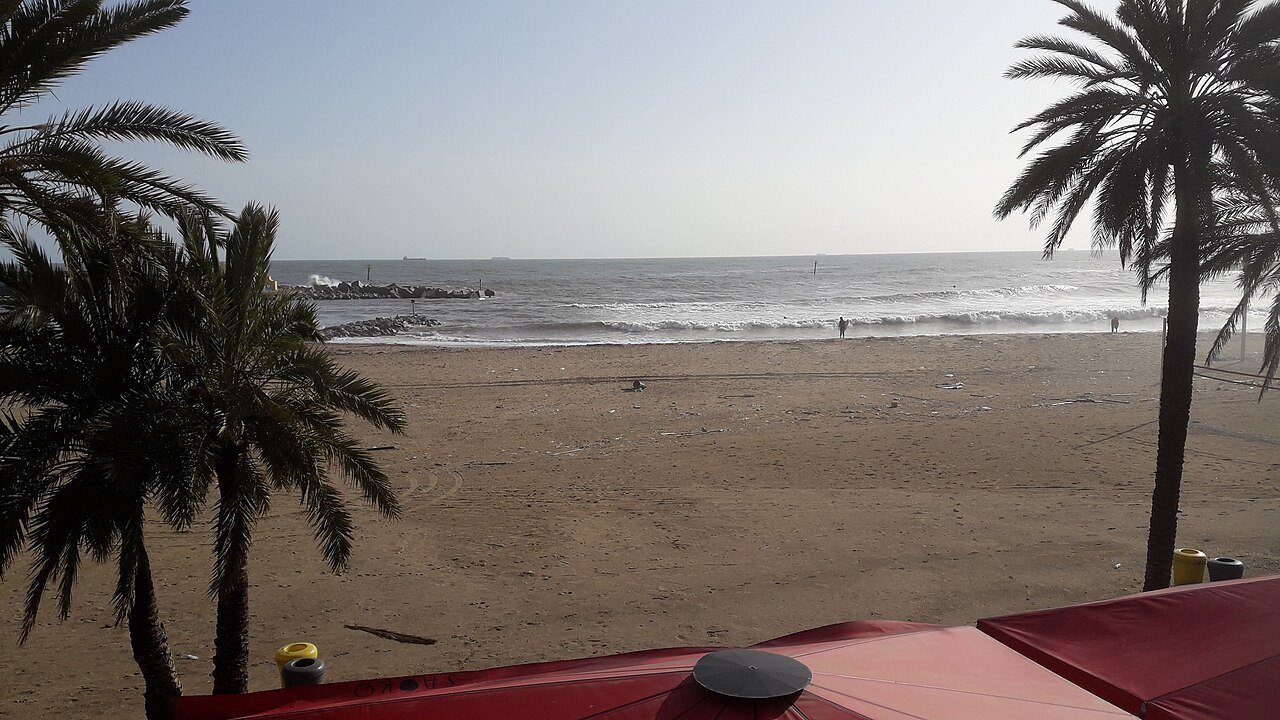
In preparing for the Games, three kilometers of beach were created, and the investment in new green areas and beaches increased by seventy-eight percent. A list by National Geographic and Discovery Channel once ranked Barcelona's beach first among the world's top ten city beaches.
Seven beaches
Barcelona has seven beaches, totaling about four and a half kilometers of coastline. Sant Sebastià, Barceloneta and Somorrostro are the largest, oldest and most frequented, each about eleven hundred meters long. The Olympic Harbor separates them from the other city beaches, which are Nova Icària, Bogatell, Mar Bella, Nova Mar Bella and Llevant, ranging from four hundred to six hundred forty meters.
Those later beaches were opened for the 1992 Games. The sand is artificially replenished, since storms regularly remove large quantities of material, and the 2004 Universal Forum of Cultures left the city a large concrete bathing zone at the eastern end of the coast. Llevant was the first beach to admit dogs during the summer season.
Barceloneta and Sant Sebastià
La Barceloneta is known for its sandy beaches, which appear in the second part of Don Quixote, and for the restaurants and nightclubs along its boardwalk. From dawn to dusk, the beach of La Barceloneta is the liveliest of all of Barcelona, and the neighborhood reaches its peak of entertainment in summer.
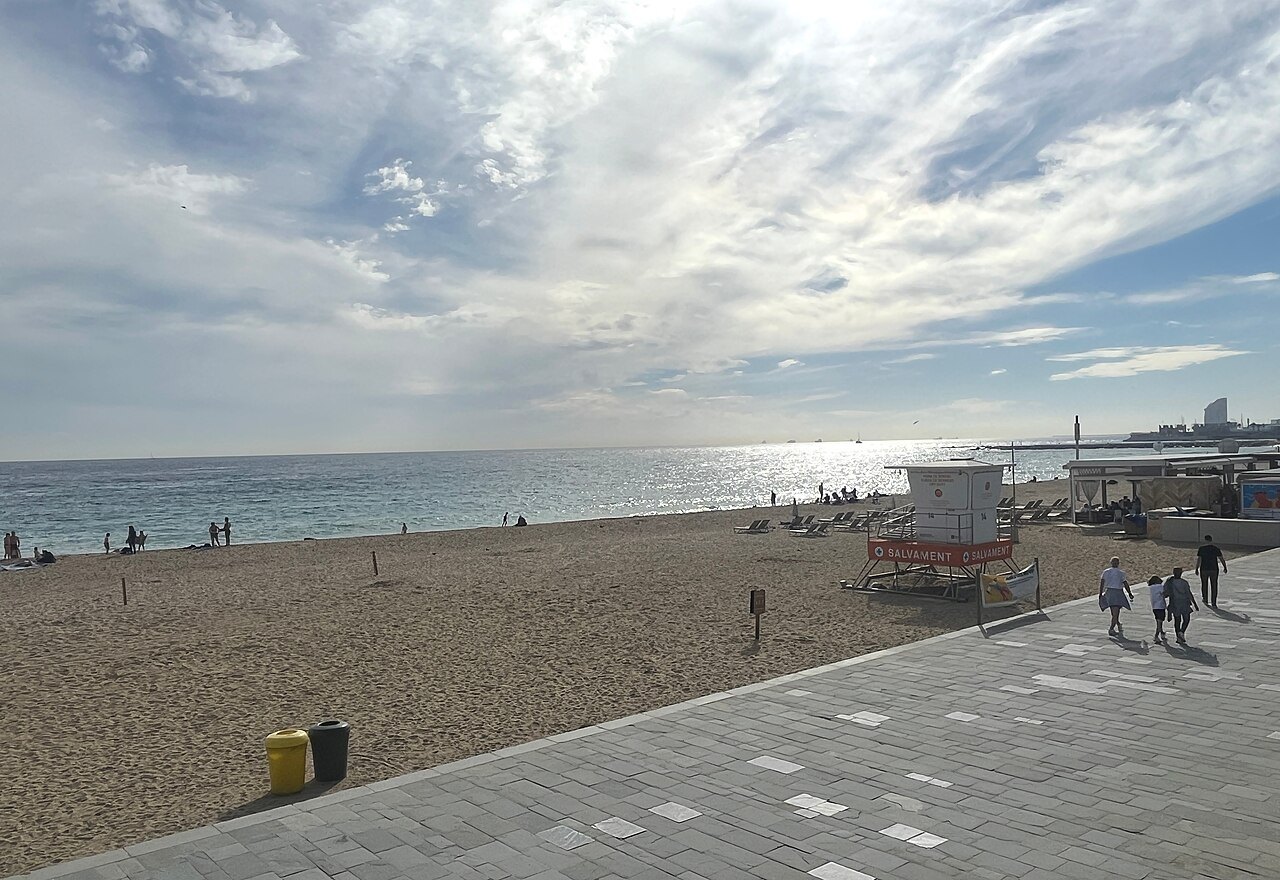
Attractions on the beach include the monument Homenatge a la Barceloneta by the German artist Rebecca Horn. Over the past several years the quality of the sand has been a matter of controversy, and in 2008 the World Health Organization began an inquiry into whether it met its guidelines. The beach is a few minutes from the Port Vell and from the old city, so a swim fits into a morning in the Gothic Quarter.
The Olympic beaches
Beyond Barceloneta, the Port Olímpic, the Olympic Harbor, is a marina east of the main port, opened in 1991. It hosted the sailing events of the 1992 Games and was the main venue of the 2024 America's Cup. Where the beach meets the harbor stands Frank Gehry's sculpture Peix d'Or, the golden fish.
The beaches northeast of the harbor, Nova Icària, Bogatell, Mar Bella and Nova Mar Bella, line the Poblenou waterfront. Poblenou, once the epicenter of Catalan industry, lies between the beaches and the city center, and relatively few tourists go there, though the area is battling the effects of gentrification and mass tourism. The leafy Rambla del Poblenou runs from the Avinguda Diagonal to the beach.
The Fòrum end
At the northeastern edge, the Parc del Fòrum was built in 2004 for the Universal Forum of Cultures, on land that had been old disused factories. Its esplanade of sixteen hectares ends in a large solar panel, one of the event's emblems, and its main building, by Herzog and de Meuron, with a textured facade of indigo blue, houses the Natural Sciences Museum.
The Besòs area was recovered by the event, Poblenou was regenerated and the neighborhood of Diagonal Mar was built, equipping the city with new parks and leisure spaces. The Llevant beach is the one nearest to this district.
Eating by the sea
La Barceloneta is regarded as one of the best places in Barcelona to try fresh fish and paella, and tapas are available on any menu. The most typical tapa of the neighborhood is the bomba, a ball of potato stuffed with meat and served with a spicy sauce or aioli, together with a small draft beer. Near the beach you will see balconies with clothes hung to dry, wine merchants and small bars.
Practical notes
Barceloneta is reached by metro line four, and the Barceloneta station is a five-minute walk from the França railway station. For the Olympic beaches, ride to Ciutadella or Vila Olímpica on the same line. Trams of the Trambesòs network serve the waterfront northeast of the Ciutadella.
Summer brings the largest crowds and the highest temperatures, and sea breezes blow from May or June to September. In the colder months the beaches are quiet and good for walks, and swimmers take part in the Christmas Day race across the Old Port. The aquarium and shops of the Port Vell are a short walk from the Sant Sebastià end.
Between the sand and the port
Behind the Barceloneta beaches the neighborhood's own history is on view. The Carmen Amaya Fountain, built in 1959 where Carrer Sant Carles meets the beach, honors the flamenco dancer born in 1913 in a settlement of Gypsies on this shore, and recalls a time when the beachfront was inhabited by fishermen and shacks, which were removed in the 1970s.
At the Port Vell end, the Palau de Mar houses the History Museum of Catalonia, and the Torre Sant Sebastià is the Barceloneta terminus of the aerial tramway that crosses the harbor to Montjuïc, which opened in 1931. Small boats called Las Golondrinas leave from the Columbus monument and give a view of the beaches from the water.
How the Games opened the city to the sea
The 1992 Summer Olympics set off an ambitious plan of urban transformation that had been drawn up earlier. Barcelona was opened to the sea with the construction of the Olympic Village and the Olympic Port in Poblenou, new centers were created, and sports facilities rose in the Olympic zones of Montjuïc, the Diagonal and Vall d'Hebron. Hotels were refurbished and new ones built, and ring roads were built around the city.
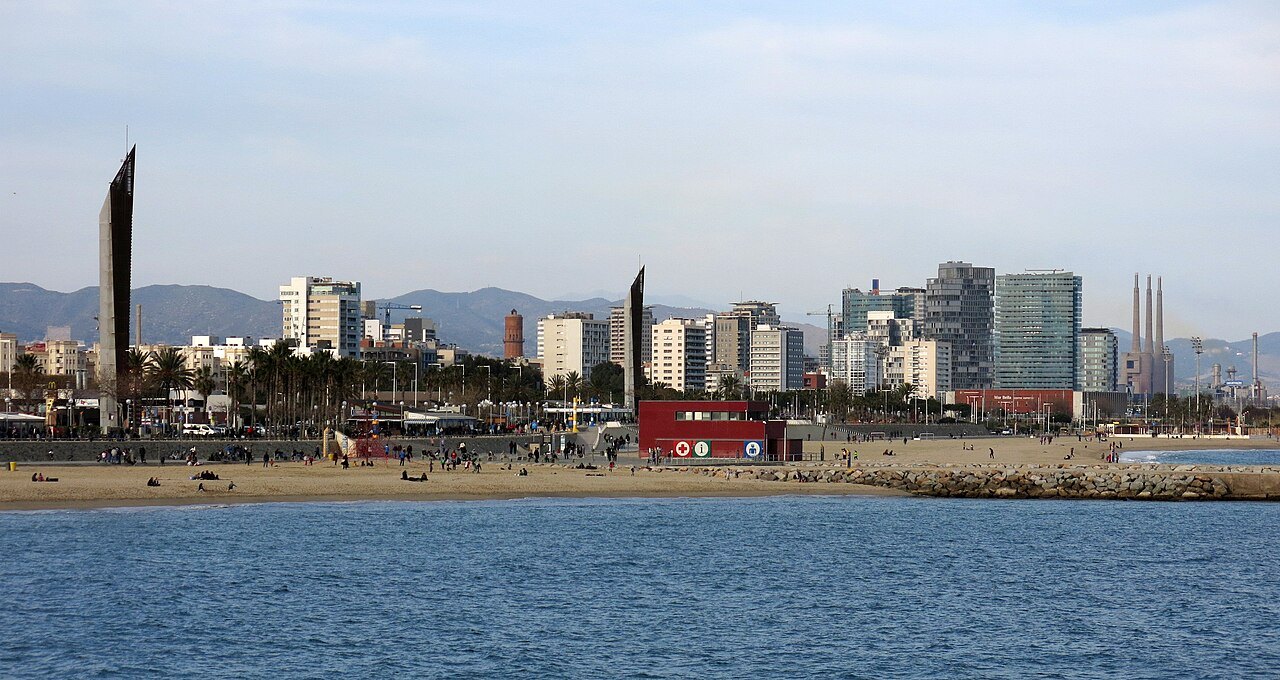
The Olympic Harbor itself opened in 1991, a year before the Games, and the beaches that line the coast beyond it are the most visible legacy of that moment. For a visitor, the practical result is a seafront of about four and a half kilometers that can be walked from Barceloneta to the Fòrum with the sea on one side and the city on the other.
More photographs
Seen on the way
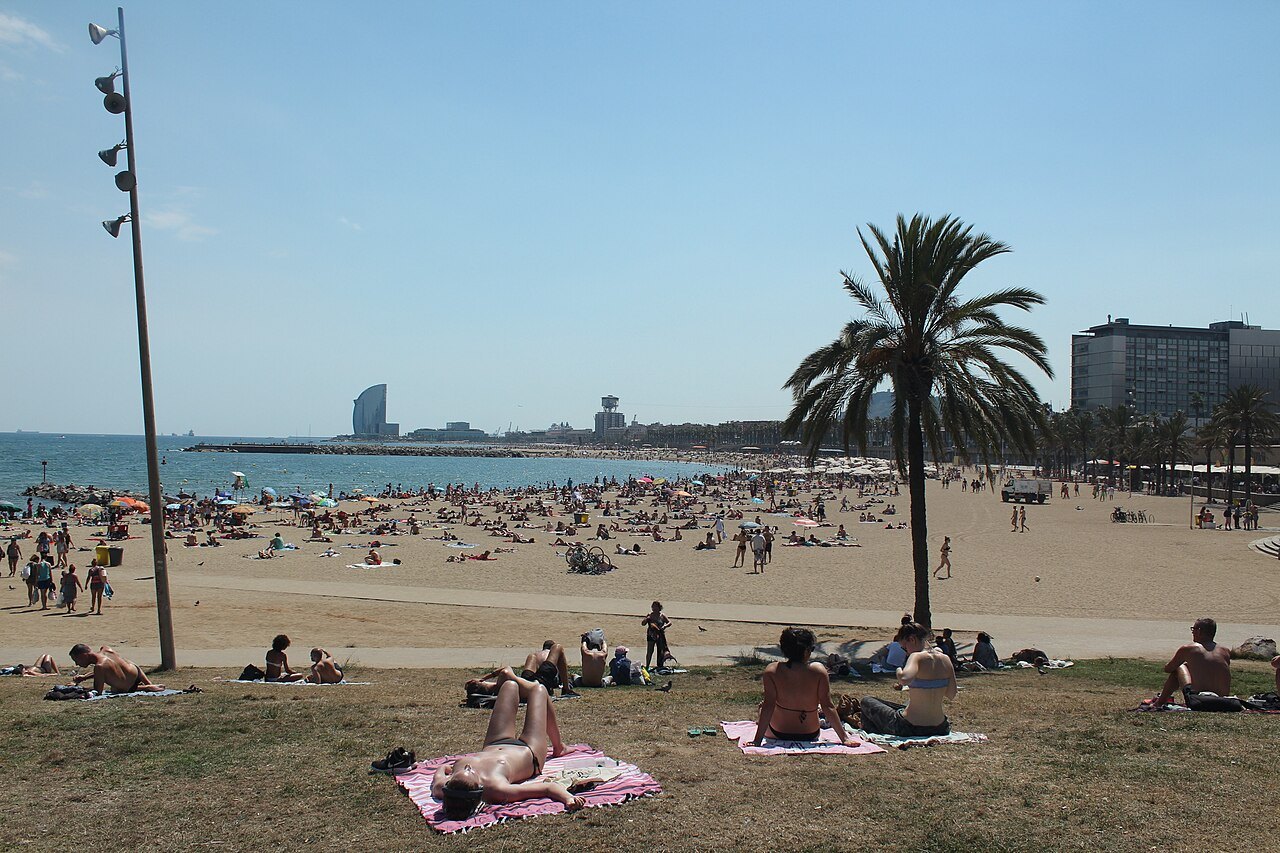
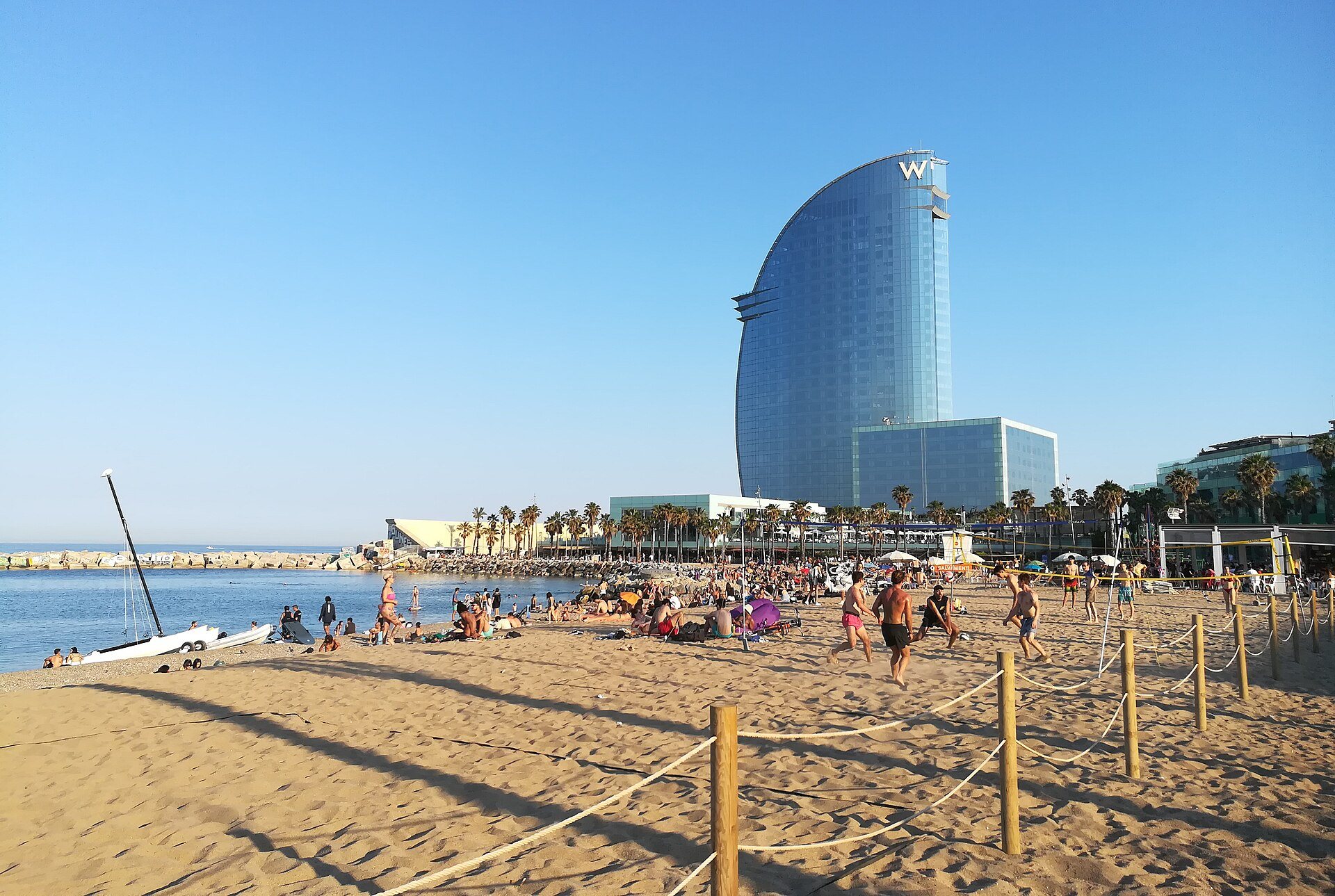
Sunbathers on the sand at the Somorrostro beach, with a hotel tower in the distance.Przemek P, Wikimedia Commons, CC BY-SA 3.0