Home · Gaudí and Modernisme
The movement in the street
Ten buildings
- Castell dels Tres Dragons1888 · Lluís Domènech i MontanerThe earliest Modernista building, a red-brick exhibition restaurant in the Parc de la Ciutadella for the 1888 fair, with an exposed iron structure and ceramics.
- Casa Vicens1883–1885 · Antoni GaudíGaudí's first major house, in Gràcia, covered in ceramic tile in an orientalist style.
- Palau Güell1886–1888 · Antoni GaudíA city mansion for Eusebi Güell with a parabolic gate arch and a starlit ceiling.
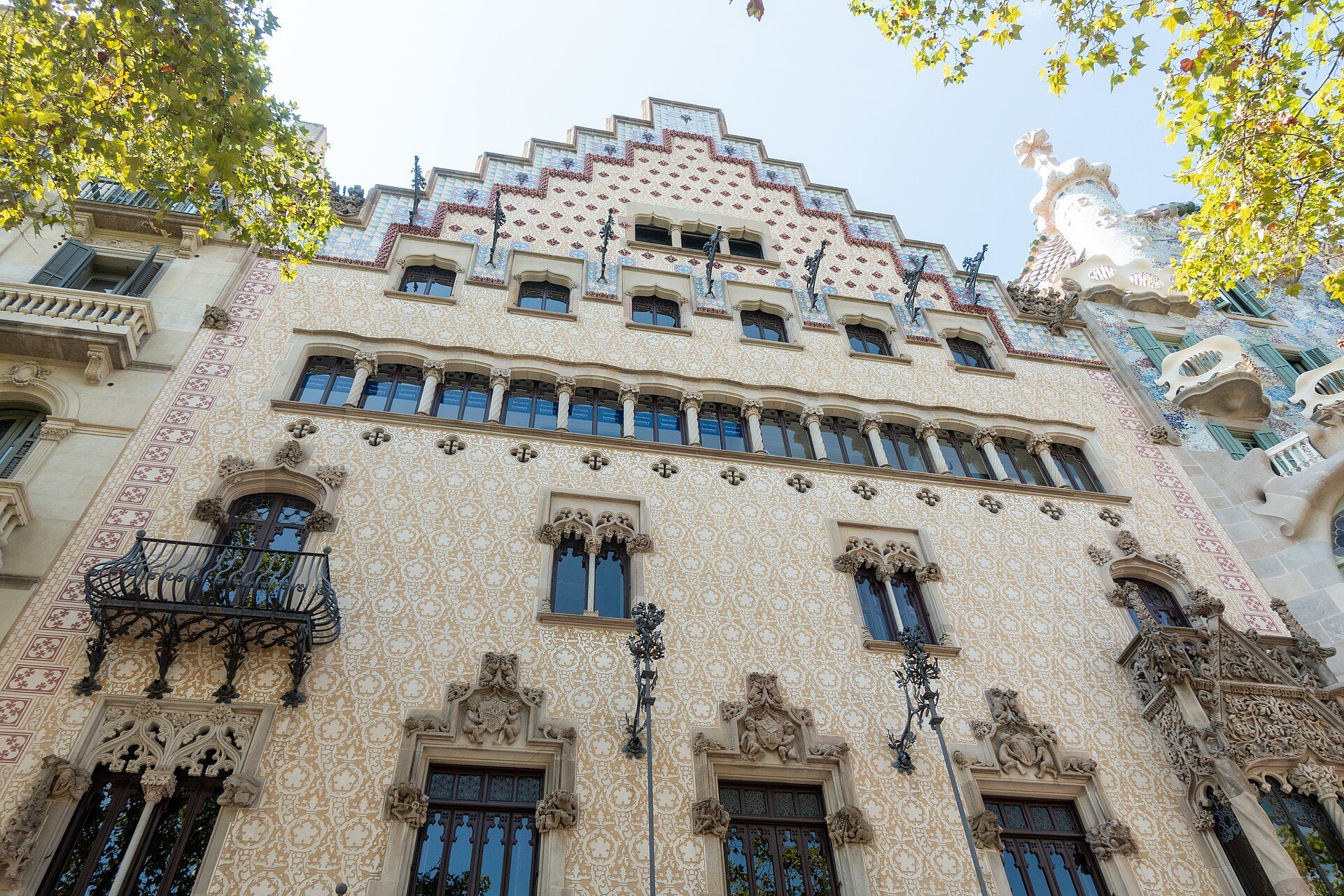
- Casa Amatller1898–1900 · Josep Puig i CadafalchA chocolatier's house with a Flemish stepped gable, its interior of 1900 largely preserved.
- Casa Lleó Morera1902–1906 · Lluís Domènech i MontanerThe only house of the Block of Discord to win the city's annual building prize, in 1906.
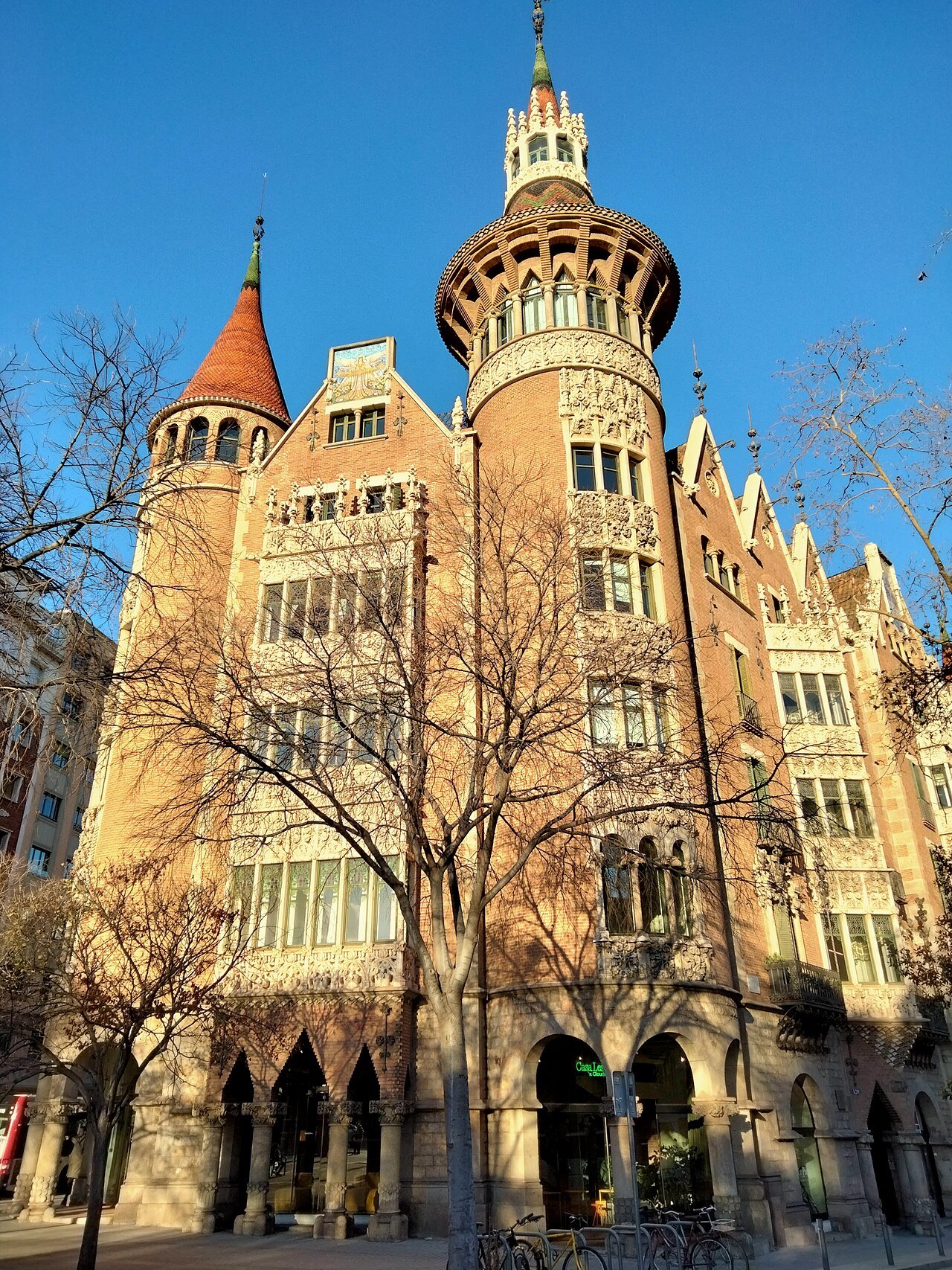
- Casa de les Punxes1903–1905 · Josep Puig i CadafalchThree houses for three sisters built to look like one medieval castle with six pointed towers.
- Casa Batlló1904–1906 · Antoni GaudíA remodeled house of mosaic scales and a dragon's-back roof.
- Palau de la Música Catalana1905–1908 · Lluís Domènech i MontanerA concert hall of brick, glass and tile lit by an inverted dome of stained glass.
- Casa Milà1906–1912 · Antoni GaudíLa Pedrera, a stone-fronted apartment house with a sculpted roof.
- Hospital de Sant Pau1901–1930 · Lluís Domènech i MontanerA garden of pavilions linked by underground galleries.
Gaudí and Modernisme
In full
What Modernisme was
Modernisme, also called Catalan modernism or Catalan art nouveau, was an art and literature movement tied to the search for a new standing for Catalan culture. Its main form of expression was architecture, but it also covered painting and sculpture and, above all, design and the decorative arts: cabinetmaking, carpentry, forged iron, ceramic tiles, glass, silver and gold work, which were important as support for architecture. It was also a literary movement of poetry, fiction and drama.
It was part of the general trend that emerged in Europe around 1900, equivalent to Art Nouveau in France and Belgium, Jugendstil in Germany, the Vienna Secession and Liberty style in Italy, but in Catalonia it acquired its own personality, as local identity grew stronger in a time of spectacular urban and industrial growth.
Dates and ideas
Modernisme was active from roughly 1888, the year of the first Barcelona World Fair, to 1911, the death of Joan Maragall, its most important poet. Catalan nationalism was an important influence: its artists wanted Catalan culture to be regarded as equal to that of other European countries, and they were receptive to the ideas of Valentí Almirall and Enric Prat de la Riba.
The Modernistes largely rejected bourgeois values, which they thought opposed to art. They took one of two stances: some set themselves apart in a bohemian attitude, while others, among them the architects and designers, tried to use art to change society.
How to recognize it
Modernista architecture combines a rich variety of historically derived elements, in particular medieval and Arab styles, with the predominance of the curve over the straight line, rich decoration and detail, the frequent use of plant and other organic motifs, a taste for asymmetry, a refined aestheticism and dynamic shapes. It was closely related to the English Arts and Crafts movement and to the Gothic Revival.
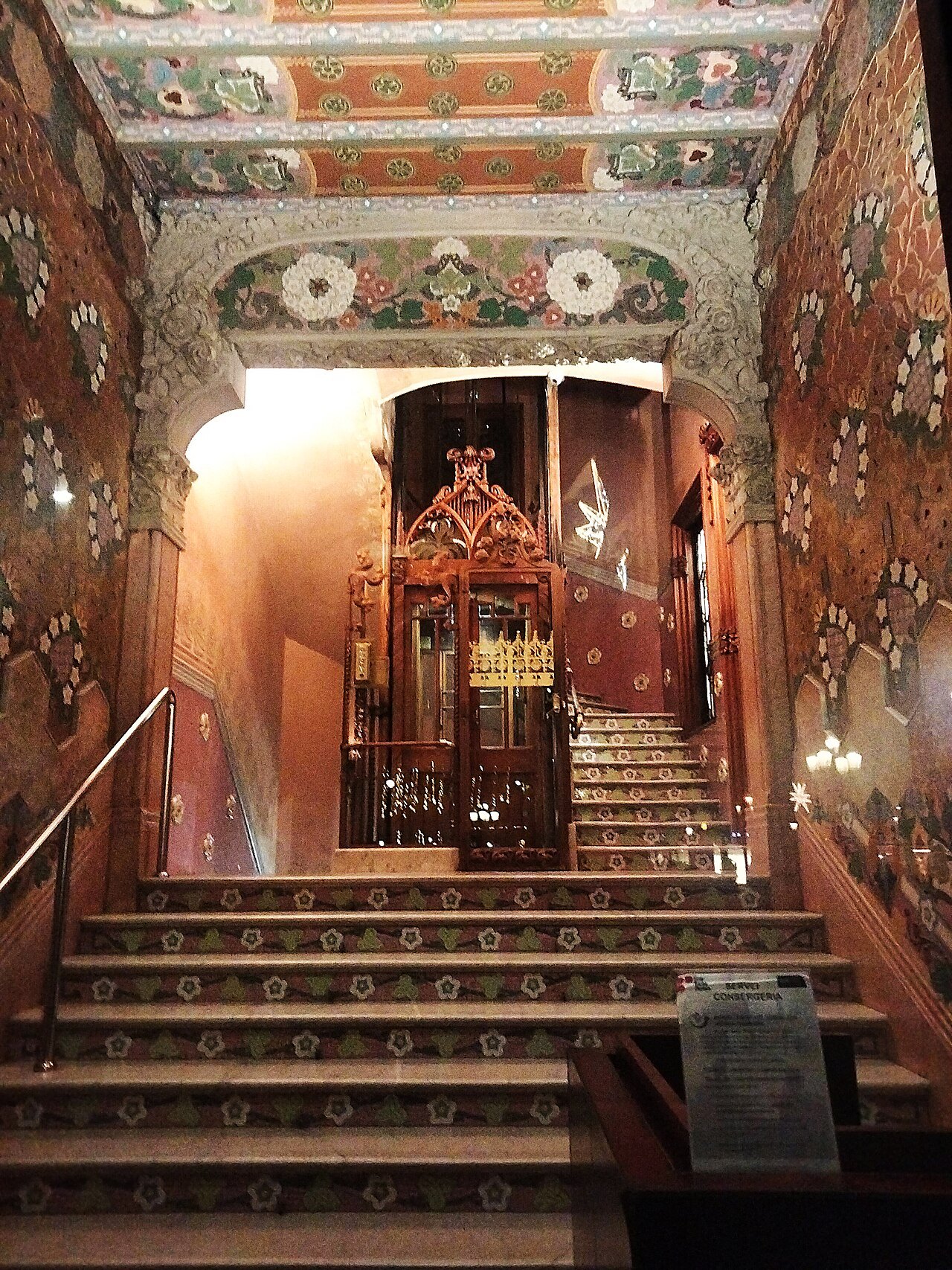
Look for ceramic tile and mosaic, wrought iron that curls like a plant, stained glass, exposed brick and facades that bulge or ripple. The city's wealthy industrial bourgeoisie also built factories and summer homes in other Catalan towns, notably Terrassa and Reus.
Three architects
More than a hundred architects built in the Modernista style, three of them particularly well known. Antoni Gaudí went beyond mainstream Modernisme, creating a personal style based on the observation of nature and on traditional Catalan construction, using geometric forms such as the hyperbolic paraboloid, the hyperboloid, the helicoid and the conoid.
Lluís Domènech i Montaner created a genuine alternative architecture, mixing constructive rationalism with ornament inspired by Hispano-Arab architecture, as in the Palau de la Música Catalana and the Hospital de Sant Pau. Josep Puig i Cadafalch, an architect, politician and historian, combined Catalan tradition with elements from the Netherlands and German Gothic, as in his rebuilding of the Casa Amatller.
The Block of Discord
On the Passeig de Gràcia, three of the most important Modernista buildings stand side by side: Casa Lleó Morera by Domènech, Casa Amatller by Puig i Cadafalch and Casa Batlló by Gaudí. They are known together as the Illa de la Discòrdia, the Block of Discord, for their unique and contrasting styles.
Casa Amatller was redesigned between 1898 and 1900 for a wealthy chocolatier and archaeology enthusiast, Antoni Amatller; his family's continuous ownership means its 1900 interior is largely preserved, and it serves now as a house museum and a study center. Casa Lleó Morera, remodeled from 1902 for Francesca Morera, is the only building of the block that won the city council's annual prize for artistic buildings, in 1906. Its decoration quotes the family name, since morera means mulberry tree.
Beyond Gaudí
Domènech's Palau de la Música Catalana and Hospital de Sant Pau are listed by UNESCO together, and Puig i Cadafalch's Casa de les Punxes, built from 1903 to 1905 at the junction of the Avinguda Diagonal, Carrer Rosselló and Carrer Bruc, was a commission by Bartomeu Terradas for his three sisters. Puig made the three houses look like a single medieval castle with six pointed towers, inspired by northern European fashion, and it was declared a historical monument of national interest in 1976.
Other names worth knowing are Enric Sagnier, the great builder for the Eixample bourgeoisie, Josep Maria Jujol, Gaudí's collaborator, who designed the serpent bench at Park Güell, and Josep Vilaseca, who designed the Arc de Triomf, the gate of the 1888 exposition.
Gaudí's seven works
UNESCO lists seven properties by Gaudí near Barcelona together as the Works of Antoni Gaudí, noting his exceptional creative contribution to the development of architecture and building technology in the late nineteenth and early twentieth centuries. They include the Sagrada Família, Park Güell, Casa Batlló, Casa Milà, Casa Vicens, the Palau Güell and the Church of the Colònia Güell.
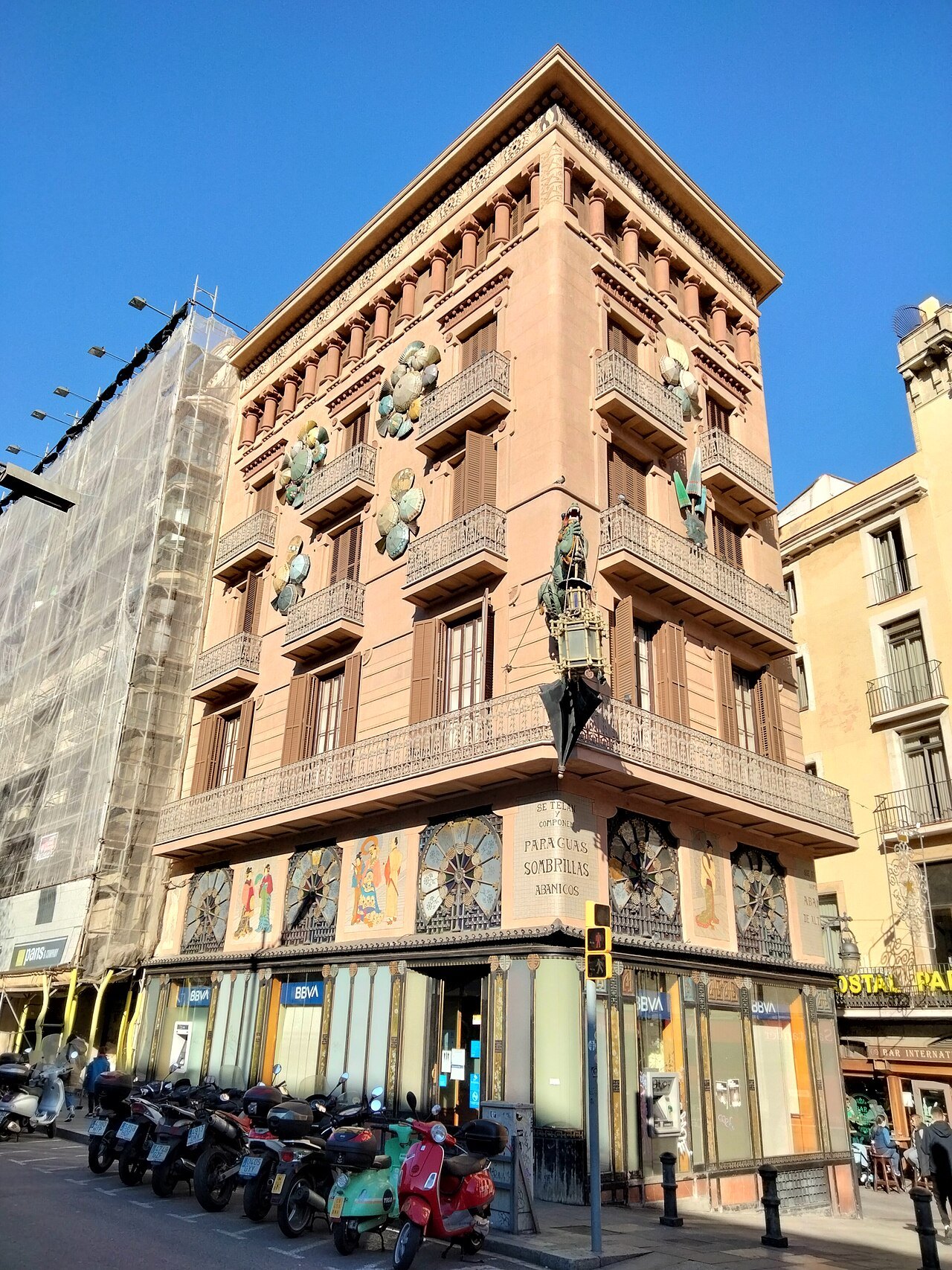
Seen in order, they trace a development from the tiled, orientalist Casa Vicens to the stone waves of Casa Milà and the unfinished church of the Sagrada Família.
Seeing it in a day or two
A good first day follows the Passeig de Gràcia: Casa Lleó Morera, Casa Amatller, Casa Batlló and Casa Milà, then the Sagrada Família. A second day can cover Domènech's Palau de la Música in the old city and the Hospital de Sant Pau, with Casa Vicens in Gràcia and Park Güell on the hill.
Many of these buildings are ticketed, and some are in use as offices or homes, so check the official sites before planning. The Casa de les Punxes is privately owned and used as offices, and the Casa Milà still has a resident, so the interiors open to visitors vary from house to house.
Painters, sculptors and craftsmen
The movement was never only about buildings. Notable painters include Santiago Rusiñol, Ramon Casas, Isidre Nonell, Hermen Anglada Camarasa, Joaquim Mir, Eliseu Meifrèn, Lluïsa Vidal and Miquel Utrillo, and notable sculptors include Josep Llimona, Eusebi Arnau and Miquel Blay. Arnau's sculpture surrounds the entrance of the Casa Lleó Morera and forms the muses of the Palau de la Música, where Blay made the great sculptural group on the corner.
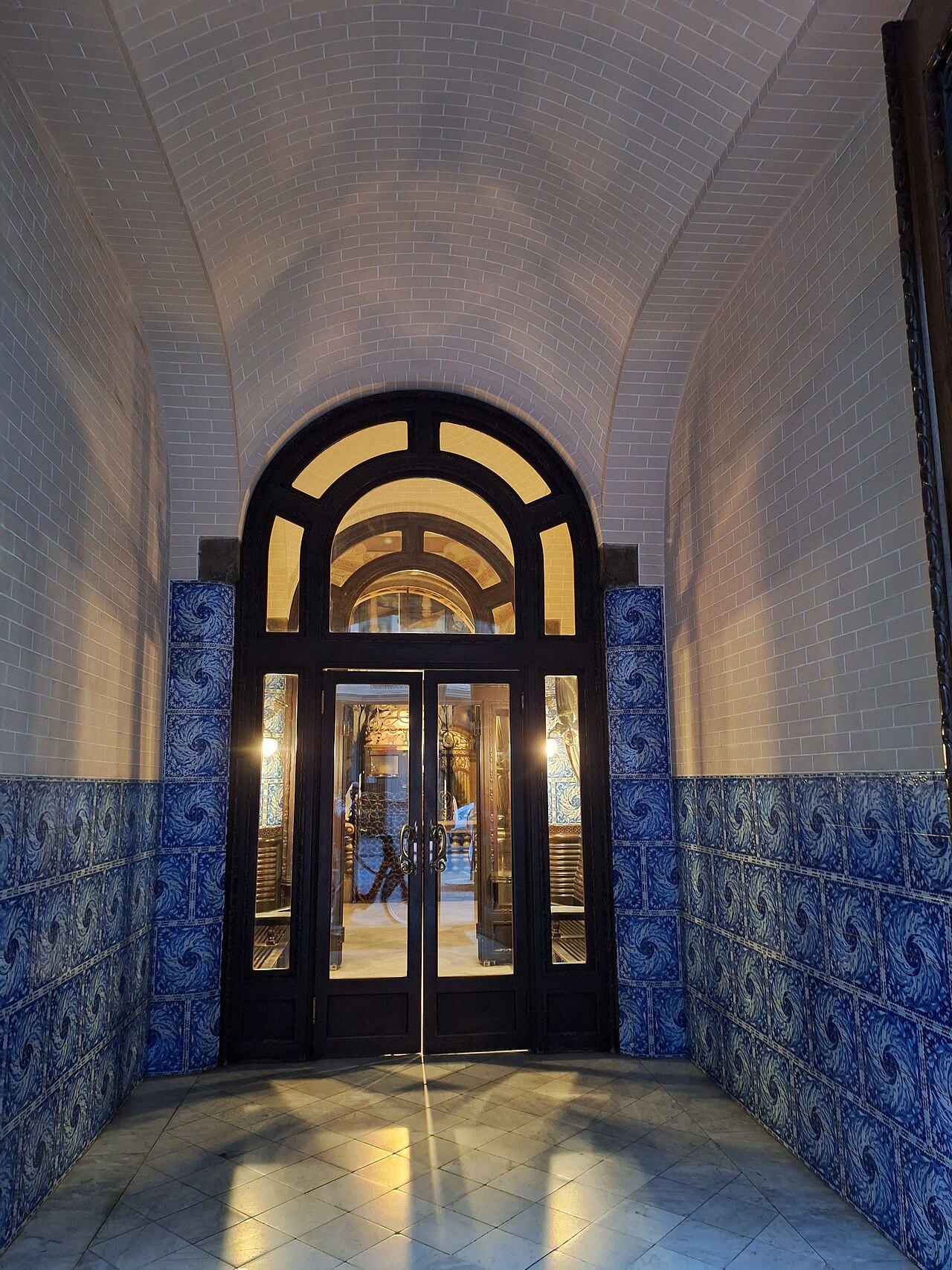
That collaboration is a feature of the style: architects worked with sculptors, ceramists, glassmakers, ironworkers and furniture designers to produce a complete work of art, as at the Casa Lleó Morera, where mosaic, sculpture, ceramics and furniture were each in the hands of a specialist.
More photographs
Seen on the way
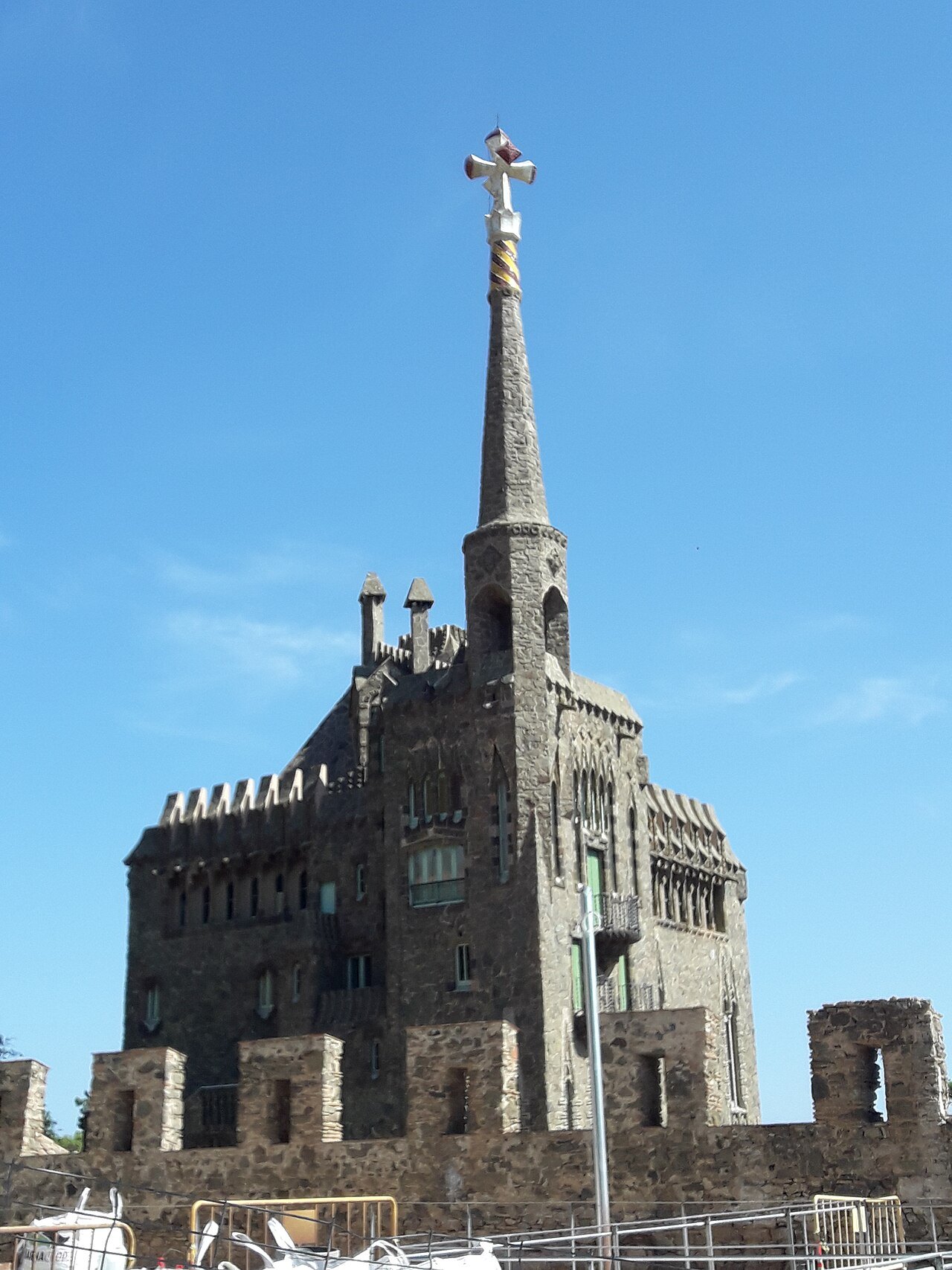
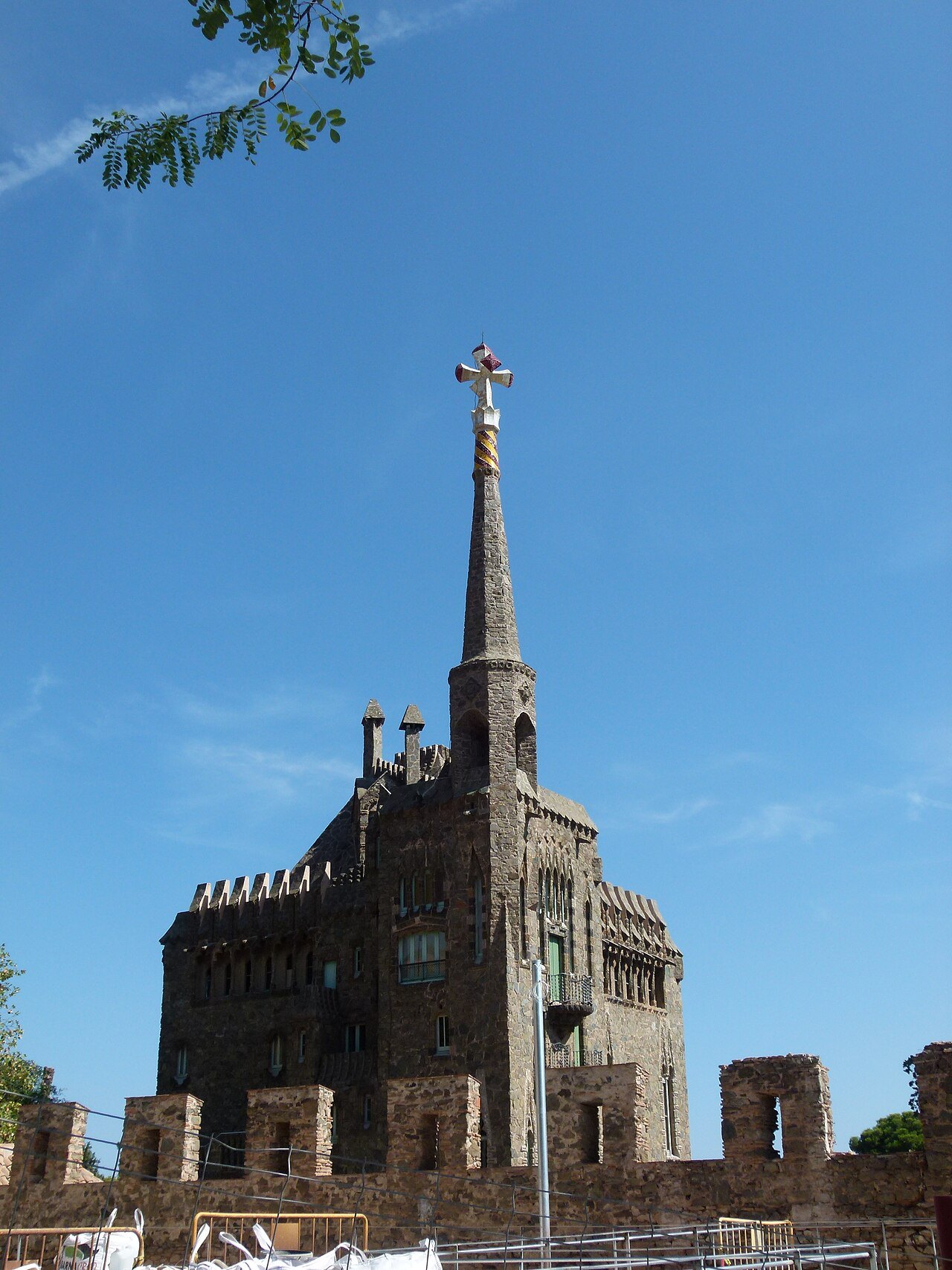
The castle-like tower of Bellesguard, topped by a cross, over a crenellated wall.Pere López Brosa, Wikimedia Commons, CC BY-SA 4.0