Home · Getting Here
Four ways into the city
Every way in
- 1
Josep Tarradellas Barcelona–El Prat Airport
About fifteen kilometers southwest of the center. Line 9 of the metro serves a station in each terminal, a commuter rail station at Terminal 2 runs on line R2, and the Aerobús and a municipal bus link the terminals with the center.
- 2
Sants and França stations
Sants is the main station for high-speed AVE and TGV trains and for regional and commuter service; França, rebuilt for the 1929 exposition, is the second station, down by the docks.
- 3
Estació del Nord
The long-distance bus terminal fills the west wing of a former railway station in Fort Pienc, with the Arc de Triomf metro and Rodalies station at its door.
- 4
By road
Barcelona has a low-emission zone covering the area inside its ring roads. Check the official site before driving in, especially with a foreign-registered or older vehicle.
Getting Here
In full
Four ways in
Most visitors arrive by air, and the airport is where this page starts, but a large share of them also come by train from Madrid, from France or from elsewhere in Catalonia. Coaches and cars matter mainly for those coming from nearby cities and countries. All four routes end in a city with an unusually good metro, so your choice of arrival point matters less than it seems; what matters is knowing which stop to ride to.
Two stations are central to everything that follows: Sants, to the west of the center, and Plaça de Catalunya, the city's hinge, where the old city and the Eixample meet.
The airport
Josep Tarradellas Barcelona–El Prat Airport, known as BCN, lies about fifteen kilometers southwest of the center in the municipalities of El Prat de Llobregat, Viladecans and Sant Boi. It is the second-largest airport in Spain, the busiest international airport of Catalonia and one of the busiest in Europe, a hub for Vueling and a focus city for several other airlines. It was renamed in 2018 for Josep Tarradellas, the first Catalan president after the 1978 constitution.
There are two terminal complexes. Terminal 1, designed by Ricardo Bofill and inaugurated on 16 June 2009, handles most flights. Terminal 2, the older complex, is divided into 2A, 2B and 2C; its oldest part dates to 1968. Check which terminal your airline uses before leaving, because the terminals are not adjacent and a connecting bus runs between them.
From the airport to the city
The metro is the most direct link. Line 9 has served the airport since 12 February 2016, with a station beneath Terminal 1 and another near the Terminal 2 rail station, and it connects to several other metro lines. Terminal 2 also has a Rodalies commuter station on line R2, running half-hourly through Sants and Passeig de Gràcia, with connections to the metro and to long-distance trains. Rail passengers for Terminal 1 take a connecting bus from Terminal 2B.
On the road, the Aerobús offers direct transfers from both terminals to the Plaça de Catalunya, and the municipal bus line 46 runs to the Avinguda del Paral·lel. Taxis are the other option. A new shuttle train to Terminal 1 has long been planned, so check the airport's website for the current arrangement instead of relying on a printed guide.
By train
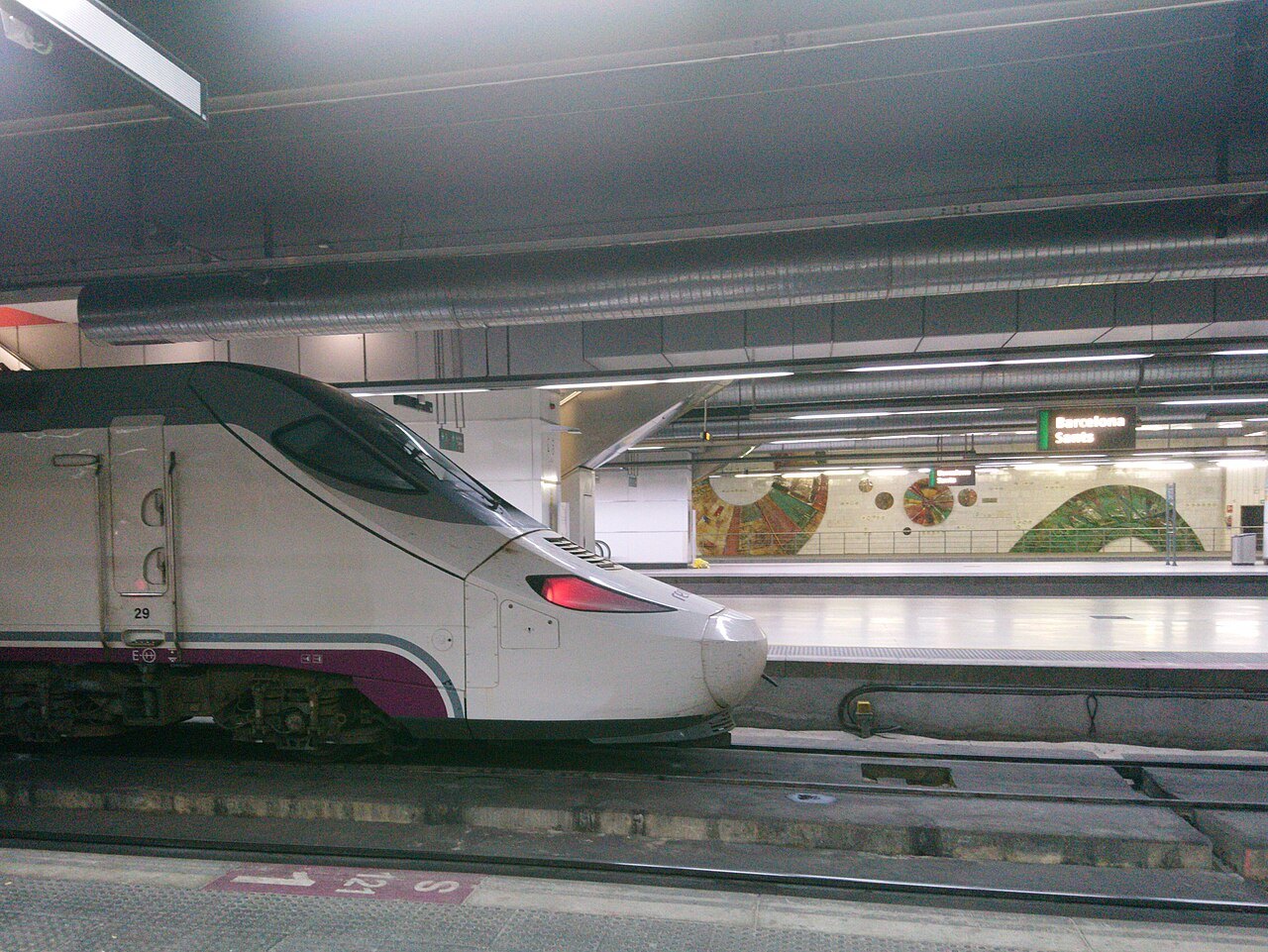
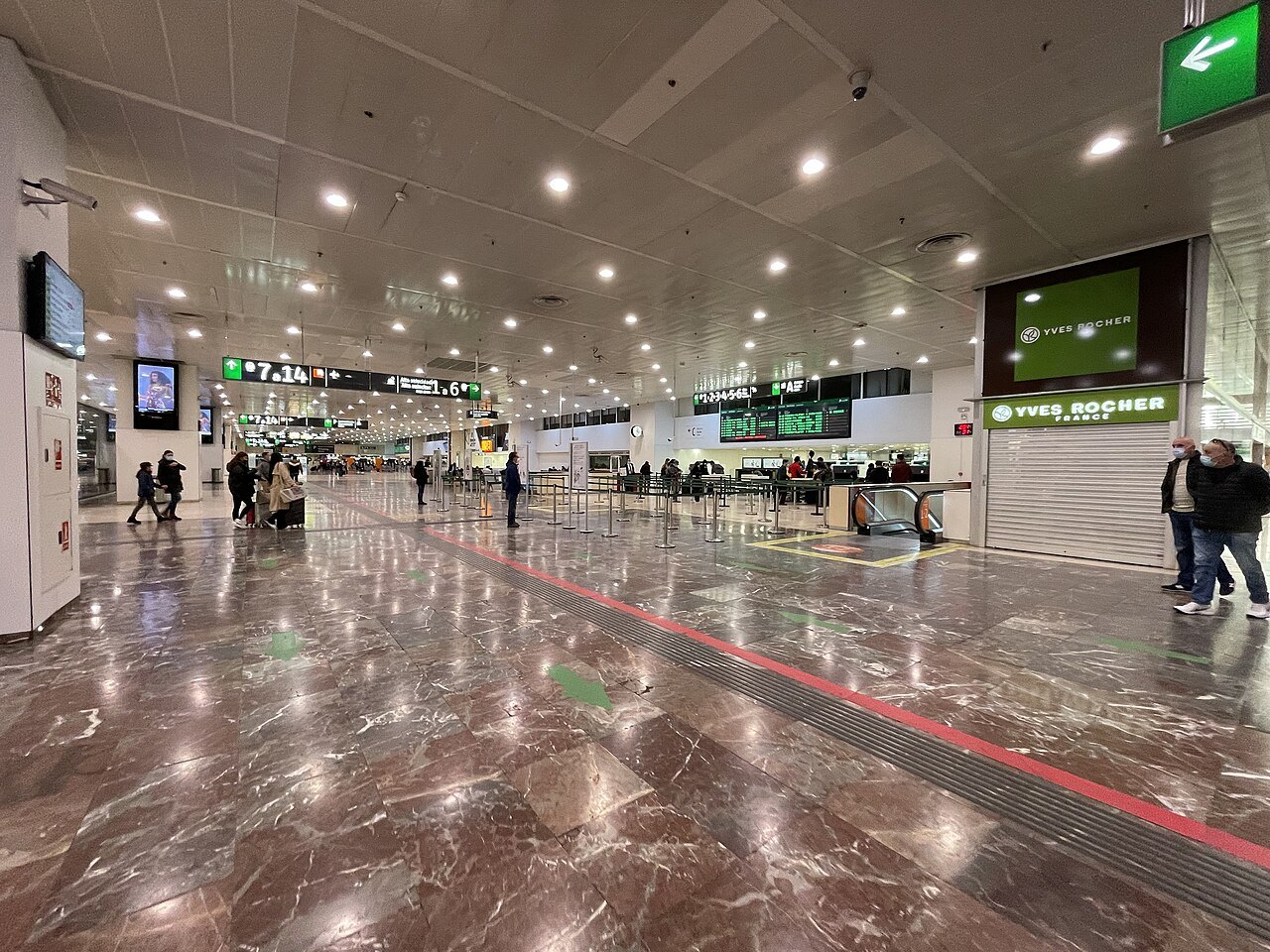
Barcelona Sants, in the Sants-Montjuïc district a little west of the center, is the city's main railway station, the hub of the Rodalies commuter and regional system and the main station for national and international trains. It was built in the 1970s in what is described as a modern airport style, with all platforms underground, and the high-speed AVE began serving it on 20 February 2008. Madrid is two and a half hours away on the AVE line.
The high-speed line east to France was completed in January 2013 and direct TGV service began that December, connecting Barcelona with Paris, Toulouse, Lyon and Marseille. Sants is at the end of Avinguda de Roma between the Plaça dels Països Catalans and the Plaça de Joan Peiró, and the Sants Estació metro station is attached. Madrid is covered in detail by the companion guide Access Madrid, and for a trip that continues south to Andalusia, Access Seville and Access Marbella cover those two cities.
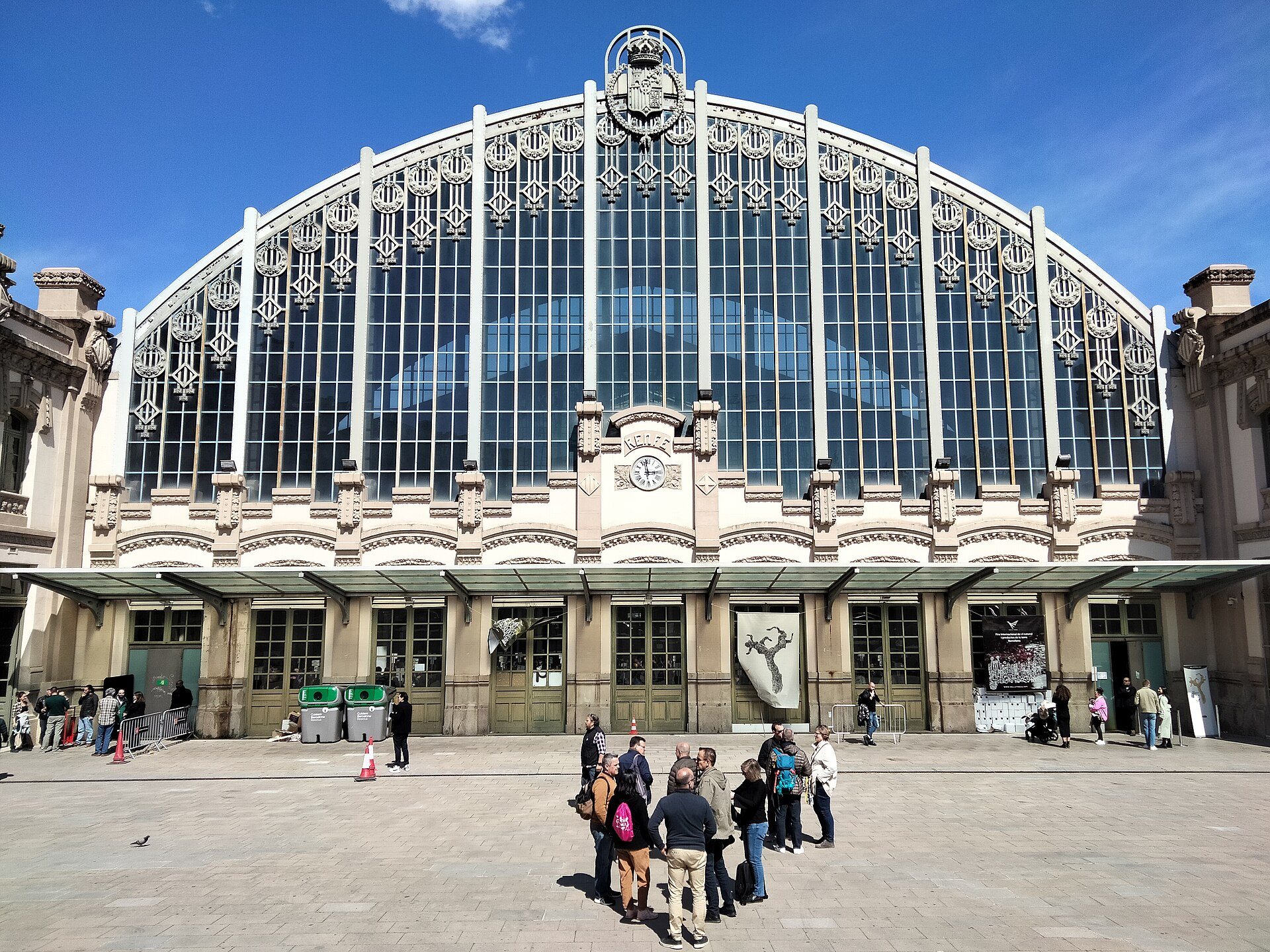
Estació de França
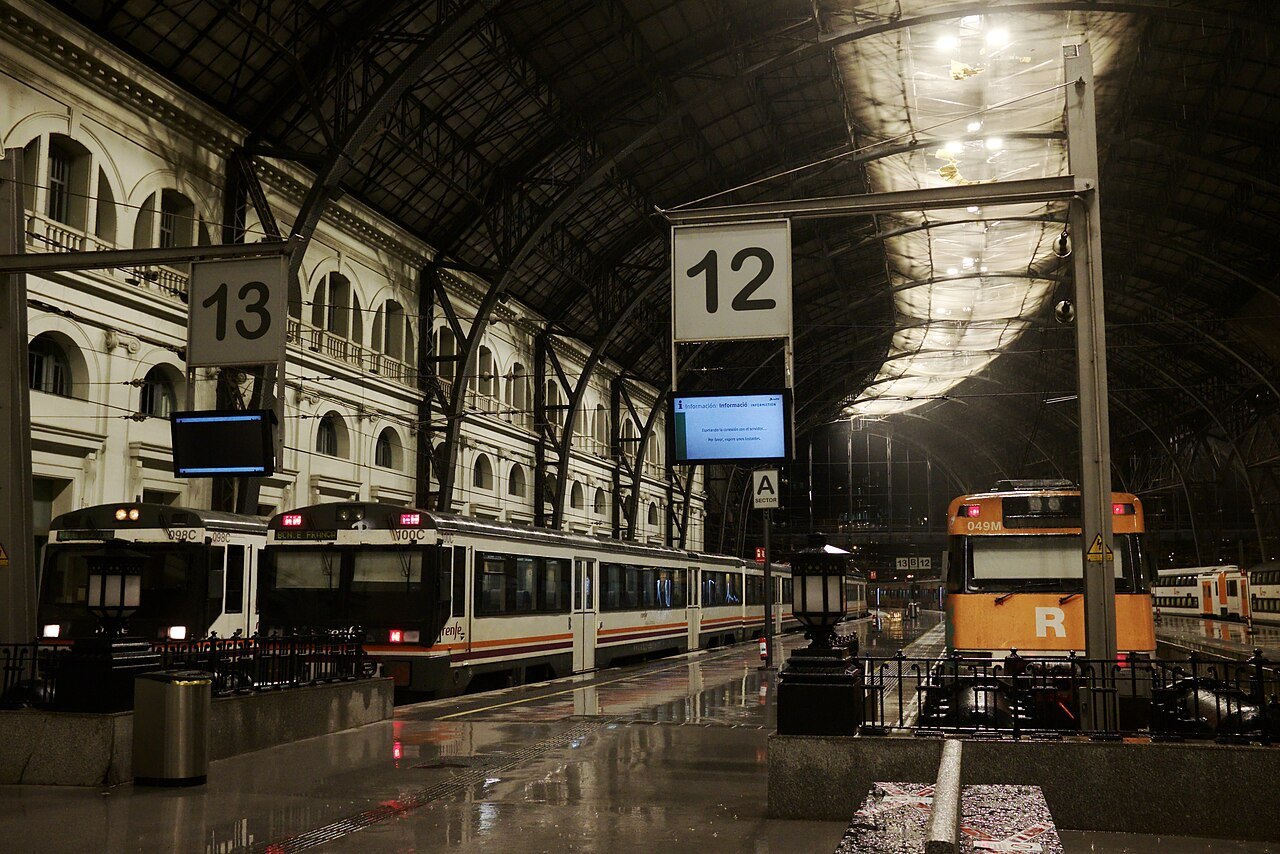
Estació de França is the other major station, and generally regarded as the city's most beautiful. It first served trains from France, which gave it its name, and also services to northeastern Catalonia and the Costa Brava. It was rebuilt for the 1929 exposition by the architect Pedro Muguruza, with two monumental buildings that wrap around the tracks in a U; the structure is twenty-nine meters tall and about one hundred ninety-five meters long. It was closed for renovation from 1988 to 1992 and reopened for the Olympics.
It has no metro station of its own, but it is on the commuter route through Sants and Passeig de Gràcia and a five-minute walk from Barceloneta station on line 4. Part of the original building now belongs to Pompeu Fabra University.
Commuter rail
Rodalies de Catalunya is the commuter and regional rail system of Catalonia, run by Renfe under the Catalan government, with eight lines in the Barcelona area. Almost all lines run through the city on two underground trunk routes, the Meridiana tunnel through Plaça de Catalunya and Arc de Triomf, and the Aragó tunnel through Passeig de Gràcia; both meet at Sants.
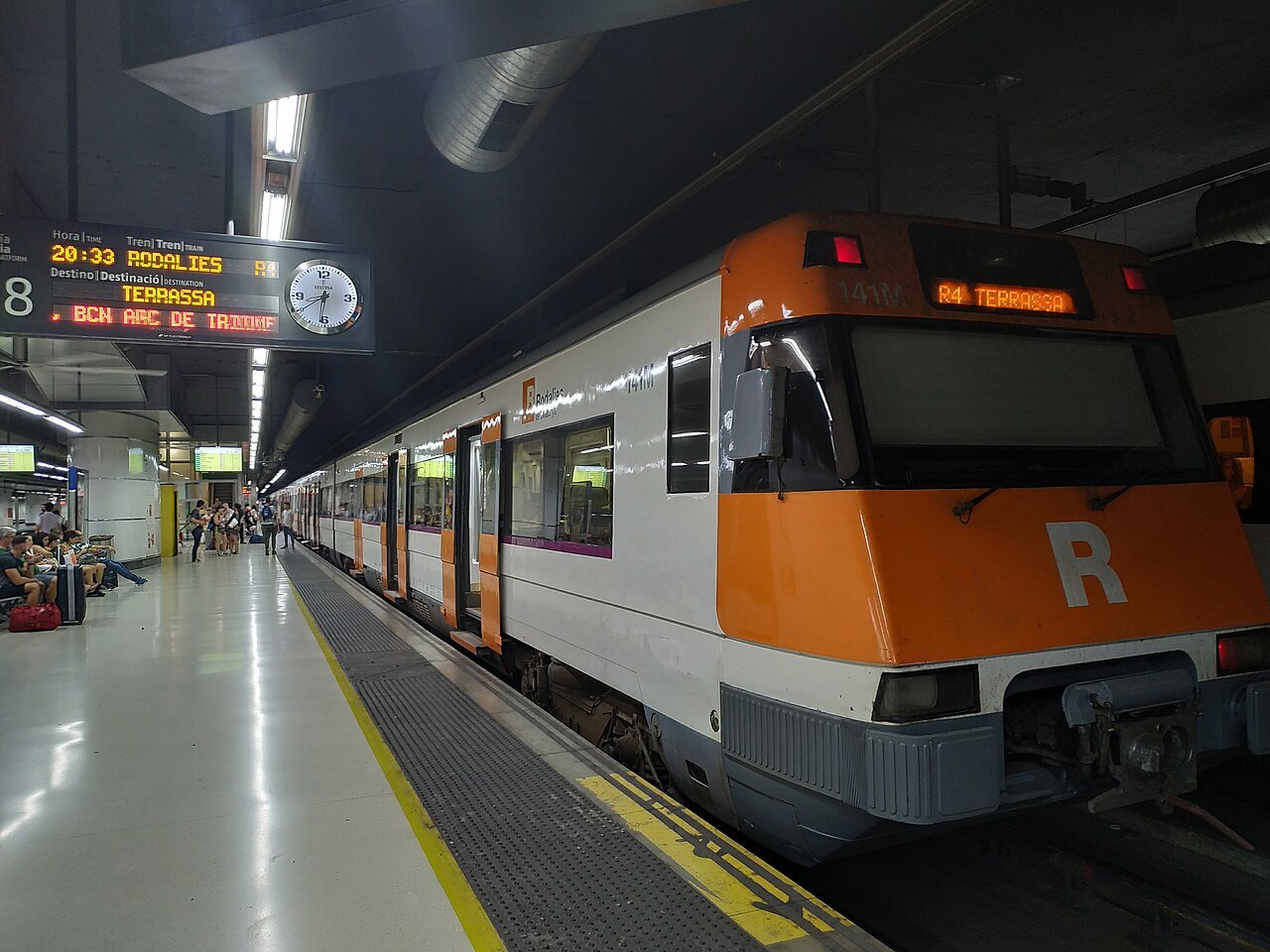
The network is the most useful way to reach towns beyond the city, among them the beach towns to the south, and some of them are covered in the day trips guide. The system has been criticized for delays that the Catalan government attributes to years of weak investment in the infrastructure, so allow slack when you have a flight or a booking.
By coach
The principal long-distance bus terminal is the Estació del Nord, in the Fort Pienc neighborhood of the Eixample, about one and a third kilometers from the Plaça de Catalunya. The railway station that once stood here opened in 1862 as the terminus of the line from Zaragoza, was expanded between 1910 and 1915 with a modernist facade and ceased operating in 1972. The bus station occupies the west wing, and the building also holds a sports hall that hosted table tennis at the 1992 Games.
The Arc de Triomf station, on metro line 1 and the Rodalies network, has an entrance directly in front, so the coach terminal connects at once to the rest of the city. An international coach station also stands beside Sants.
By car
Barcelona sits inside a ring-road system, and the area within the Rondes is a low-emission zone. Vehicles without an environmental label may not enter it on working days, and owners of foreign-registered cars are asked to register their vehicle with the metropolitan authority before arrival. The rules and the permits are on the official site, zbe.barcelona, and they change, so read them before a trip.
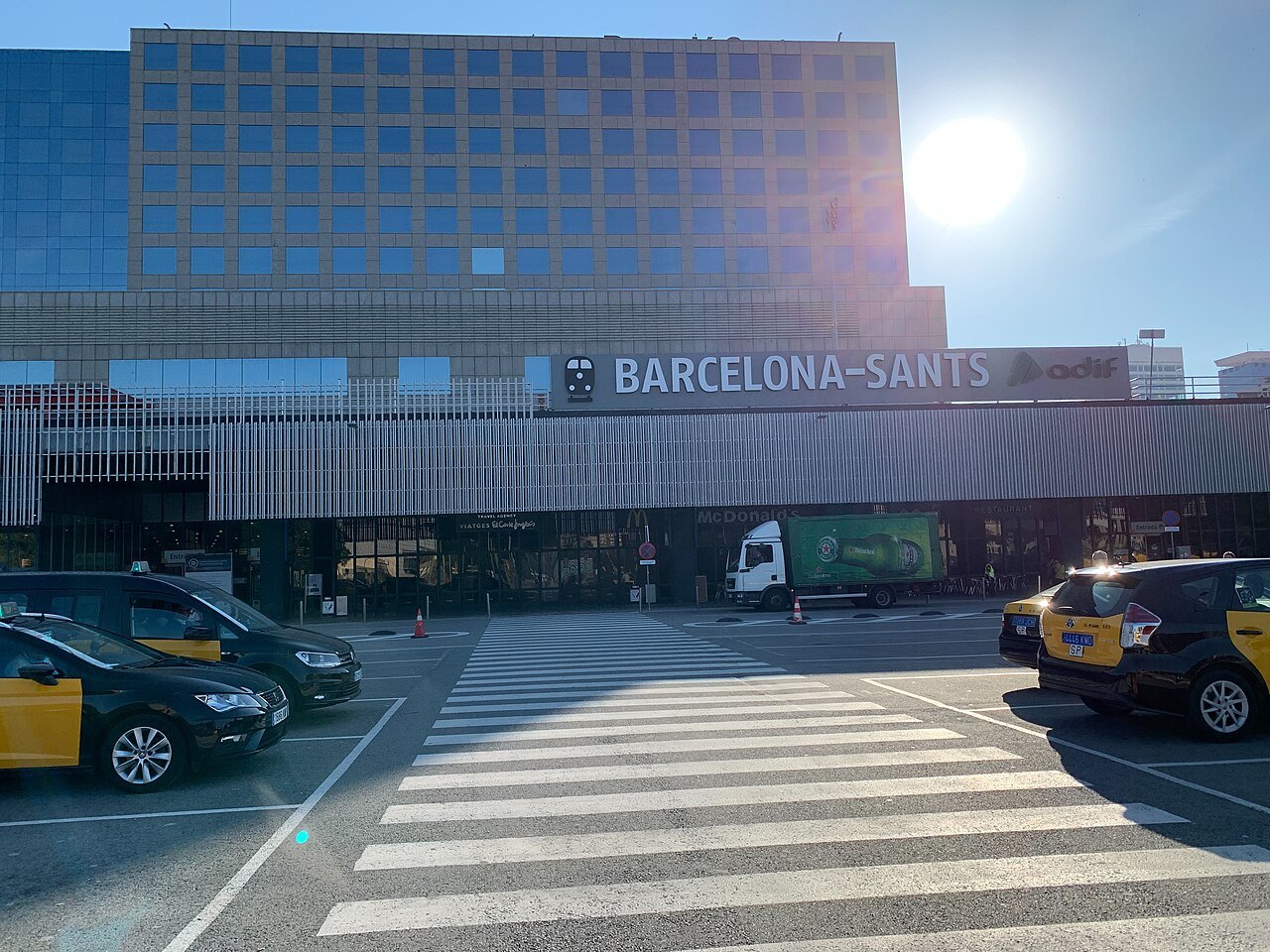
Most visitors leave the car outside the center. The metro, the tram and the commuter lines serve the whole city, and the places a car is useful, such as the day trips, are better reached on days you are leaving Barcelona anyway.
More photographs
Seen on the way
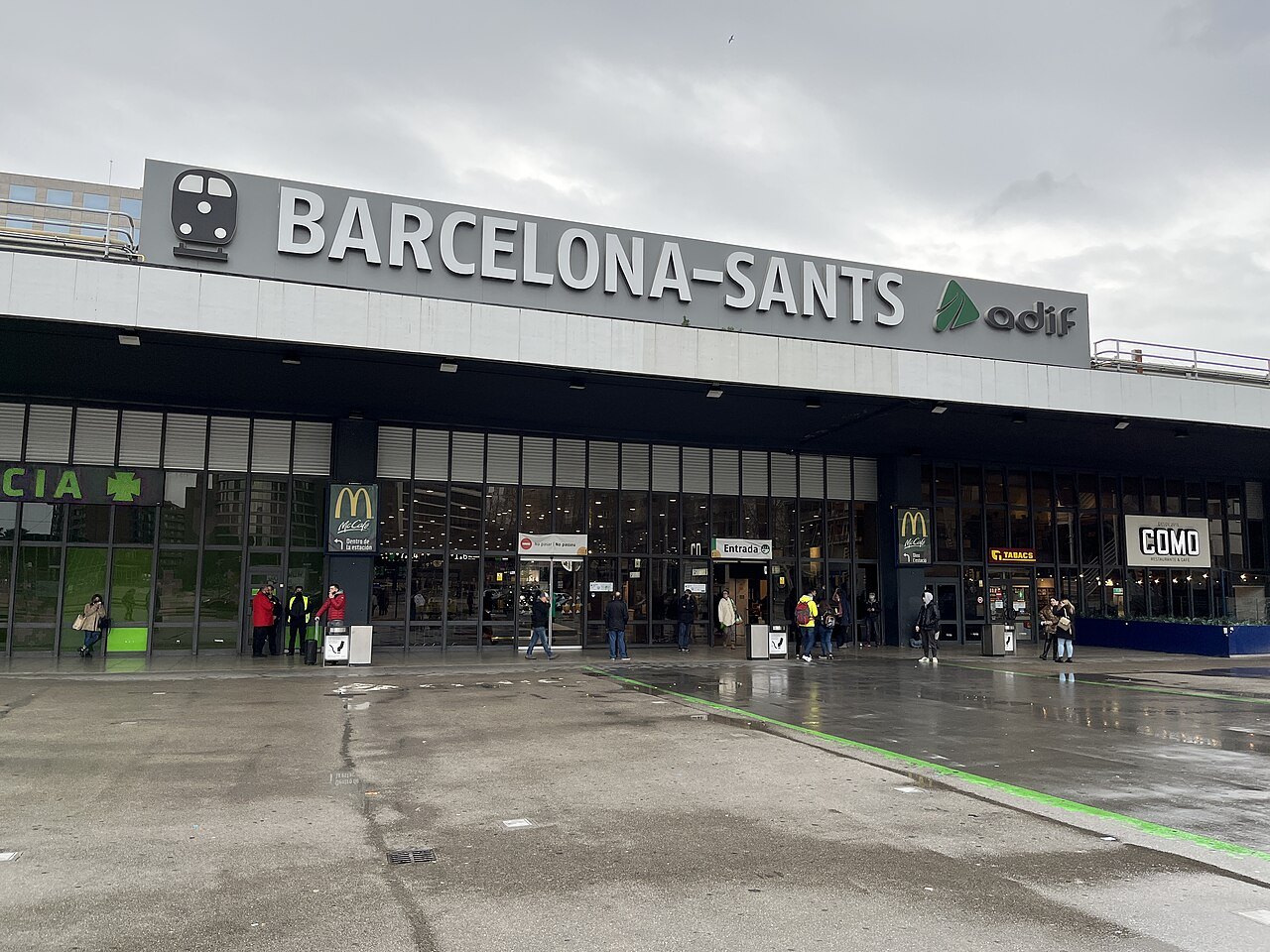
The entrance front of Barcelona Sants under its name sign, on a wet day.Chris Yunker from St. Louis, United States, Wikimedia Commons, CC BY 2.0 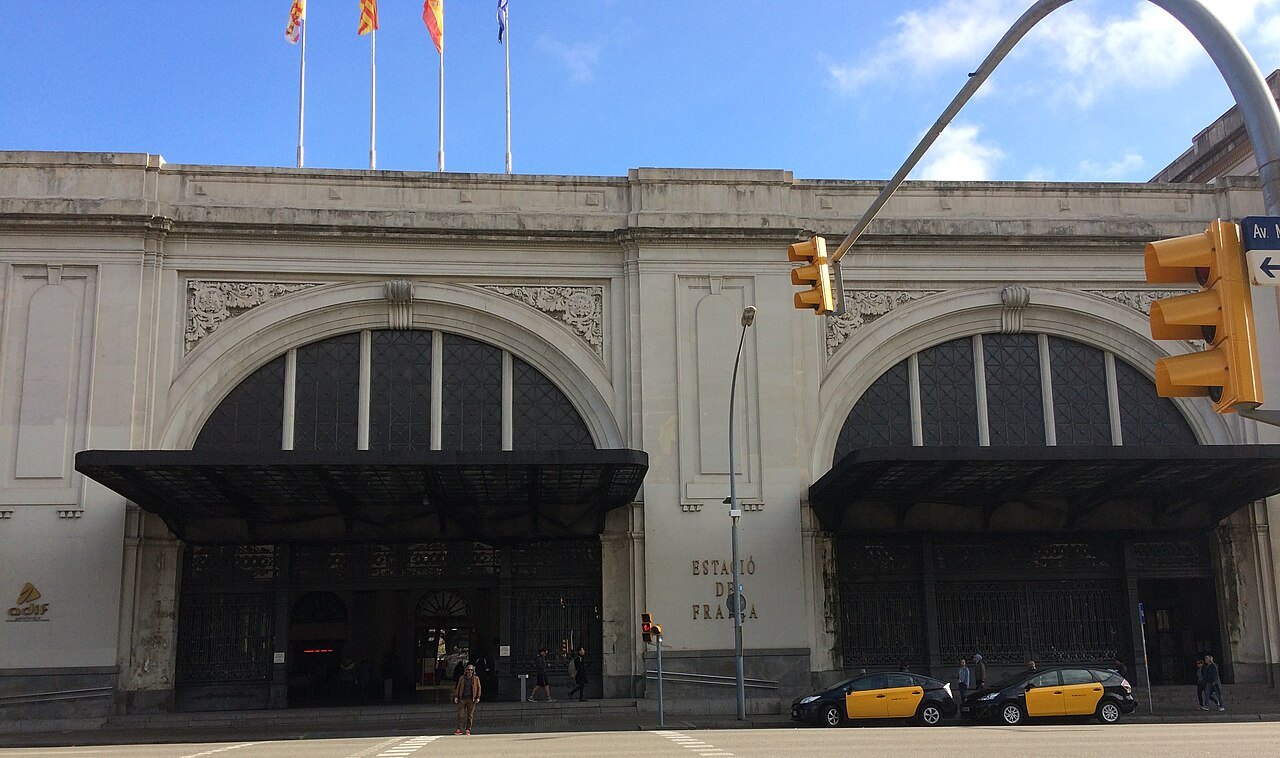
The front of Estació de França, two large arched openings under a row of flags.Azulino, Wikimedia Commons, CC BY-SA 4.0 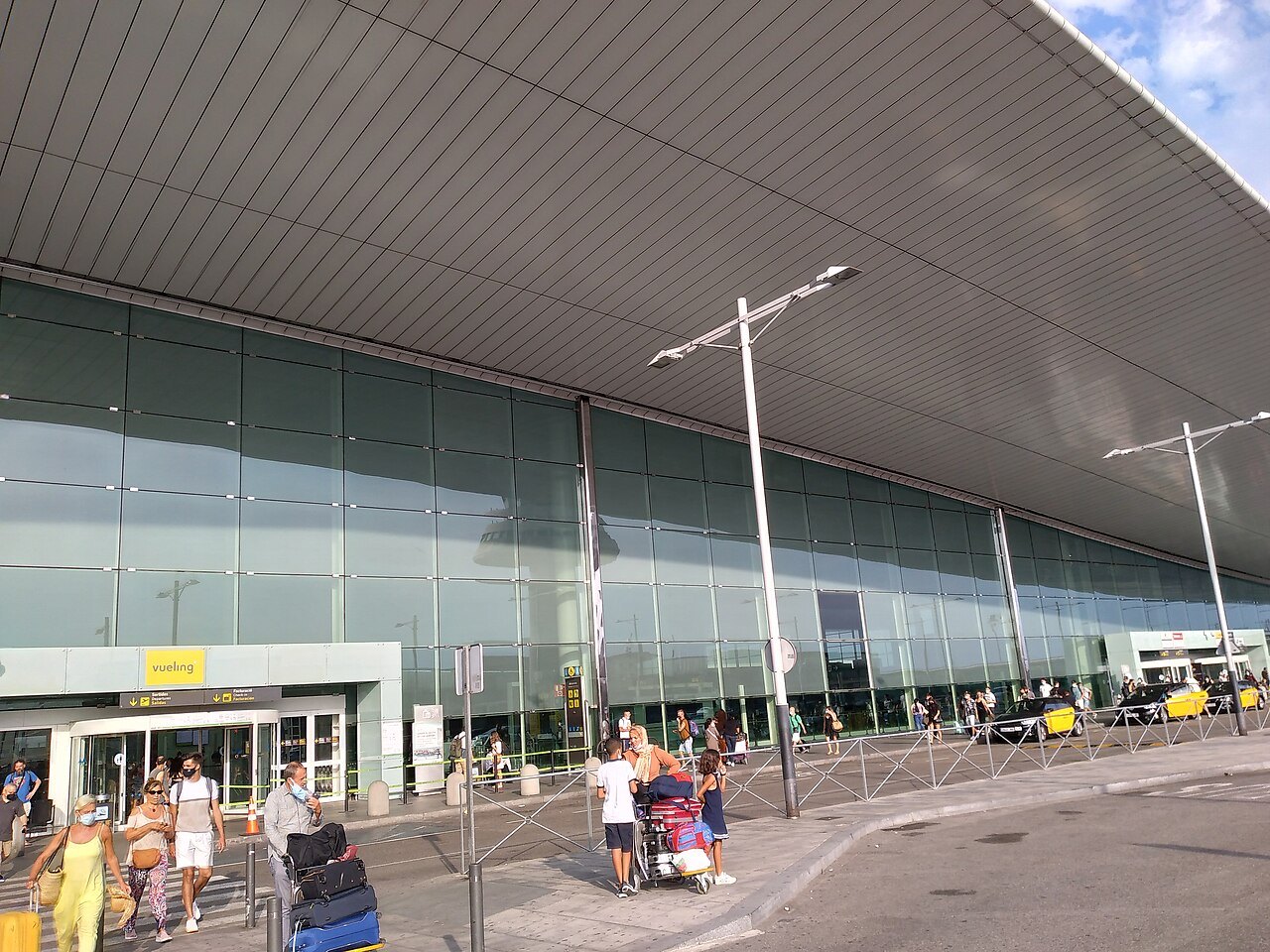
The front of an airport terminal, with arriving travelers and a taxi lane.CAPTAIN RAJU, Wikimedia Commons, CC BY-SA 4.0