Home · Where to Stay
Eight bases around the city
Where to stay
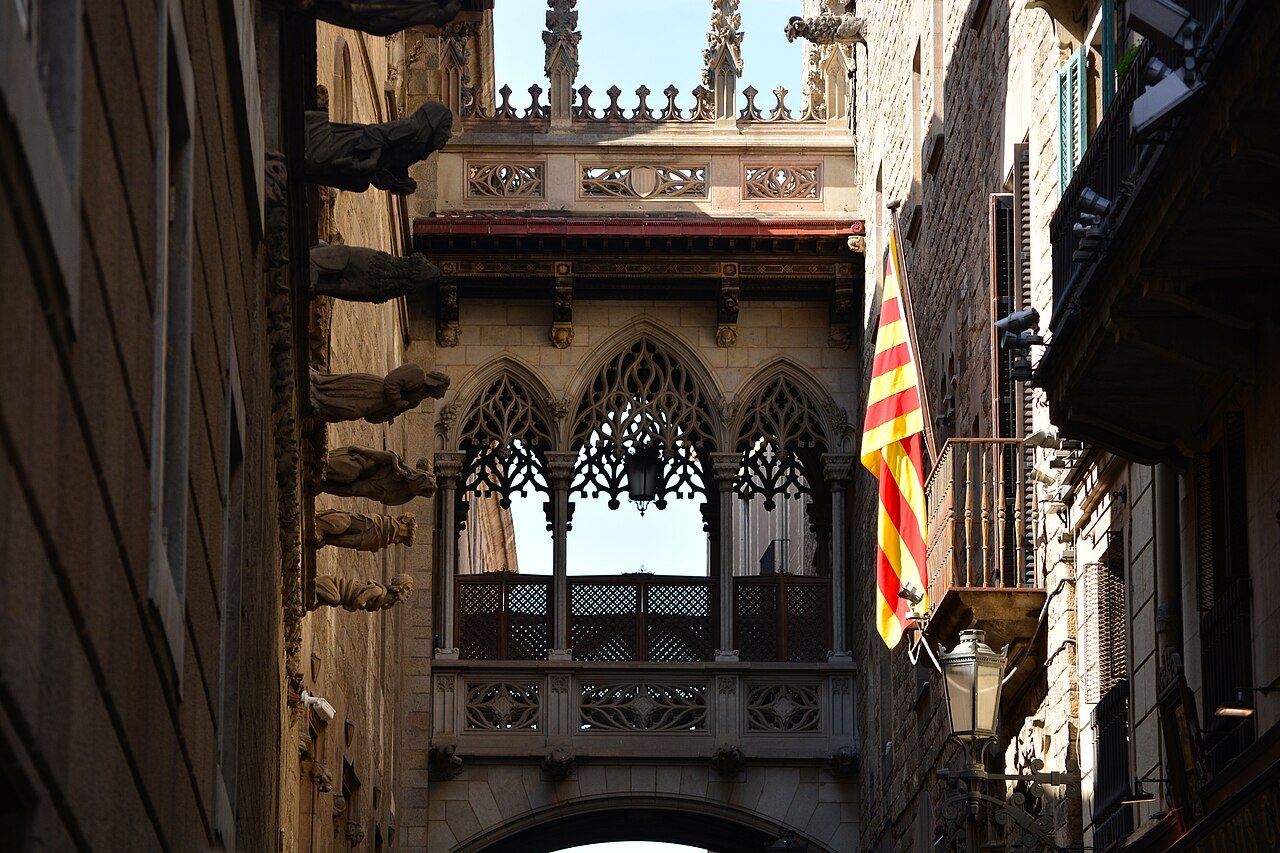
- The Gothic QuarterFirst visits, the cathedral and the Roman core, and everything within a short walkThe historic center of the old city, running from La Rambla to Via Laietana, with the cathedral, the Roman wall fragments and a maze of small streets and squares. Much of its Gothic character was restored in the early twentieth century.
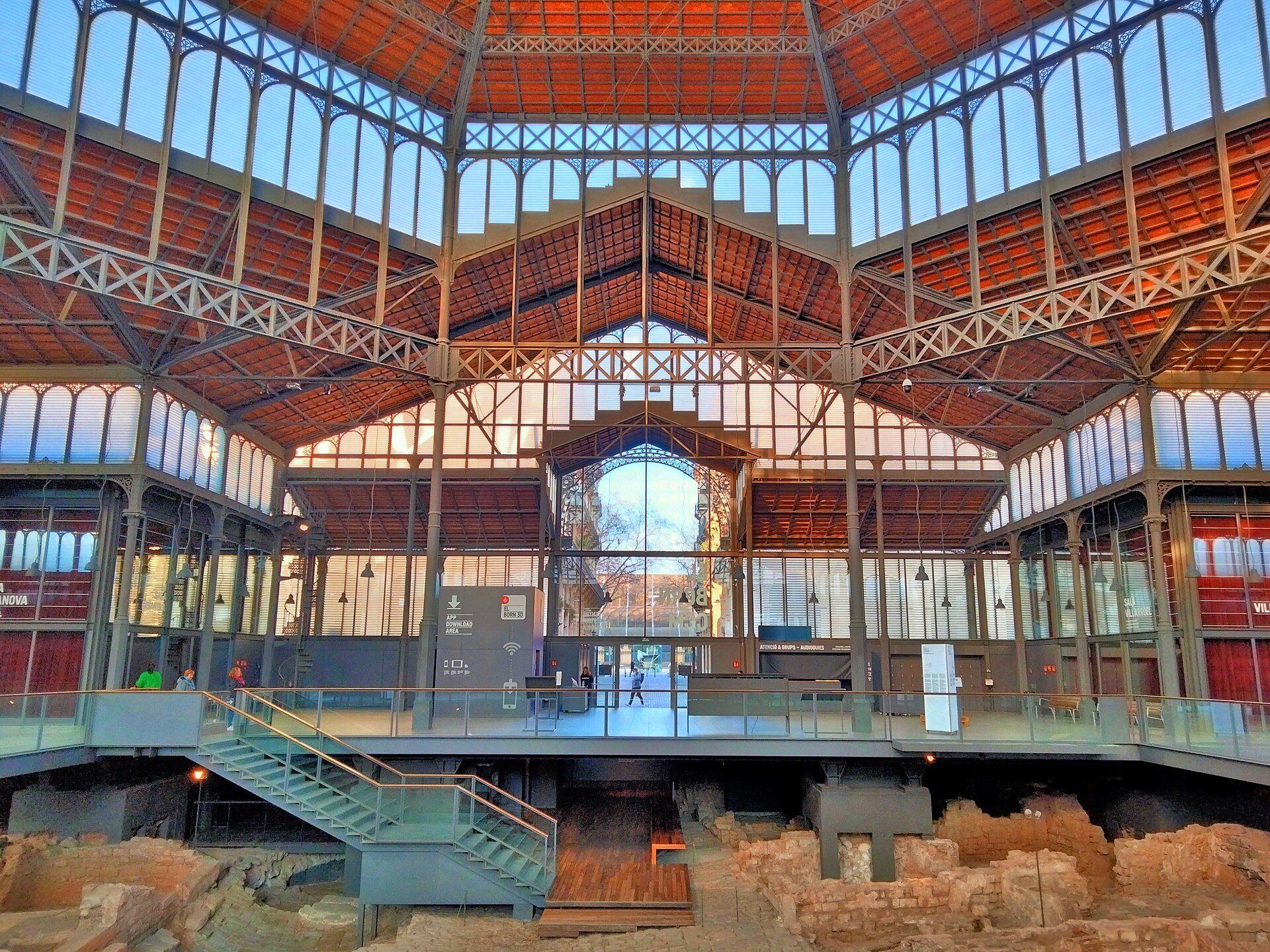
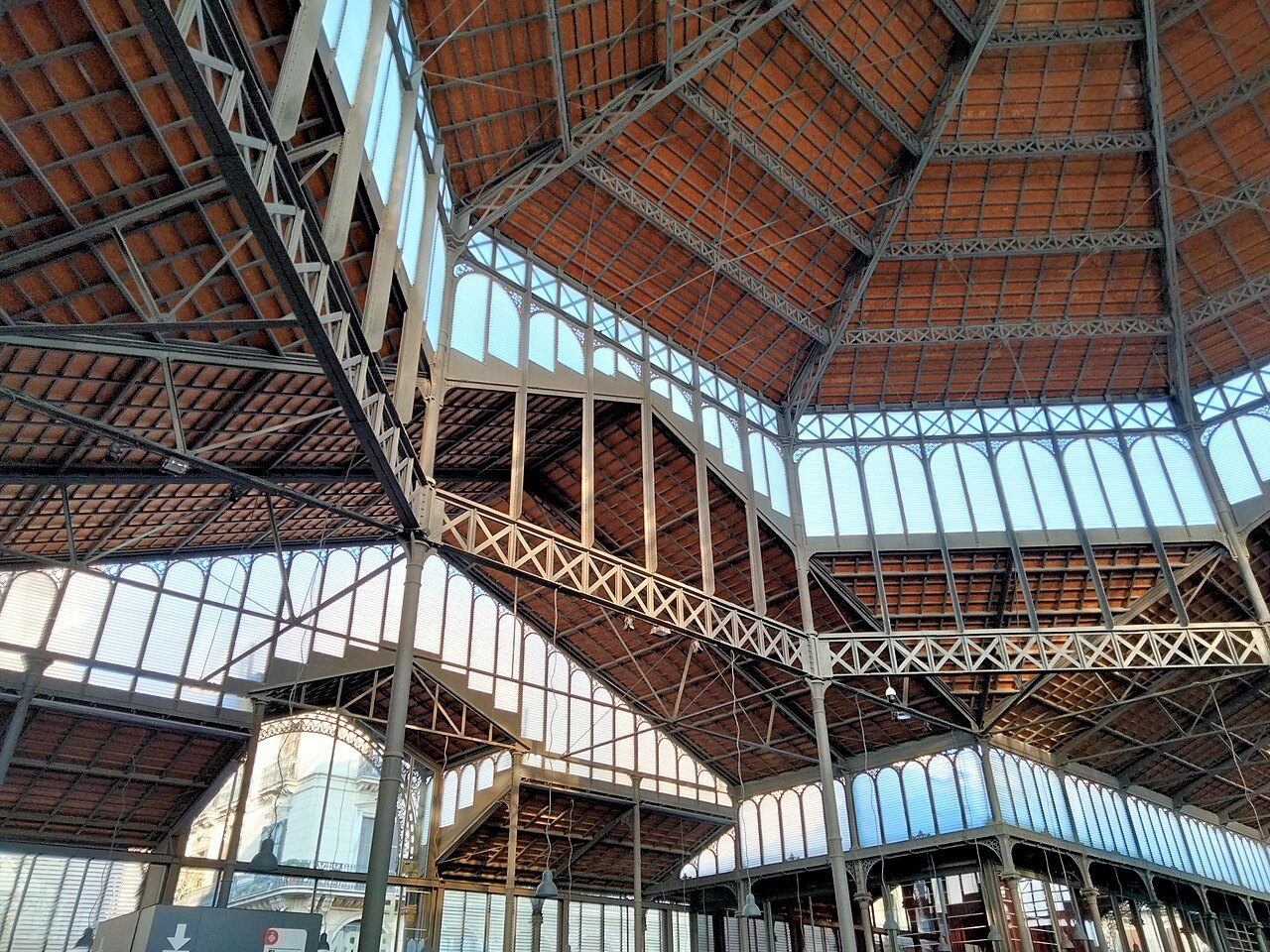
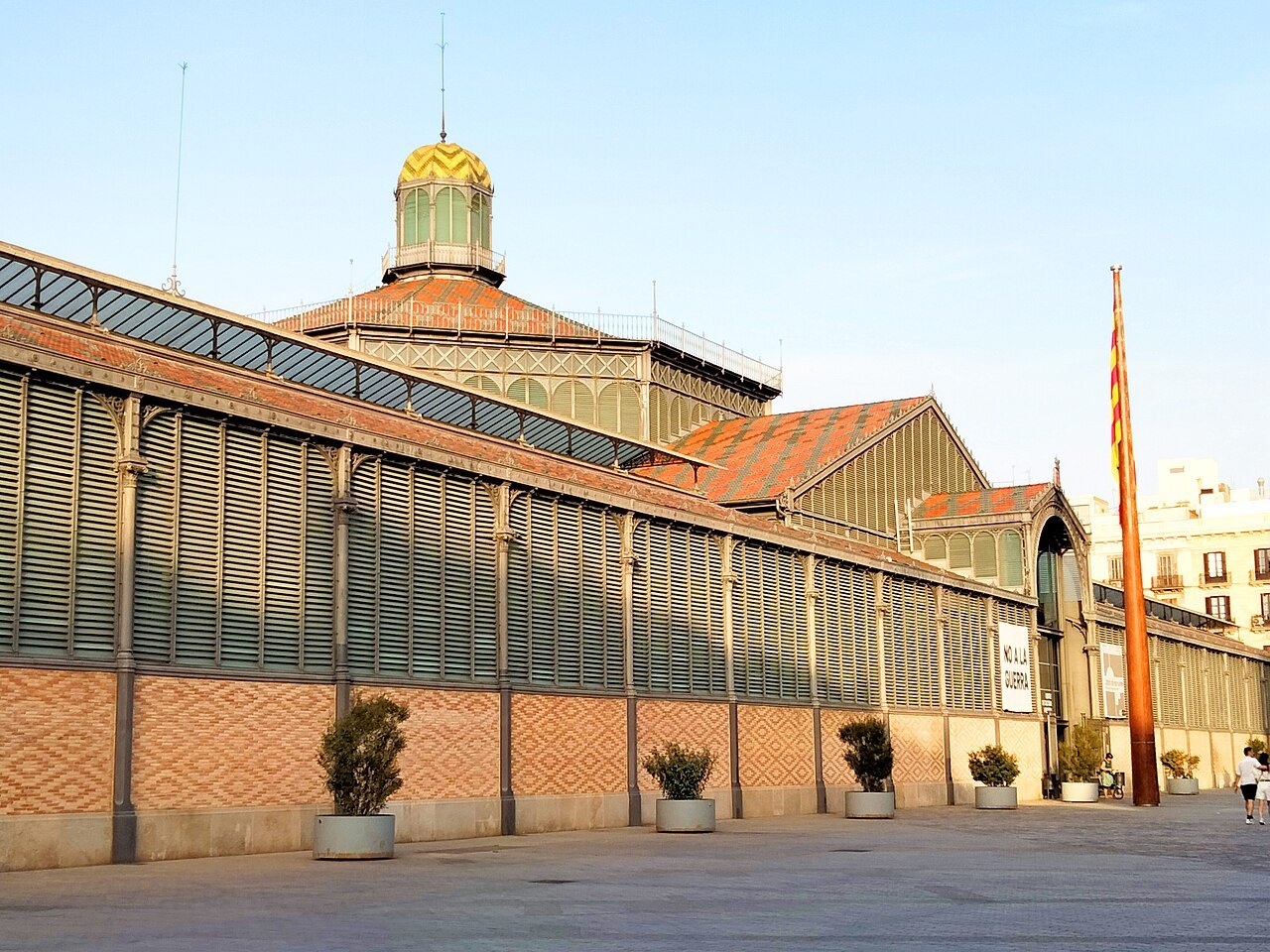
- El Born and La RiberaMedieval churches, palaces and a lively evening scene near the seaA medieval merchant quarter that once lay by the shore, now holding Santa Maria del Mar, the palaces of Carrer de Montcada and the former Born market. The lower part, El Born, is among the most visited districts of the old city.
- El RavalMuseums, contemporary art, and a mixed, multicultural neighborhood across the RamblaThe other historic neighborhood on the Rambla, once outside the walls. It is home to the Palau Güell, the contemporary art museum and the Rambla del Raval, and is known for a diverse population.
- The EixampleModernista architecture, wide avenues, shopping and a gridded, walkable baseThe nineteenth-century extension laid out on Ildefons Cerdà's grid of chamfered blocks. It holds Gaudí's Casa Batlló and Casa Milà on the Passeig de Gràcia, and the Sagrada Família.
- GràciaVillage squares, small shops and a local feel, a little north of the EixampleAn independent town until annexed by Barcelona in 1897, still organized around small squares. Its Festa Major each August is the largest neighborhood festival in the city, and Casa Vicens stands here.
- La BarcelonetaThe beach, seafood and a fishing-quarter grid of narrow streetsA triangle of narrow lanes built from 1754 on land reclaimed from the sea, beside the Port Vell and the city beach, with fish and paella restaurants and its own metro stop.
- PoblenouBeaches, a creative scene, parks and fewer visitors, a longer ride from the old cityA former industrial district, once called the Catalan Manchester, now a mix of converted factories and lofts, the Rambla del Poblenou, the 22@ technology district and the Torre Glòries.
- Poble-sec and MontjuïcAccess to the hill, the 1929 fair buildings and an easygoing neighborhood below itA neighborhood between Montjuïc and the Avinguda del Paral·lel, outside the old walls, with the hill's museums, gardens and the Olympic sites a short climb above.
Where to Stay
In full
Villages that became a city
Barcelona is divided into ten districts, but the neighborhoods that matter to a visitor are older than the districts. Gràcia was an independent municipality for centuries until it was annexed in 1897 along with Sants, Les Corts, Sant Gervasi, Sant Andreu and Sant Martí. Poblenou was a separate town too. The nineteenth-century extension, the Eixample, was laid out to join the old city to those towns.
That history is why moving between neighborhoods feels like moving between small towns, each with its own main square and its own festival, and why a base in one of them changes your experience of the city.
The old city
Ciutat Vella, the Old City, lies between the sea and the Eixample and is divided by La Rambla into the Gothic Quarter on the east and El Raval on the west, with La Ribera and El Born beyond the Via Laietana and La Barceloneta along the harbor. It is the densest concentration of sights, and almost everything is walkable.
The Gothic Quarter holds the cathedral, the Generalitat and the city hall, and its labyrinthine lanes are mostly closed to ordinary traffic. El Born, the lower part of La Ribera, is described as among the trendiest and most visited districts in the old city, a popular place with expatriates, full of boutiques, bars and cafés. The northern part, La Ribera proper and Sant Pere, is less touristic and is being revitalized, a process that has been contested.
Across the Rambla
El Raval is the other historic neighborhood that borders the Rambla and holds about fifty thousand people. Its name comes from an Arabic word meaning suburb: it stayed outside the city's walls for centuries and was home to convents, hospitals and mills before factories and tenements filled it in the nineteenth century. For decades it was known for its cabarets and nightlife, and its part nearest the port was informally called the Barri Xinès.
It has changed a great deal in recent years. A very diverse immigrant community lives here, and it now has many bars and restaurants, community spaces, the contemporary art museum MACBA and the Filmoteca de Catalunya. The Palau Güell stands a few steps from the Rambla.
The Eixample
The Eixample, meaning expansion, was built in the nineteenth and early twentieth centuries on a plan by Ildefons Cerdà: long straight streets, a strict grid crossed by wide avenues and square blocks with chamfered corners. Cerdà thought about traffic, sunlight and ventilation, and the streets widen at every intersection for visibility and air. His plan called for markets, schools and hospitals at regular intervals, and most of the markets remain on their original sites.
Many of his provisions were ignored, since the blocks were built up on all four sides and the streets are narrower than he planned, but the grid remains the hallmark of the city. The Eixample is where Modernisme flourished: Gaudí's Casa Batlló and Casa Milà on the Passeig de Gràcia, the Sagrada Família, and the work of Puig i Cadafalch, Domènech i Estapà, Vilaseca and Enric Sagnier, who was responsible for more than five hundred buildings across the city. The Casa Terrades, better known as the Casa de les Punxes, stands where the Avinguda Diagonal meets Carrer de Rosselló; Puig i Cadafalch built it in 1903 to 1905 and set Nordic Gothic and Spanish Plateresque ideas side by side with traditional Catalan motifs.
Gràcia and the north
Gràcia lies north of the Eixample at the foot of the Serra de Collserola. It was founded in 1626 by a Carmelite novitiate that built a convent, Our Lady of Grace, and it remained independent until 1897. Its Festa Major, begun in 1817, is the largest neighborhood festival in Barcelona and runs for eight days every August, with residents competing to decorate their streets.
A day here is a different pace from the center: small squares, local shops, and Gaudí's first major house, Casa Vicens. The district also includes La Salut, where Park Güell sits.
The sea side
La Barceloneta is a triangular neighborhood built in the eighteenth century on a spit of reclaimed land for the families displaced by the construction of the citadel. It is bordered by the sea, the Moll d'Espanya of the Port Vell and El Born, and has its own metro stop. Its charm lies in its narrow streets, and the beach is the liveliest in the city in summer.
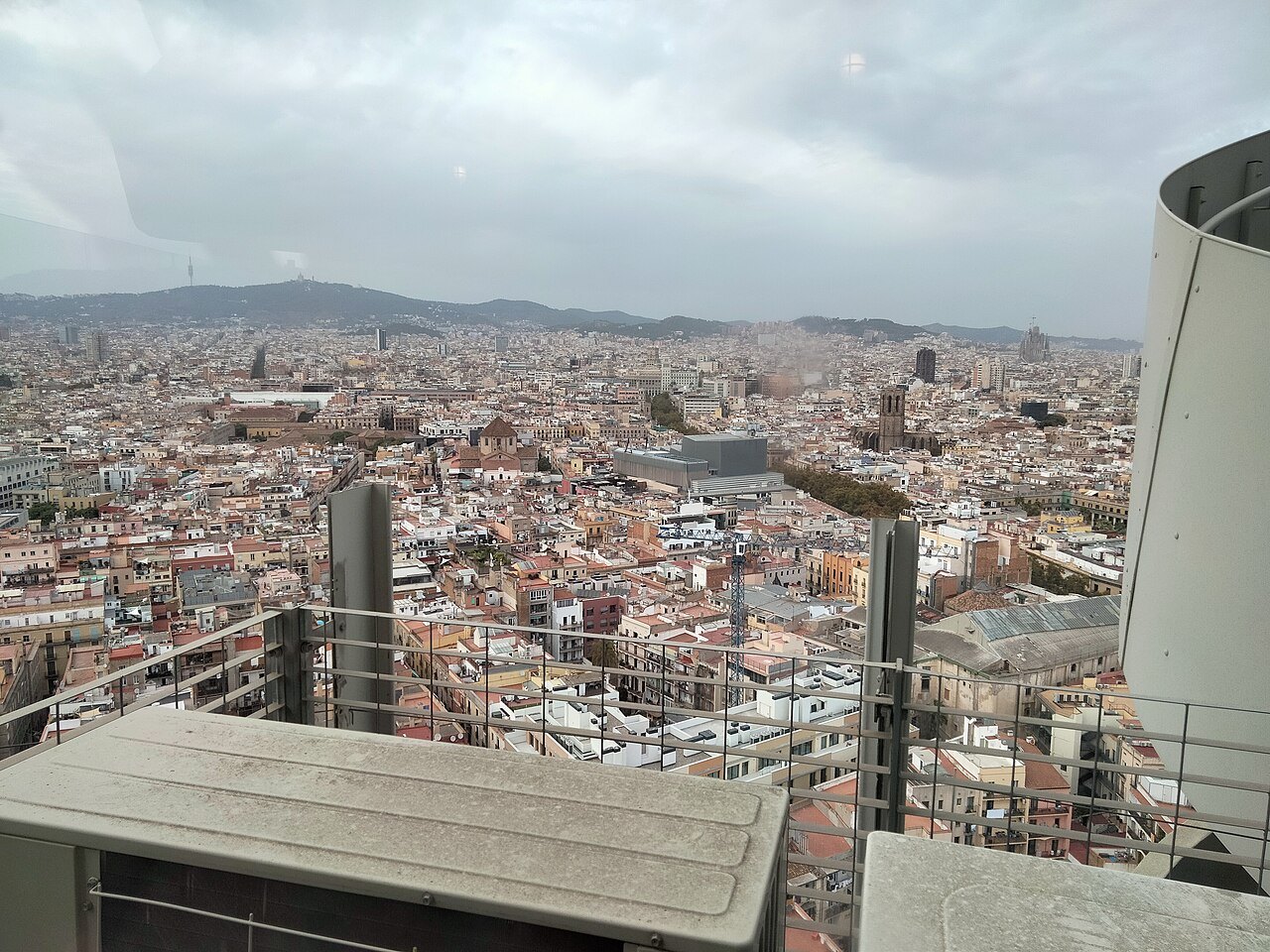
Further northeast, Poblenou was the epicenter of Catalan industry and is now a district of converted factories, artists' lofts and design studios, with a leafy Rambla that runs to the beach. The Olympic Village, the Diagonal Mar area and the Fòrum are products of the 1992 Games and later projects.
The hill side
Poble-sec, meaning the dry village, lies between Montjuïc and the Avinguda del Paral·lel and covers about seventy hectares. It began to develop in the nineteenth century when people moved outside the old walls, and you can still see fragments of the medieval wall at the end of the Paral·lel, beside the maritime museum.
The wider district of Sants-Montjuïc is the southern part of the city, including Sants, with the main railway station, the Hostafrancs and La Bordeta areas, and the hill itself. A base here is practical for trains and for Montjuïc. The district's main shopping street, the Carrer de la Creu Coberta, is famous for its many shops, and the district was itself a separate municipality before it was added to Barcelona, with its main nucleus in Sants.
Choosing a base
A first visit works well from the Gothic Quarter, El Born or the lower Eixample, where metro lines cross and the main sights are in walking distance. Return visits and longer stays suit Gràcia, Poblenou or Poble-sec, which give the city a more residential feel at the price of a longer ride to the center.
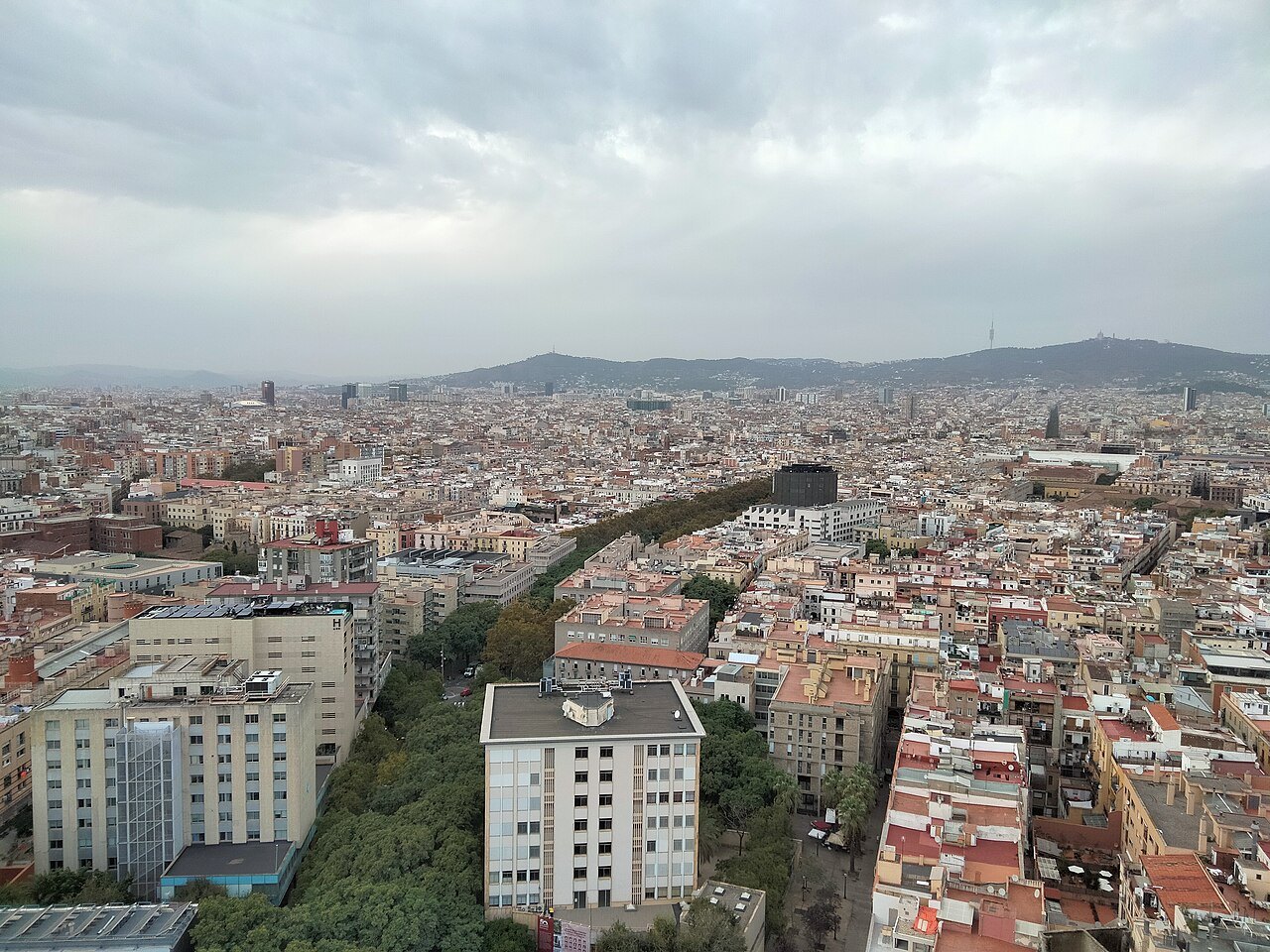
Whichever neighborhood you choose, check that a metro station is close, and look at the street the room faces, since the busiest nightlife streets are loud. For arrivals see the getting here guide, and for moving about see the guide to getting around.
More photographs
Seen on the way
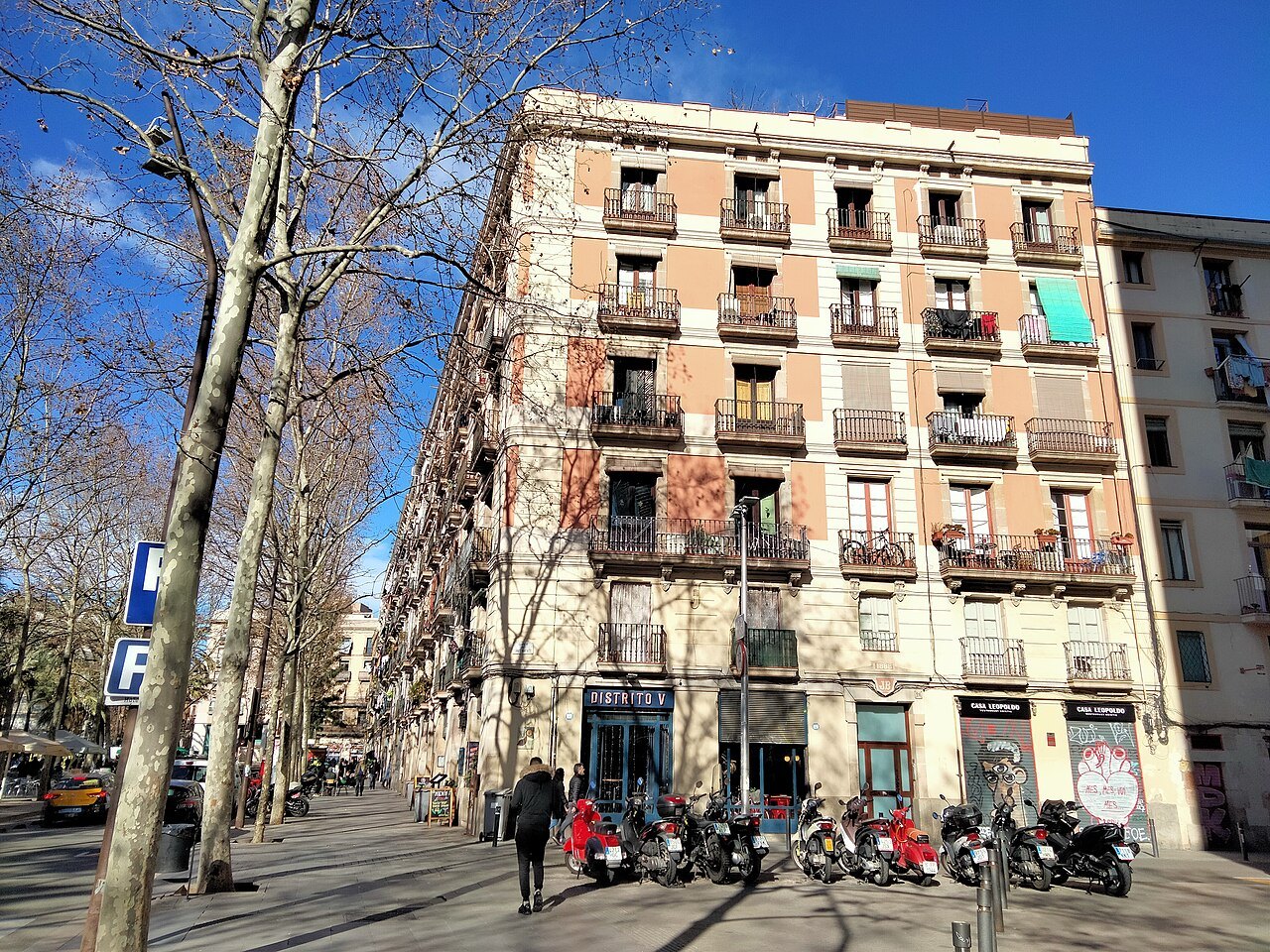
An apartment building with balconies and bare trees on a street in the Raval.Enric, Wikimedia Commons, CC BY 4.0 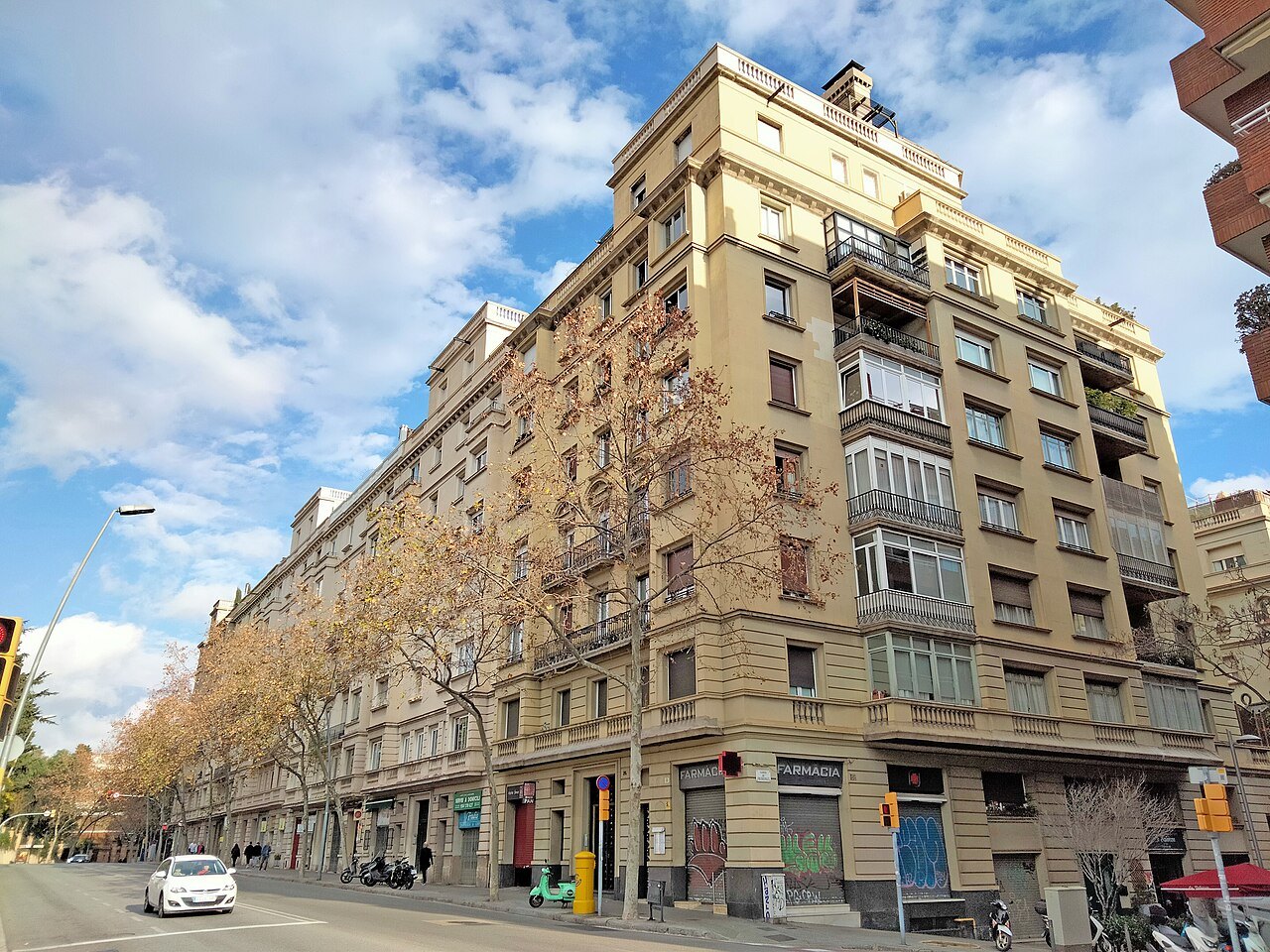
A long apartment block on a wide avenue lined with bare trees.Enric, Wikimedia Commons, CC BY-SA 4.0