Tibidabo: the highest hill above the city
What you are looking at
Collserola
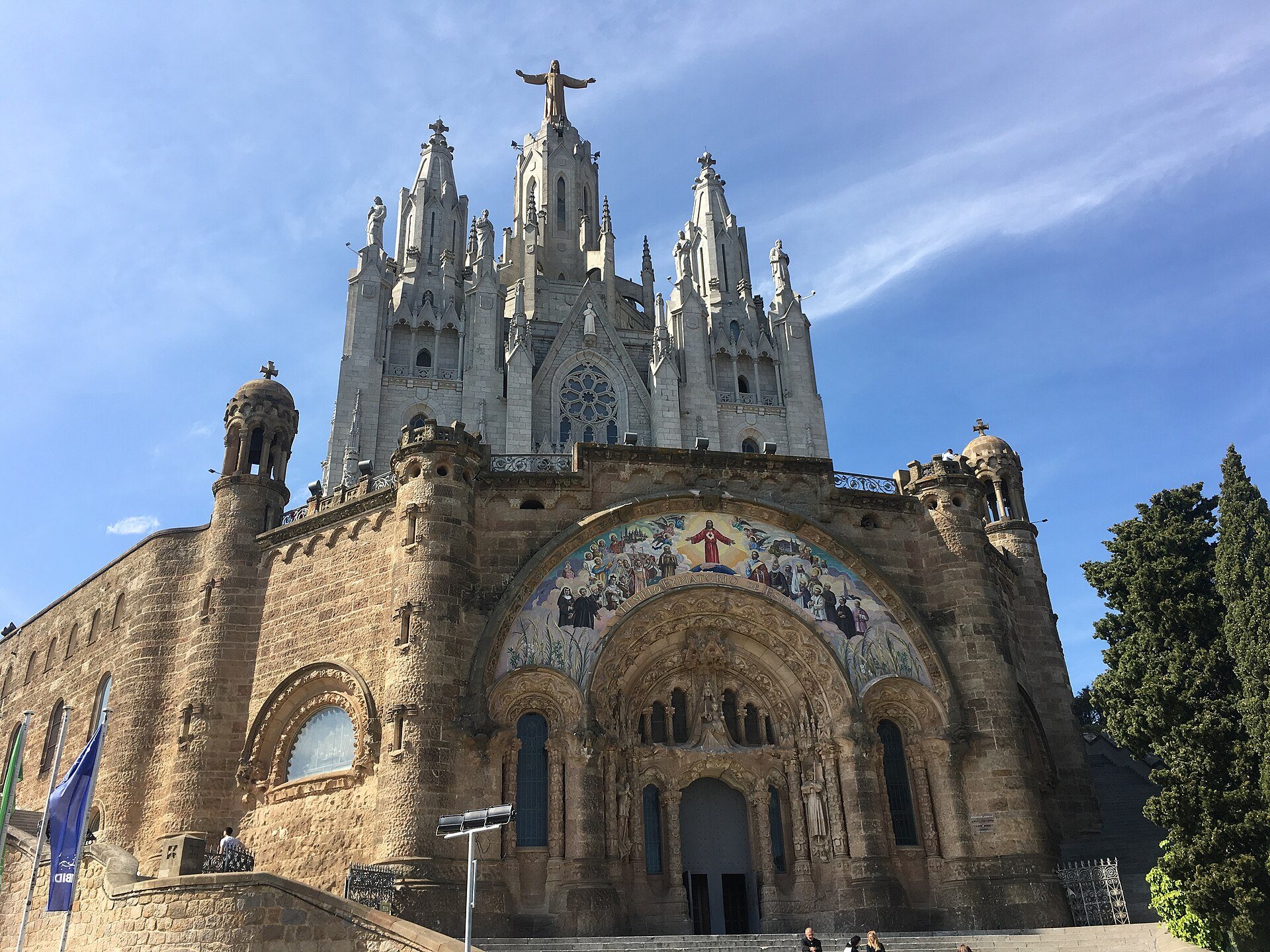
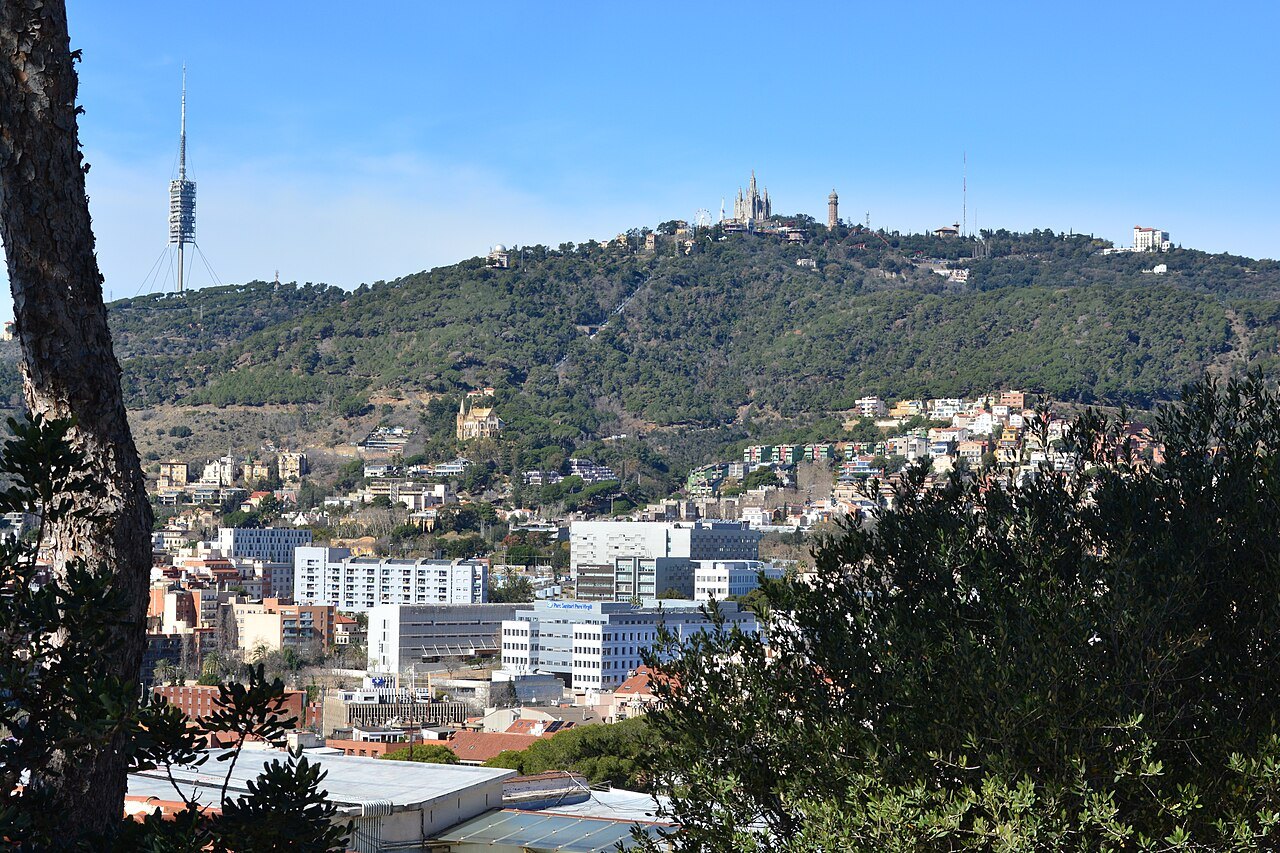
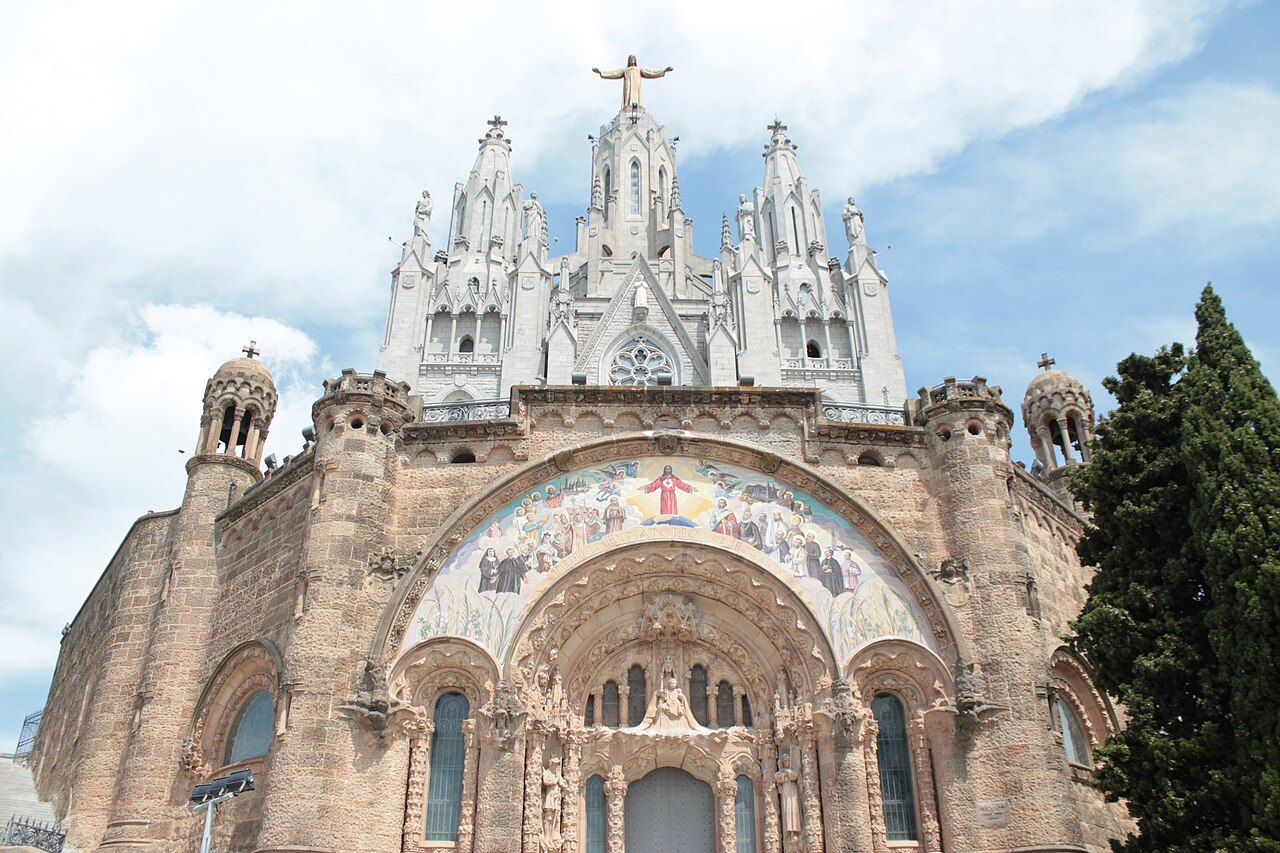
- 1The Sagrat Cor churchA church by Enric Sagnier, begun in 1902 and sixty years in the building, topped by a sculpture of the Sacred Heart.
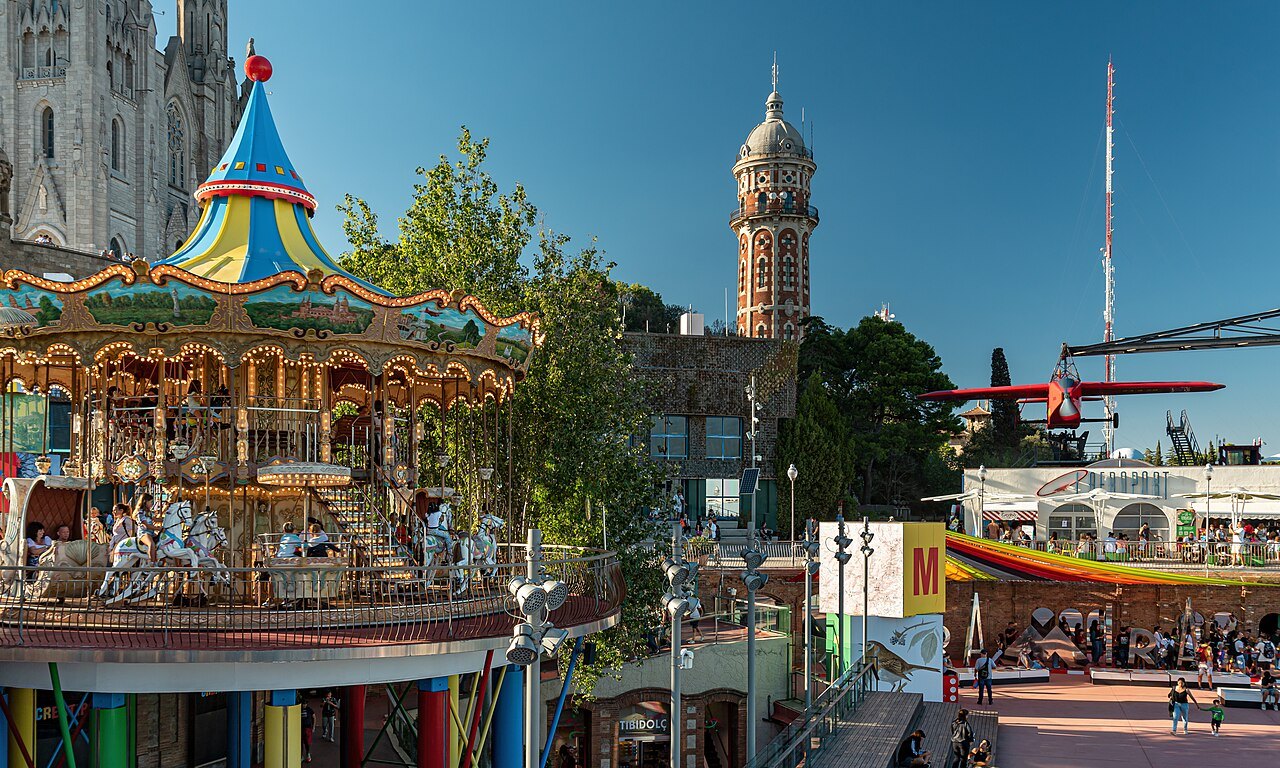
- 2The amusement parkThe fairground at the summit, beside the church.
- 3The funicularThe Tibidabo Funicular, the first of its kind in Spain.
- 4The Tramvia BlauA blue heritage tram that climbed Avinguda del Tibidabo from 1901.
- 5The Torre de CollserolaA telecommunications tower built for the 1992 Games, designed by Norman Foster.
Reading the place
The sight in full
The tallest hill of the Serra
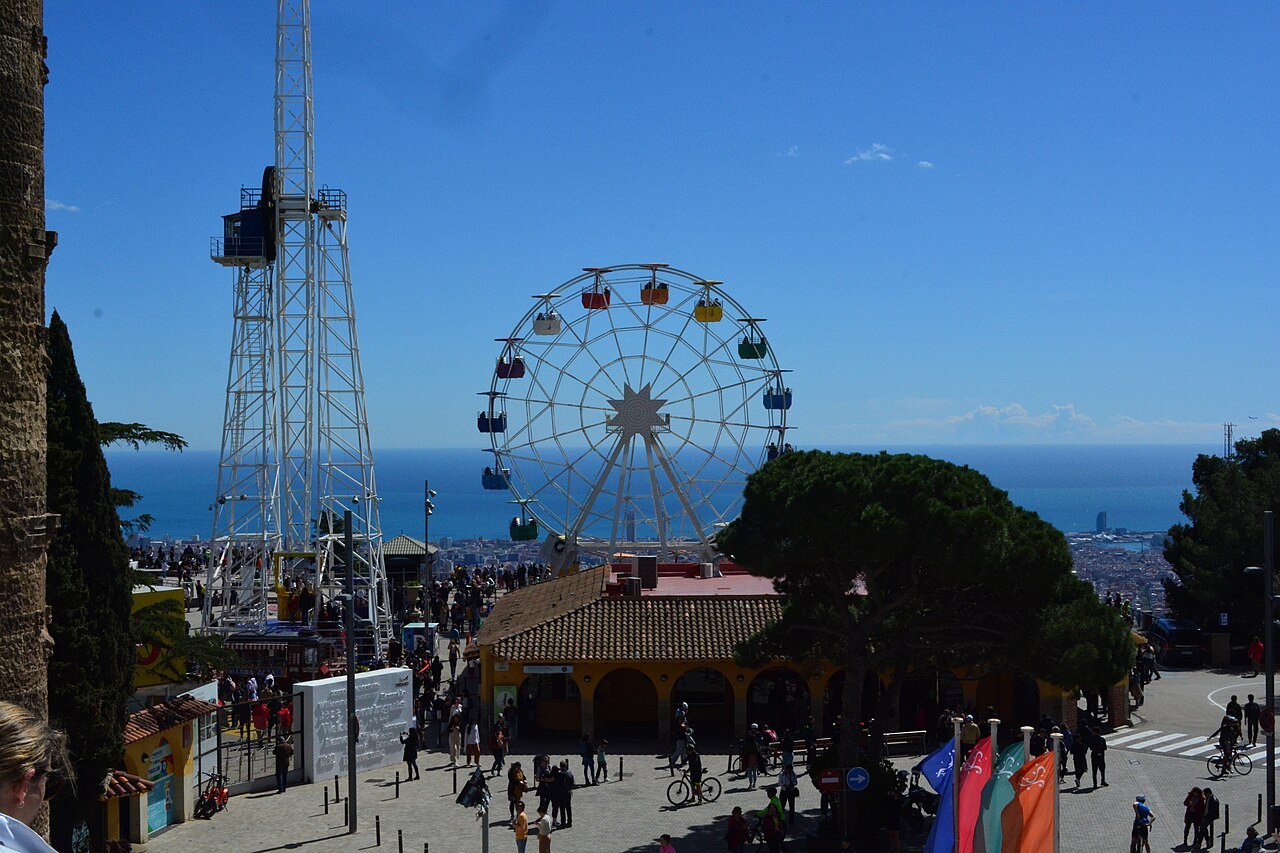
Tibidabo, at five hundred and twelve meters, is the tallest hill in the Serra de Collserola, a mountain range between the Besòs and Llobregat rivers that is part of the Catalan Coastal Range. It rises sharply to the northwest of the city and has views over Barcelona and the surrounding coastline.
The Serra separates Barcelona from the Vallès plain, and its other main summits include the Turó del Puig, the Puig d'Olorda and the Turó de Valldaura.
What is on the summit
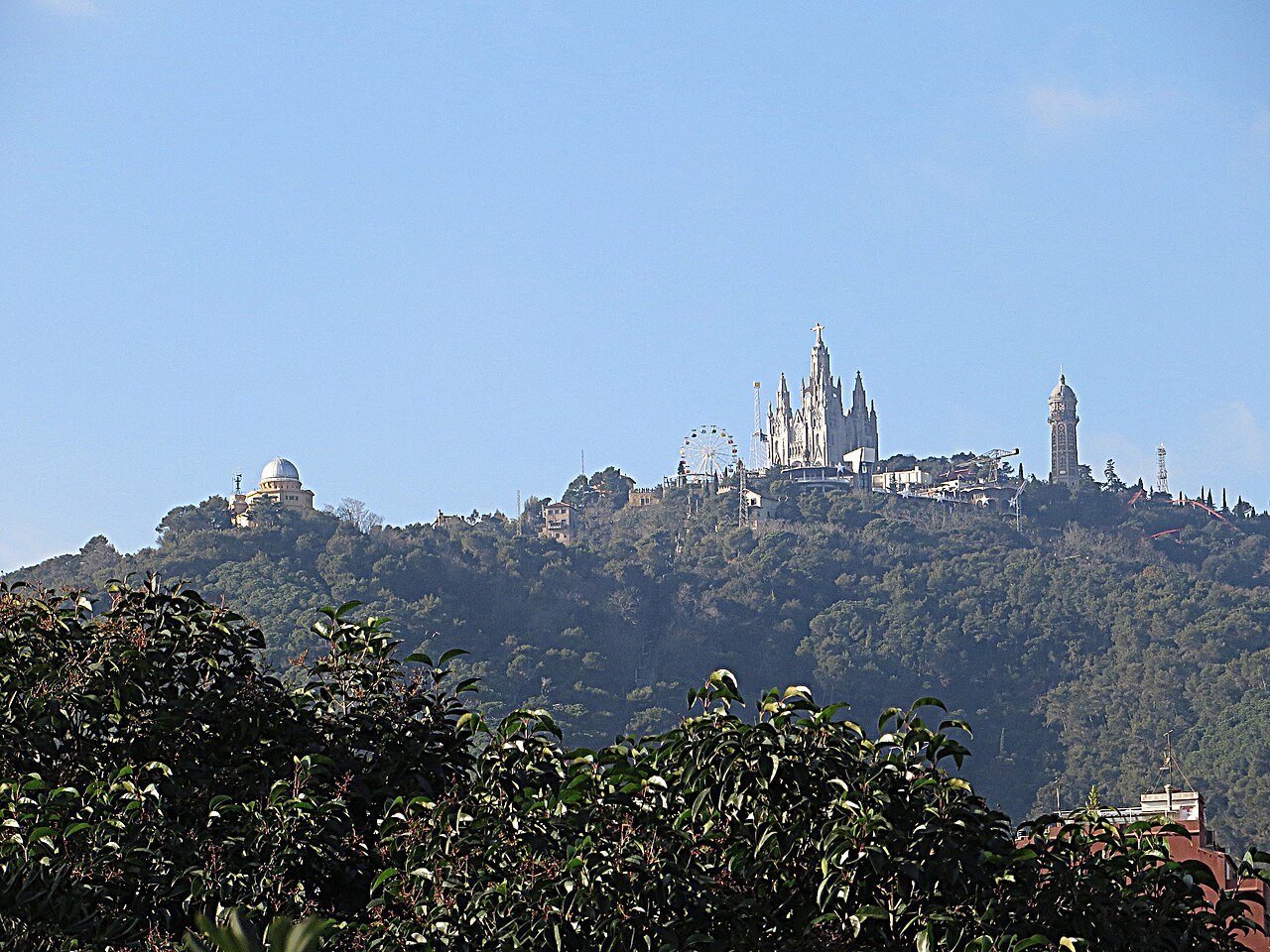
The summit is occupied by the Sagrat Cor church and the adjacent Tibidabo amusement park, and the Torre de Collserola telecommunications tower is a short walk away. All three are prominently visible from most of the city.
The church was designed by Enric Sagnier and begun in 1902, and it took sixty years to finish. It is topped by a sculpture of the Sacred Heart of Jesus by Josep Miret Llopart.
The amusement park
The pharmacist Salvador Andreu proposed an amusement park on Tibidabo in 1899, and building of the blue tram and the funicular began in June 1900; both were inaugurated on 29 October 1901. The first rides opened in 1905 and were modest, among them binoculars, mirrors, automaton displays and games.
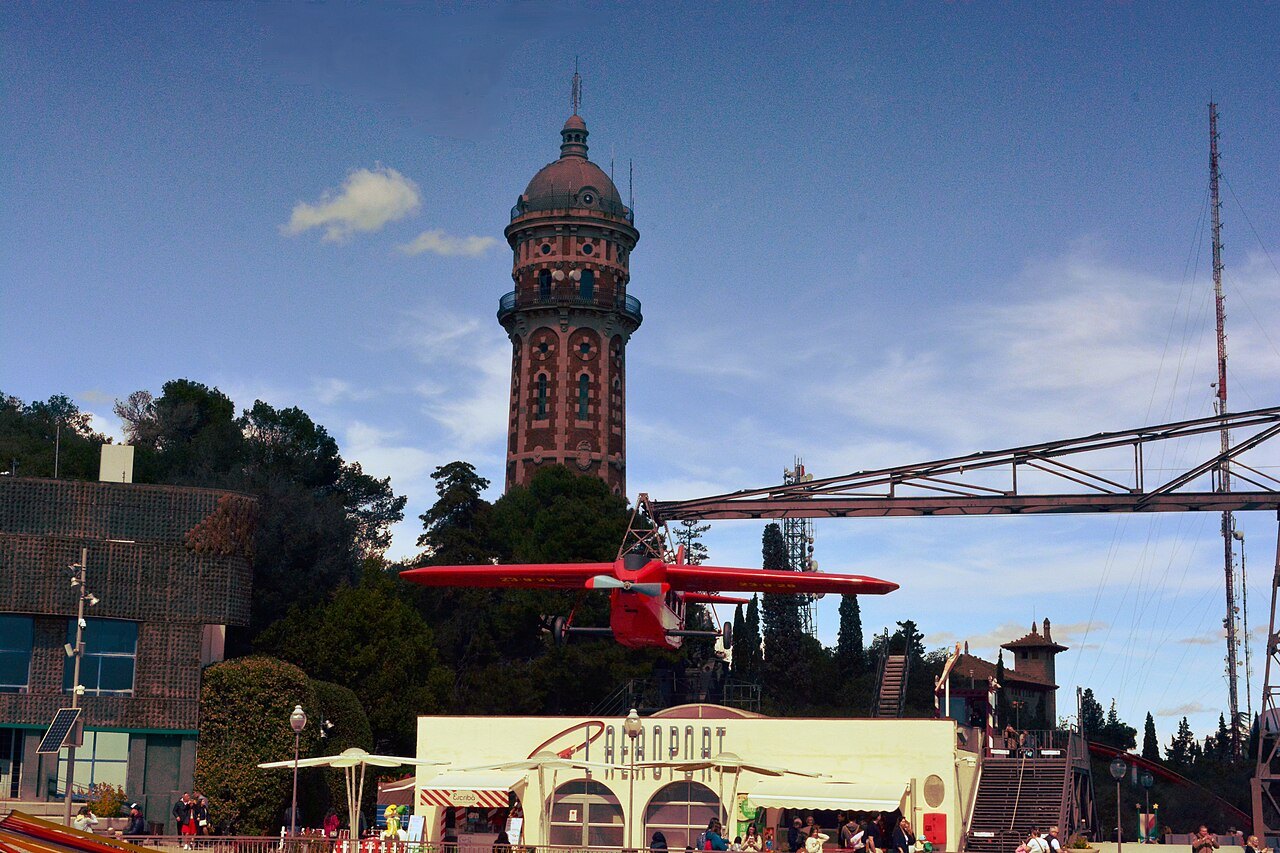
Three early rides still run: the Avió, a replica of the first commercial airplane from Madrid to Barcelona, from 1928; the Embruixabruixes, from 1915, originally an aerial railway; and the Talaia, an observation ride that opened on 18 December 1921, which then reached the highest point accessible on the mountain, since the church was not yet complete. The park's Museum of Automata, a collection of mechanical figures whose oldest piece, a mandolin-playing clown, dates from 1880, has been there from the beginning.
Where the name comes from
The name comes from several verses of the Latin Vulgate Bible. In the Gospel of Matthew, the devil tempts Jesus from a high mountain, showing him all the kingdoms of the world and saying, in Latin, tibi dabo, I will give to you. The same words appear in Luke.
The name could reflect a folk belief that Barcelona's hill was the biblical mountain, or, more likely, it is a tongue-in-cheek transfer of the scene to Barcelona, to show how glorious and tempting the city could be seen from above.
The Tramvia Blau
The Tramvia Blau, the Blue Tram, is one of Barcelona's three tram systems: a heritage line that is a little more than a kilometer long and runs between the terminus of metro line 7 and the Tibidabo Funicular. It was built at the instigation of Dr. Salvador Andreu, who was building a residential project along Avinguda del Tibidabo, and was inaugurated in 1901. Its distinctive blue paint gave it its name.
It is one of only two first-generation tramways to survive in Spain, together with the tramway at Sóller in Majorca. Between 1971 and 2004, when the Trambaix and Trambesòs lines opened, it was the only tram route in the city. Operation ceased on 28 January 2018 pending reconstruction, and in November 2025 the mayor announced plans to rebuild and reopen it together with work on Avinguda del Tibidabo; design work for that project is not expected to be done until 2027.
Getting up
Tibidabo can be reached by road or by the Tibidabo Funicular, the first of its kind in Spain, and operations of the funicular resumed in June 2021 after modernization. A replacement bus links Tibidabo with the Avinguda de Tibidabo metro station, and a municipal minibus connects it to the village of Vallvidrera and the upper station of the Vallvidrera funicular.
Check the current arrangements for each link before going, because the transport on the hill has changed several times.
The Collserola park
To preserve the area, the Parc de Collserola was established in 1987. It covers about eighty-five square kilometers and is one of the largest metropolitan parks in the world, eight times larger than the Bois de Boulogne in Paris and twenty-two times larger than Central Park in New York.
Over a thousand major plants and about thirty plant communities have been catalogued, from Aleppo pine and nut pine forests to evergreen oak woods, and wildlife includes wild boar, foxes, genets, badgers and squirrels, with many birds. Barcelonans use the park for walking, cycling and birdwatching, and a ridge path called the Carretera de les Aigües, the Water Road, has been improved for cyclists.
The tower on the hill
On the Vilana hill, at four hundred and forty-five meters, stands the Torre de Collserola, a telecommunications tower built in 1992 for the Olympic Games. It is about two hundred and eighty-eight meters tall and was designed by the British architect Norman Foster.
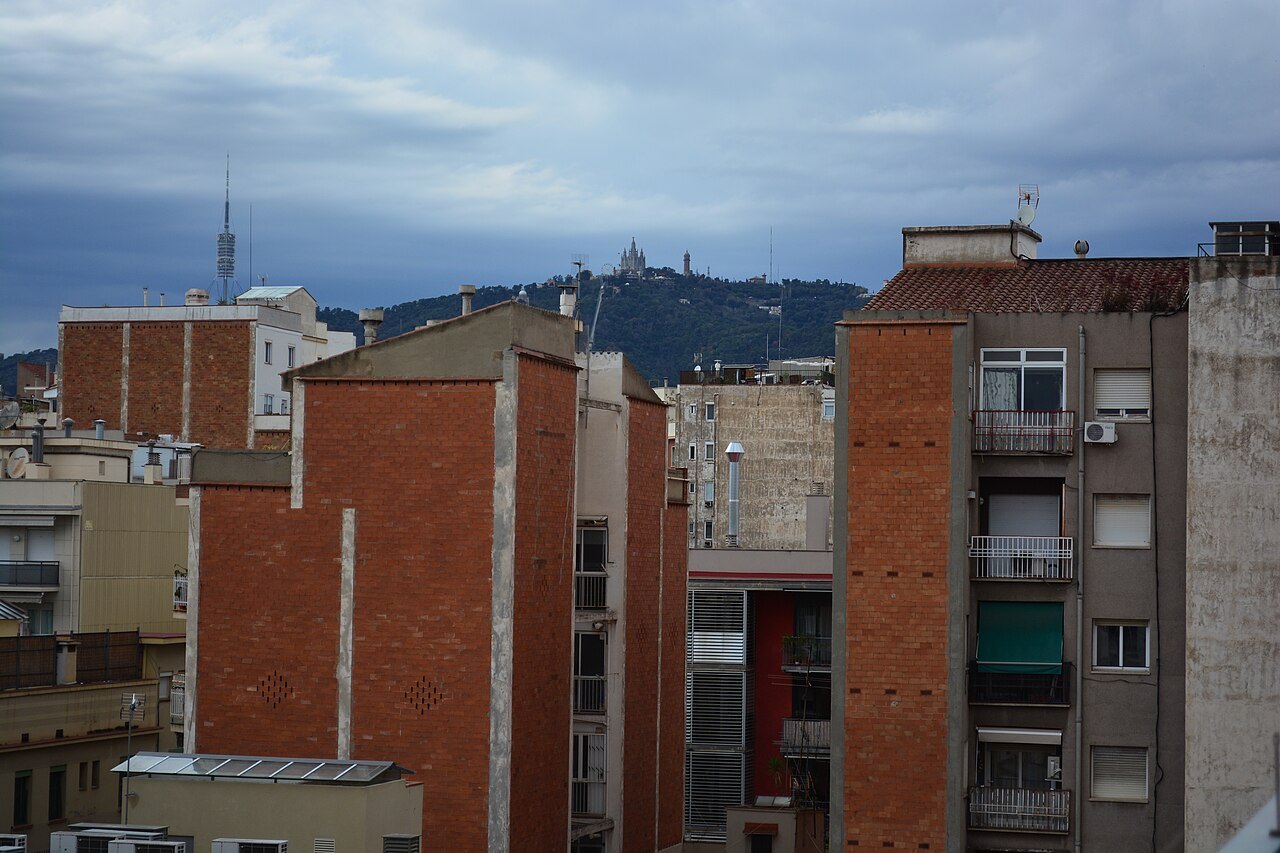
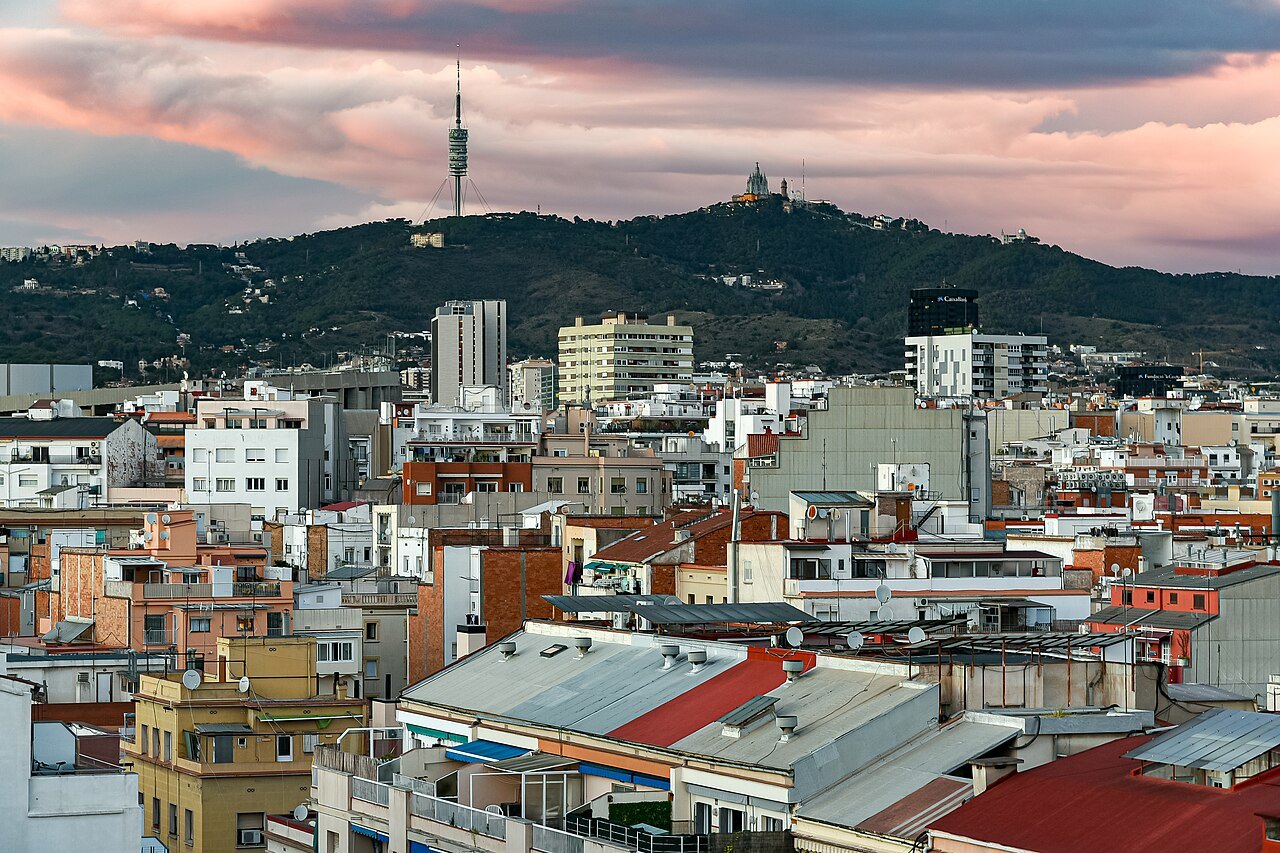
Seen from the city, the tower, the church and the amusement park form the skyline of the northern edge, a counterpart to the cranes and spires of the basilica in the Eixample. The park's own ownership has changed over the years: after financial trouble and bankruptcy in 1999, the Barcelona City Council bought it in 2000.
Hills compared
Barcelona has two famous hills, and they could hardly be more different. Montjuïc, near the sea, is a broad, shallow rise of about a hundred and eighty-five meters, layered with fortress and fair buildings. Tibidabo is nearly three times as high, wooded and steep, and belongs to the mountain range that closes the city to the north.
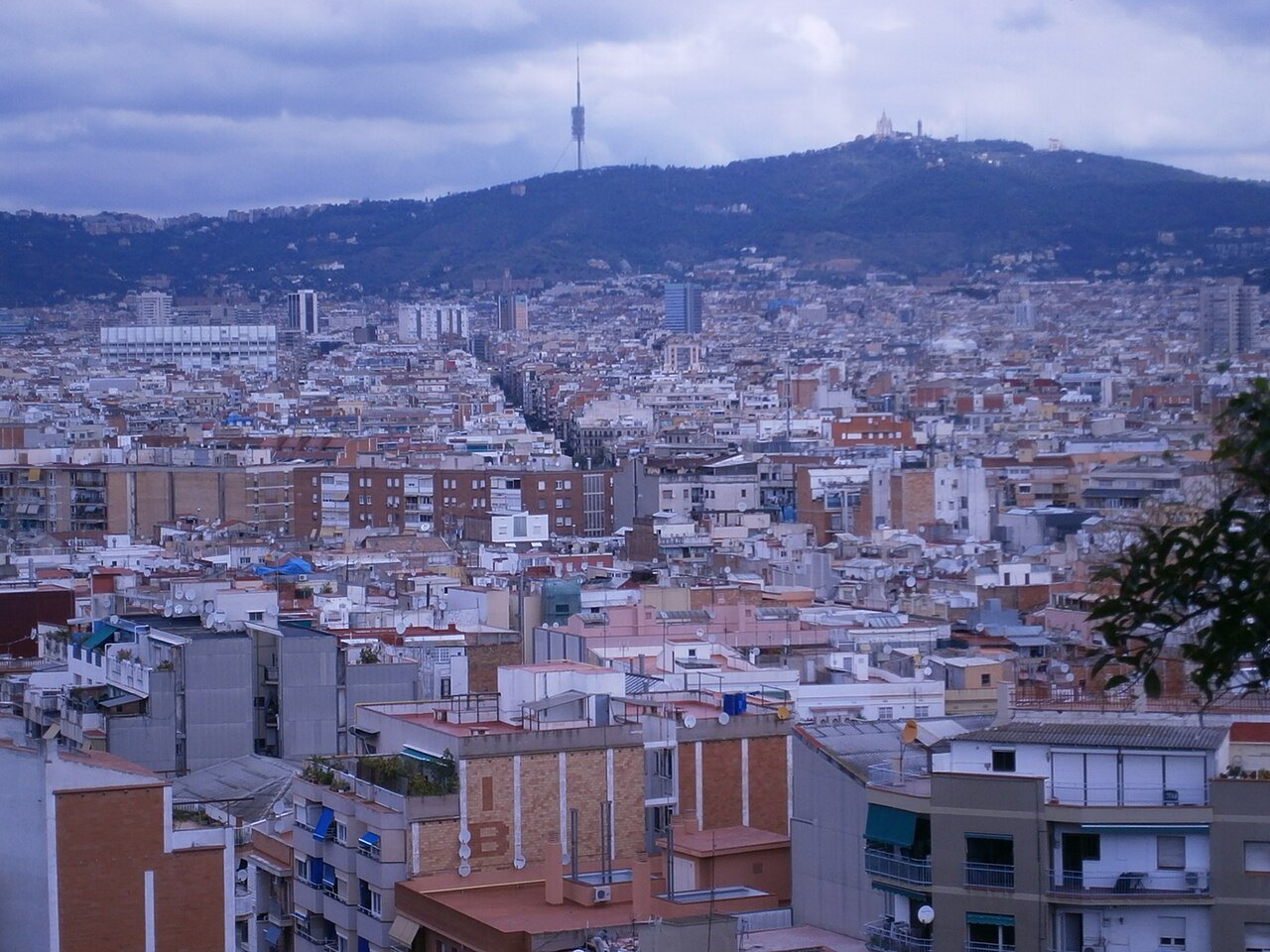
The Park Güell sits on the southern slope of the Turó del Carmel, another part of the same Collserola range, so the two can be seen as steps up toward the summit.
Nearby
Where to go next
- Nearby · Gràcia · Turó del CarmelPark GüellPark Güell is a hillside garden of curving stone viaducts, mosaic-covered benches and two gingerbread gatehouses, laid out between 1900 and 1914 for a housing estate that was never built.Read the page →
- Nearby · EixampleThe Sagrada FamíliaThe Basílica de la Sagrada Família is a church that took more than a century and a half to raise, and its great central tower reached full height in 2026.Read the page →
- Nearby · GràciaCasa VicensCasa Vicens is the summer house Antoni Gaudí designed for a stockbroker in what was then the separate town of Gràcia.Read the page →