Home · Sights · La Barceloneta
La Barceloneta: the fishermen's quarter and the city beach
What you are looking at
Ciutat Vella · seafront
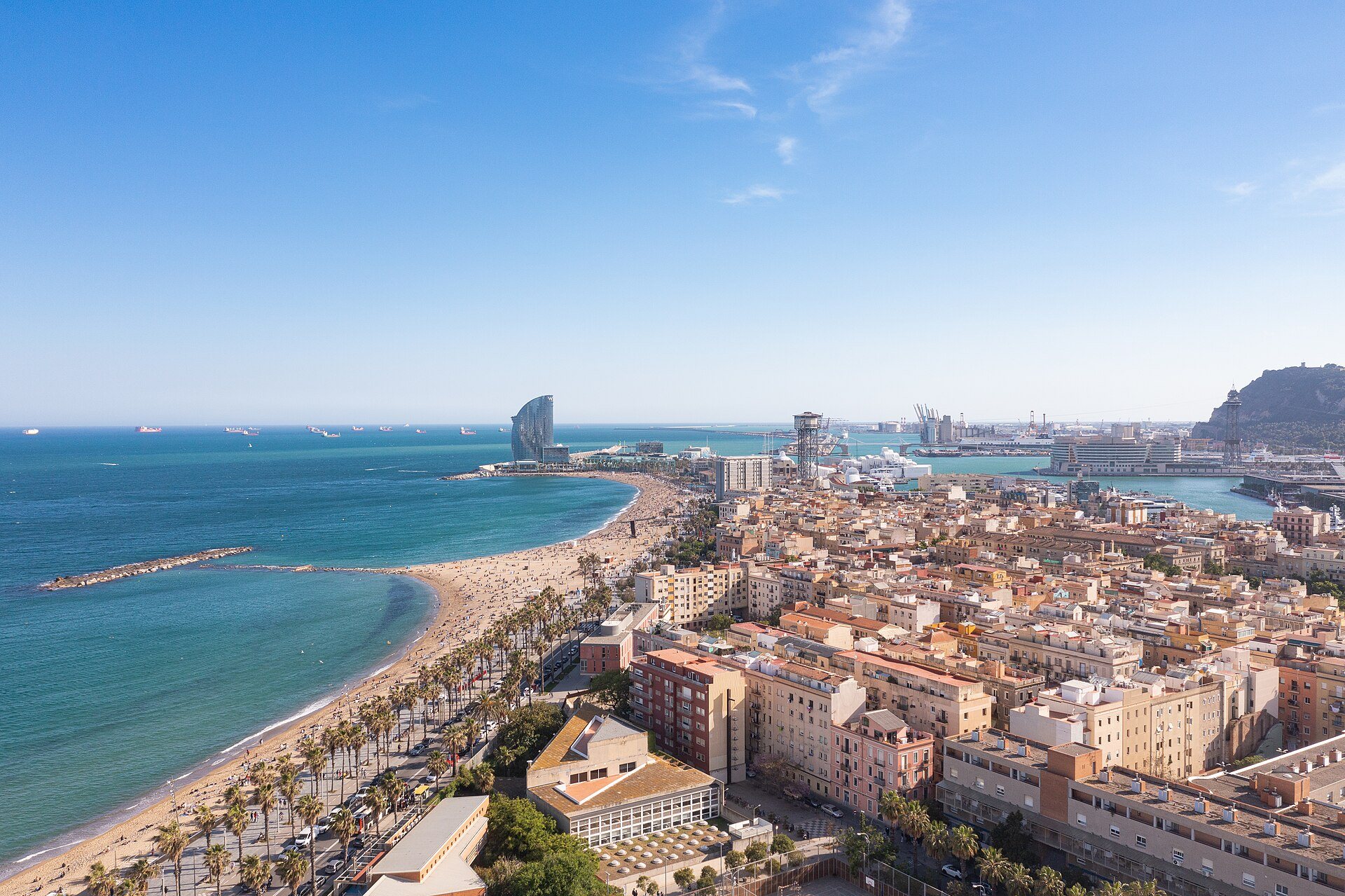
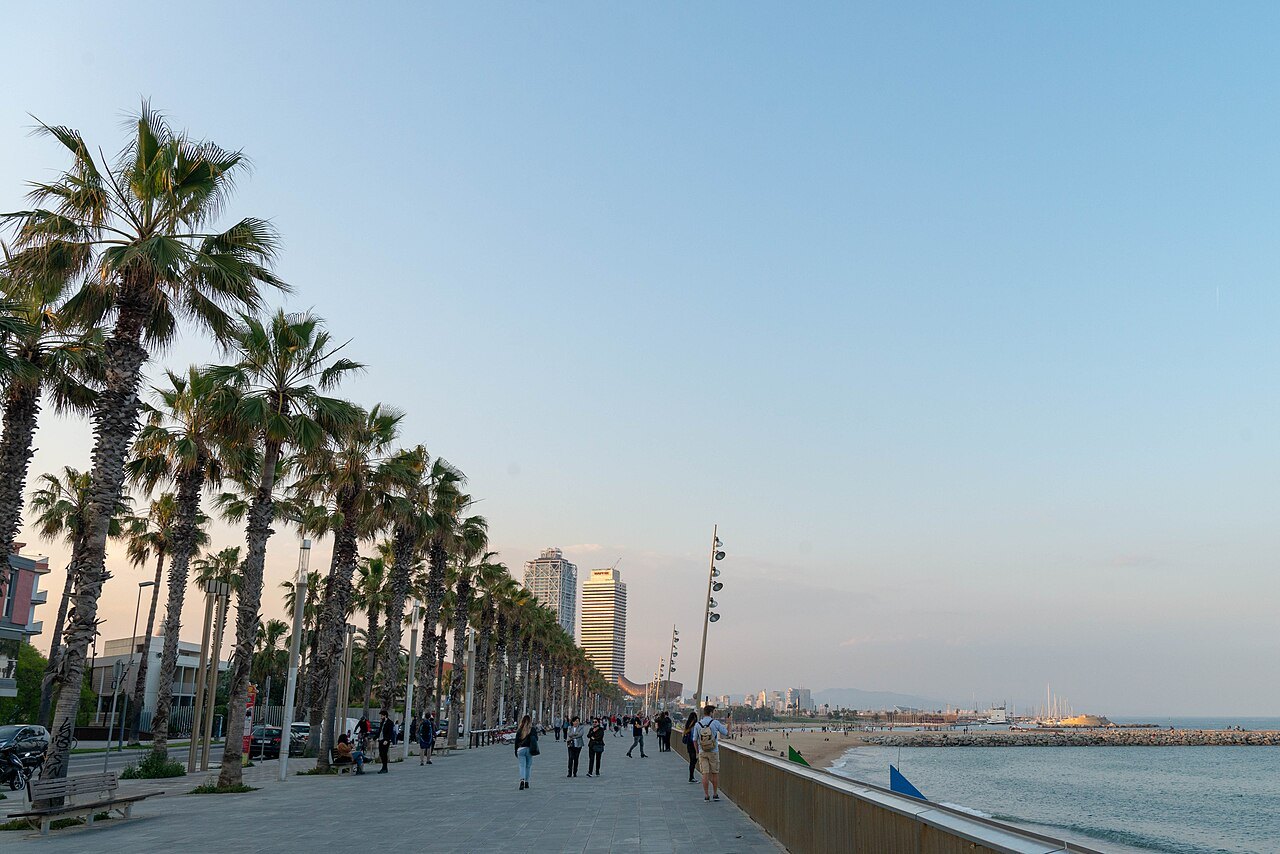
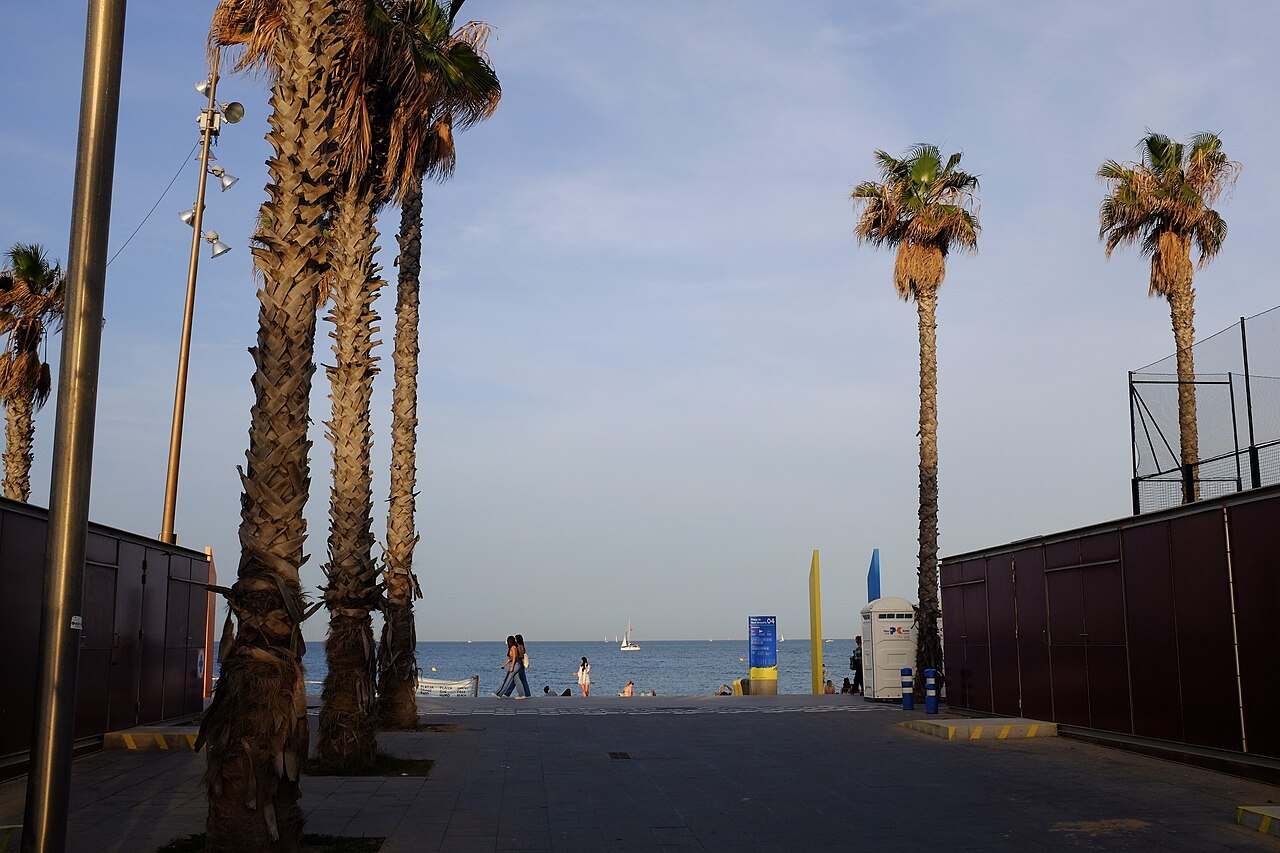
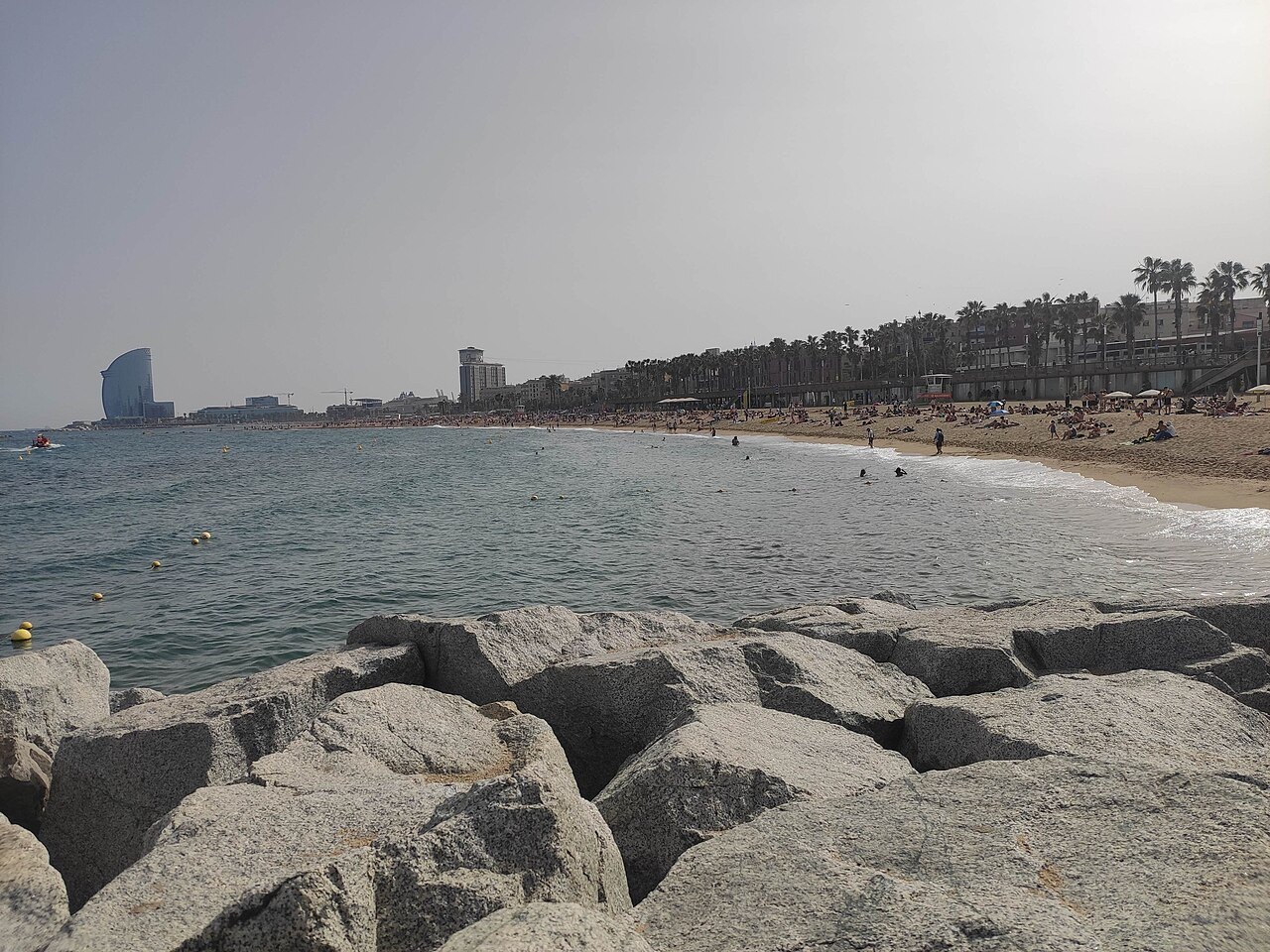
- 1The beachThe sandy beach that appears in Don Quixote, busiest from dawn to dusk in summer.
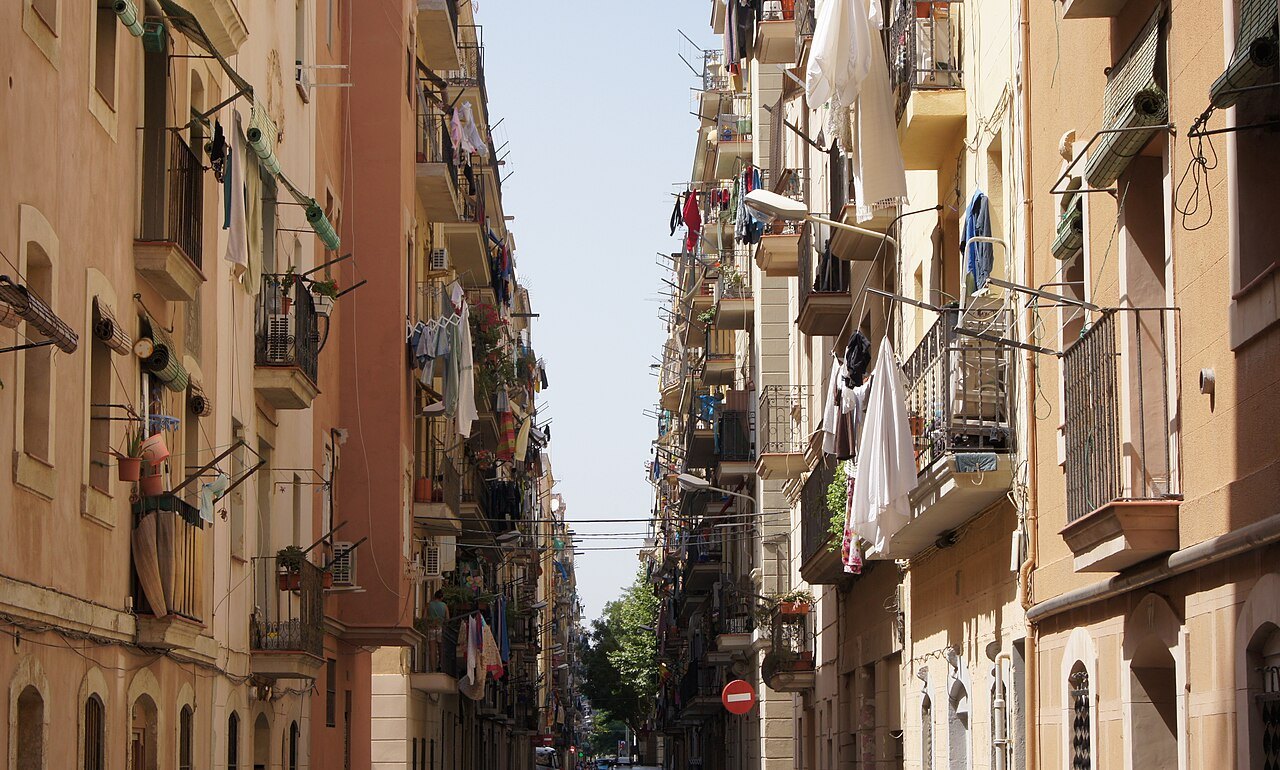
- 2The grid of lanesNarrow, straight streets laid out by the engineer Juan Martín Cermeño in the 1750s.
- 3The Casa de la BarcelonetaA small museum in a preserved house of 1761 that explains the neighborhood.
- 4The clock towerThe former lighthouse of 1772, later converted into a clock.
- 5The tapa of the quarterThe bomba, a ball of potato filled with meat and served with a spicy sauce or aioli.
Reading the place
The sight in full
Land that was once sea
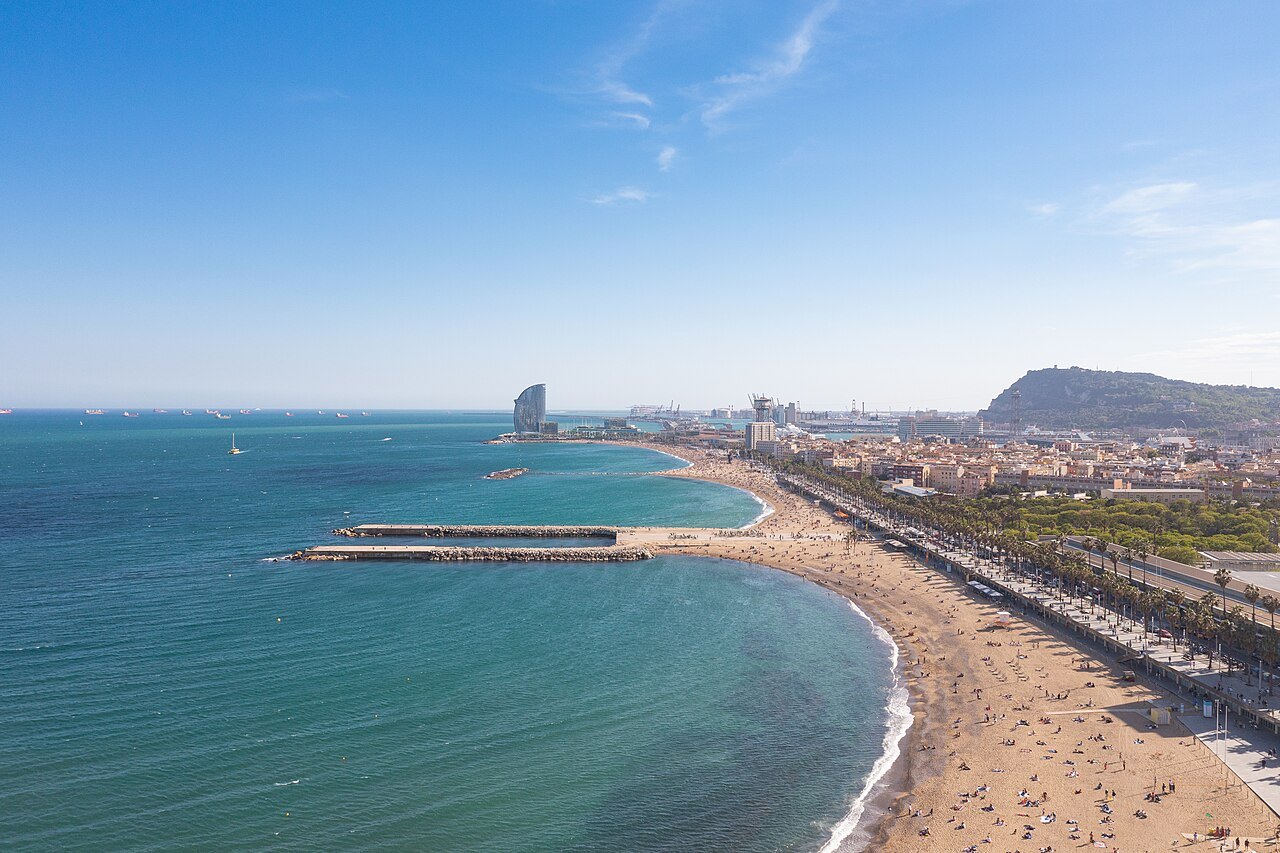
La Barceloneta was mostly underwater until the 1600s. During the construction of the Port Vell a dike was built to connect the small island of Maians to the city, and landfill created the land on which the neighborhood was later built. The harbor was hard to make: storms deposited huge amounts of sand and sediment that ruined works, and in 1743 the accumulated sand finally blocked the port altogether, making it necessary to close it and trapping some of the anchored ships.
The neighborhood stands on the sandy peninsula that formed from that deposit. It was virtually uninhabited until the middle of the eighteenth century, when fishermen, the first to visit despite the risky sea, were joined by residents who worked in the port.
Built for the displaced
The neighborhood was built in the eighteenth century for the residents of the Ribera district who had been displaced by the construction of the citadel. After the city fell in 1714 to the army of Philip V, the king built the largest fortress in Europe, and a substantial part of La Ribera was destroyed to make room, leaving its inhabitants homeless. Three decades later, a quarter was rebuilt around the fortress and named La Barceloneta.
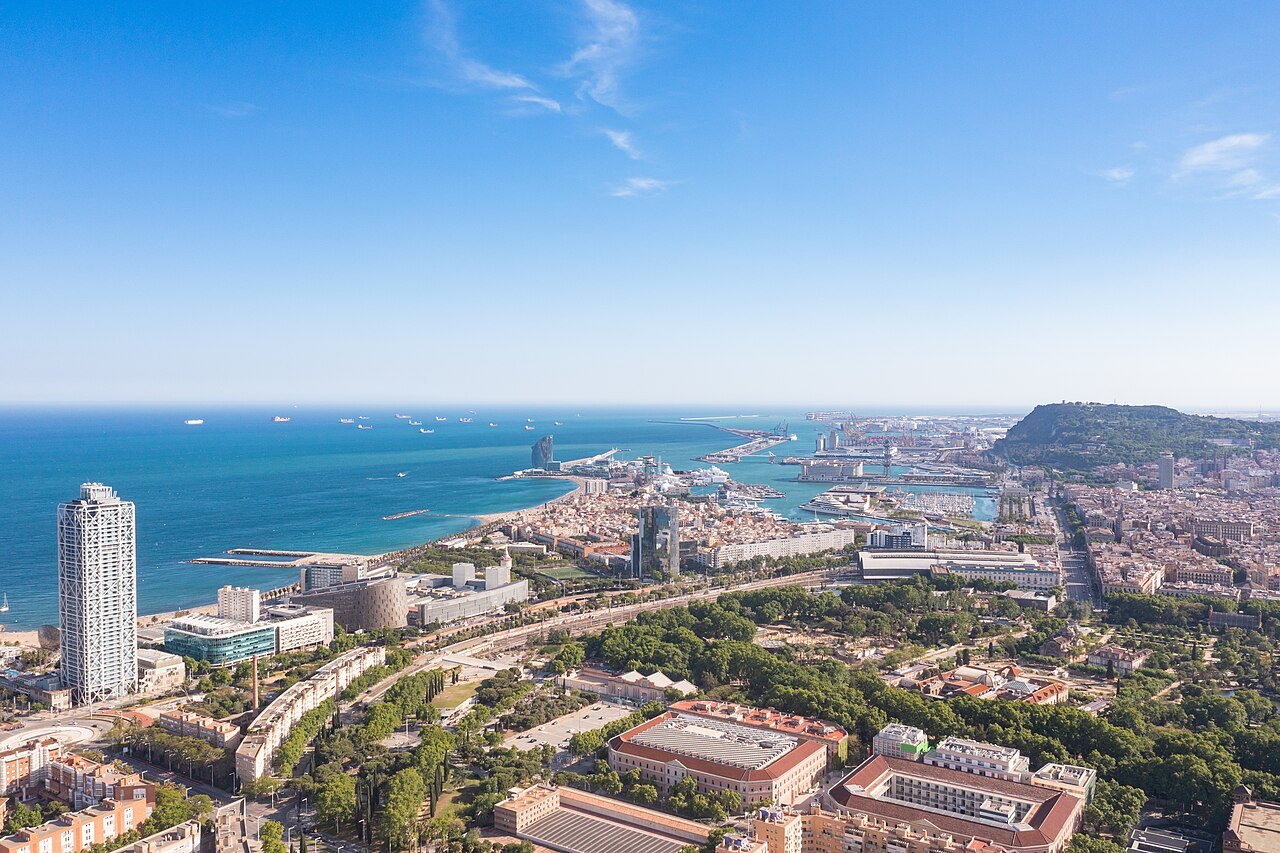
Construction of the first houses began in 1754, to a design by an engineer, Juan Martín Cermeño. The neighborhood has a triangular shape, bordered by the Mediterranean, the Moll d'Espanya of the Port Vell and the El Born neighborhood, and it has its own flag.
Markets and a forgotten plan
The famous markets of La Barceloneta were designed by the Catalan architect Antoni Rovira i Trias in 1873. He had produced an urban plan for the future of Barcelona that won the municipal contest in 1859, but the central government in Madrid preferred the plan of Ildefons Cerdà, and Rovira's work was soon forgotten, until a book revived interest in his style of urban planning and in works such as the Barceloneta markets.
It is a useful reminder that the Eixample grid, the most famous urban design of the century, was a choice among alternatives.
Old buildings in a new quarter
In the center of the neighborhood is a small museum called the Casa de la Barceloneta, housed in a preserved building of 1761, with a stone facade carved with letters and numbers that indicate the plots used in construction. It gives an insight into the evolution of the quarter.
The clock tower was built in 1772 in the Fishermen's Wharf and served as the harbor lighthouse until the middle of the nineteenth century, after which its base was converted into a clock. The tower was one of the sites used by the scientist Pierre Méchain in measuring the length of the meridian arc between Barcelona and Dunkirk, work that led to the decimal metric system. Another notable building is La Llotja, a neoclassical building with a Gothic interior, of the fourteenth century, which since 1775 has been linked to the fine arts academy.
The beach
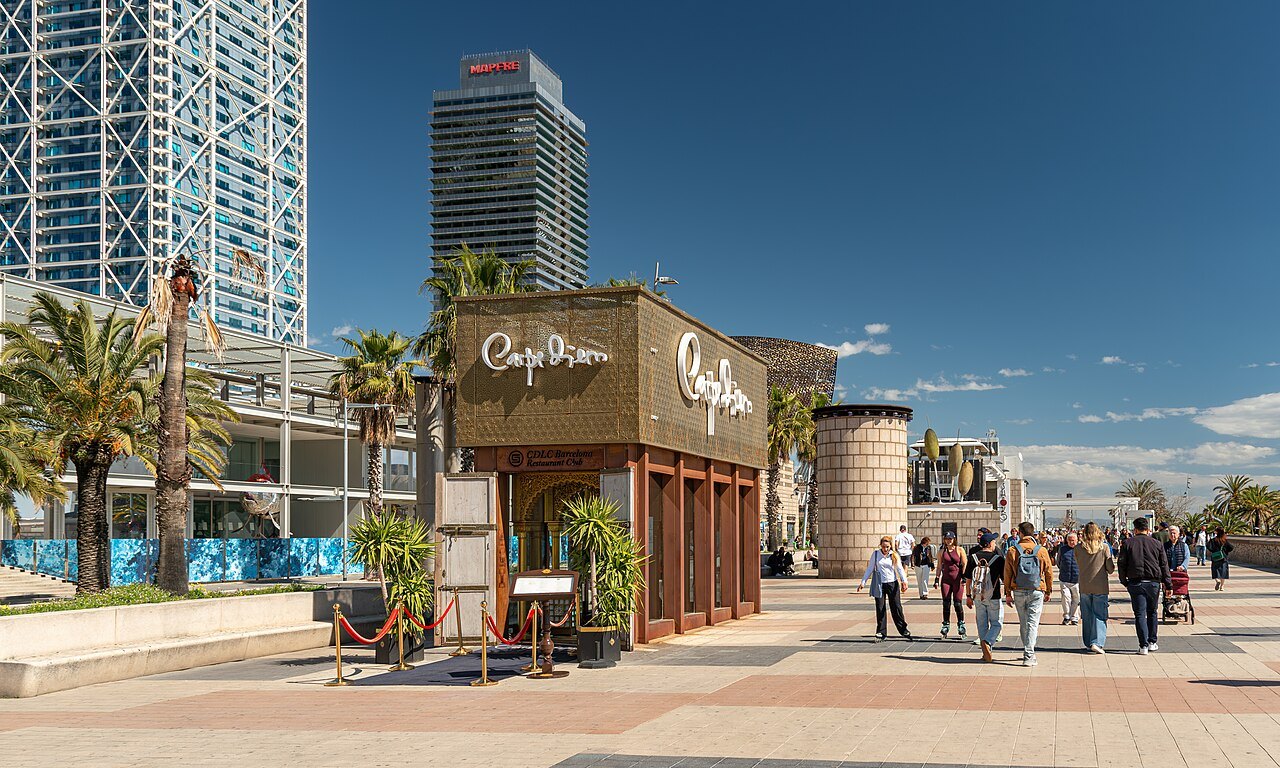
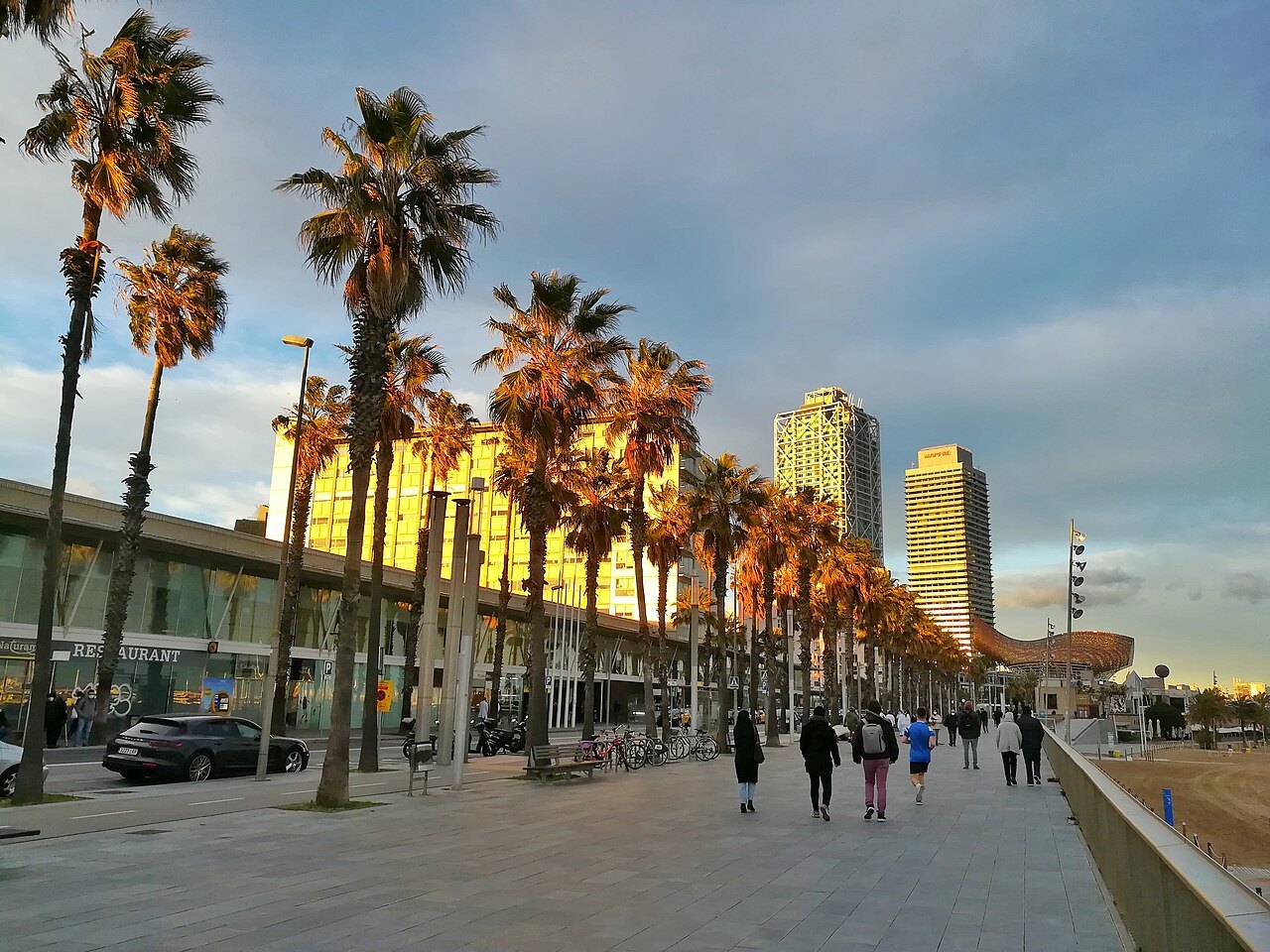
La Barceloneta is known for its sandy beaches, which appear in the second part of Don Quixote, and for the restaurants and nightclubs along the boardwalk. Among the attractions on the beach are the monument Homenatge a la Barceloneta by the German artist Rebecca Horn, and, where the beach meets the Port Olímpic, Frank Gehry's sculpture Peix d'Or, the golden fish.
Over the past several years the quality of the sand has been a matter of controversy. The beach is the liveliest in Barcelona from dawn to dusk, and the neighborhood reaches its peak of entertainment in the summer.
Food
La Barceloneta is regarded as one of the best places in Barcelona to try fresh fish or paella, and a variety of tapas is available on any menu. The most typical tapa of the neighborhood is the bomba, a ball of potato stuffed with meat and served with a spicy sauce or the classic aioli, together with a caña, a small glass of draft beer.
Near the beach you will see balconies with clothes hung out to dry, small shops, wine merchants, bars and restaurants. The neighborhood keeps the scent of salt and marine life.
Memory and culture
The Carmen Amaya Fountain, built in 1959 where Carrer Sant Carles meets the beach, is a tribute to the most famous flamenco dancer in history, who was born in 1913 in a Gypsy settlement in La Barceloneta. The fountain shows two guitarists and three flamenco dancers, and recalls the difficult past of a neighborhood once inhabited by fishermen and shacks, which were removed in the 1970s.
In the Palau de Mar on the Passeig de Joan de Borbó is the History Museum of Catalonia, with a permanent exhibition on the history of Catalonia from industrialization through the dictatorship to the democracy of today. The terrace of its cafeteria offers a view of the neighborhood and the port.
Getting around the quarter
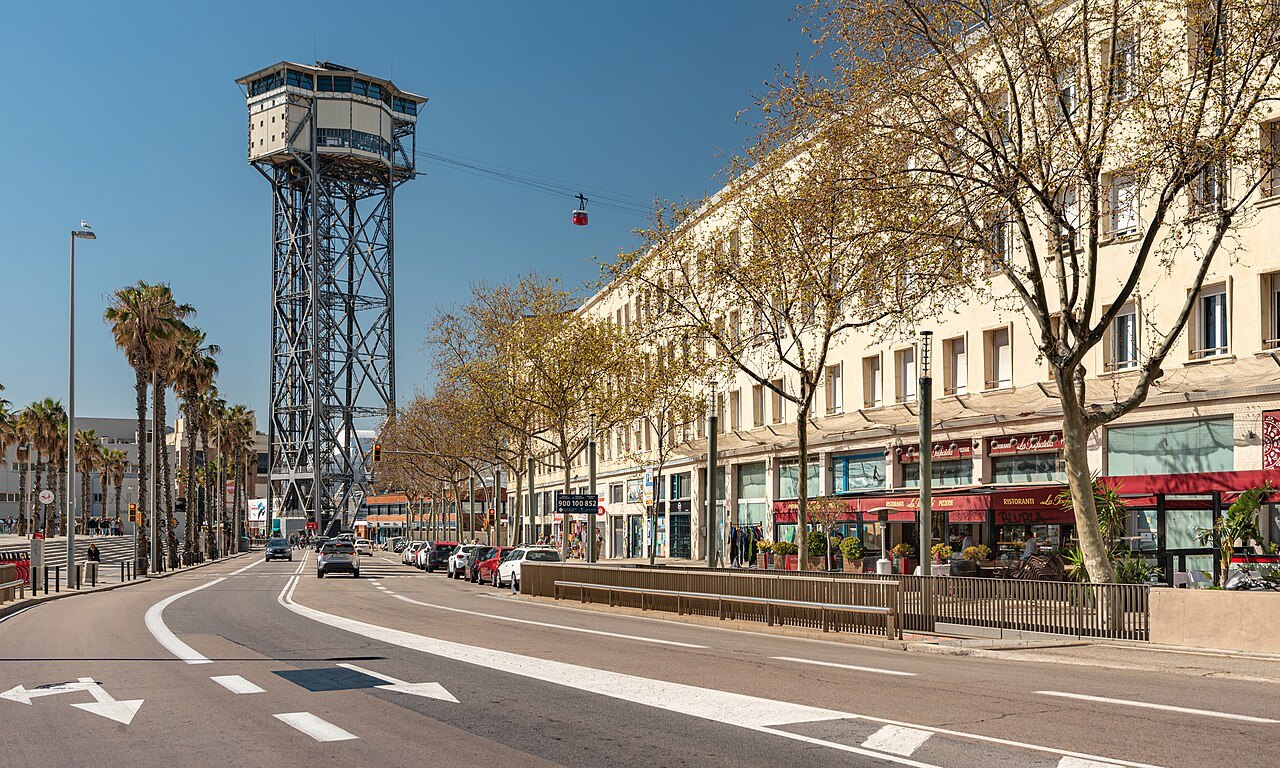
The neighborhood has a metro stop on line 4. Torre Sant Sebastià, at the edge of the quarter, is the end of the harbor aerial tramway, which opened in 1931 and connects La Barceloneta across the Port Vell with Montjuïc. Small boats called Las Golondrinas leave from the Columbus monument and give a view of the coastal strip.
The real charm of the quarter, though, lies in wandering its narrow streets and alleys, where a grid of lanes made for fishermen's families has survived under a modern city.
Nearby
Where to go next
- Nearby · Ciutat Vella · waterfrontPort Vell and the Columbus MonumentPort Vell, literally the Old Harbor, is the waterfront harbor of Barcelona and part of the Port of Barcelona.Read the page →
- Nearby · Ciutat Vella · La RiberaThe Parc de la Ciutadella and the Arc de TriomfThe Parc de la Ciutadella is a park on the northeastern edge of Ciutat Vella, on the site of a hated fortress.Read the page →
- Nearby · Sants-MontjuïcMontjuïcMontjuïc is a broad, shallow hill southwest of the city center with a commanding view over the harbor.Read the page →