Is the Sagrada Família finished?
THE TOWERS, THE FAÇADES AND WHAT IS STILL TO BUILD
The central Tower of Jesus Christ reached its full height in 2026, but the Sagrada Família is not complete. What has been built, what has not, and why a basilica begun in 1882 is still a building site.
Read on
The answer in full
The short answer
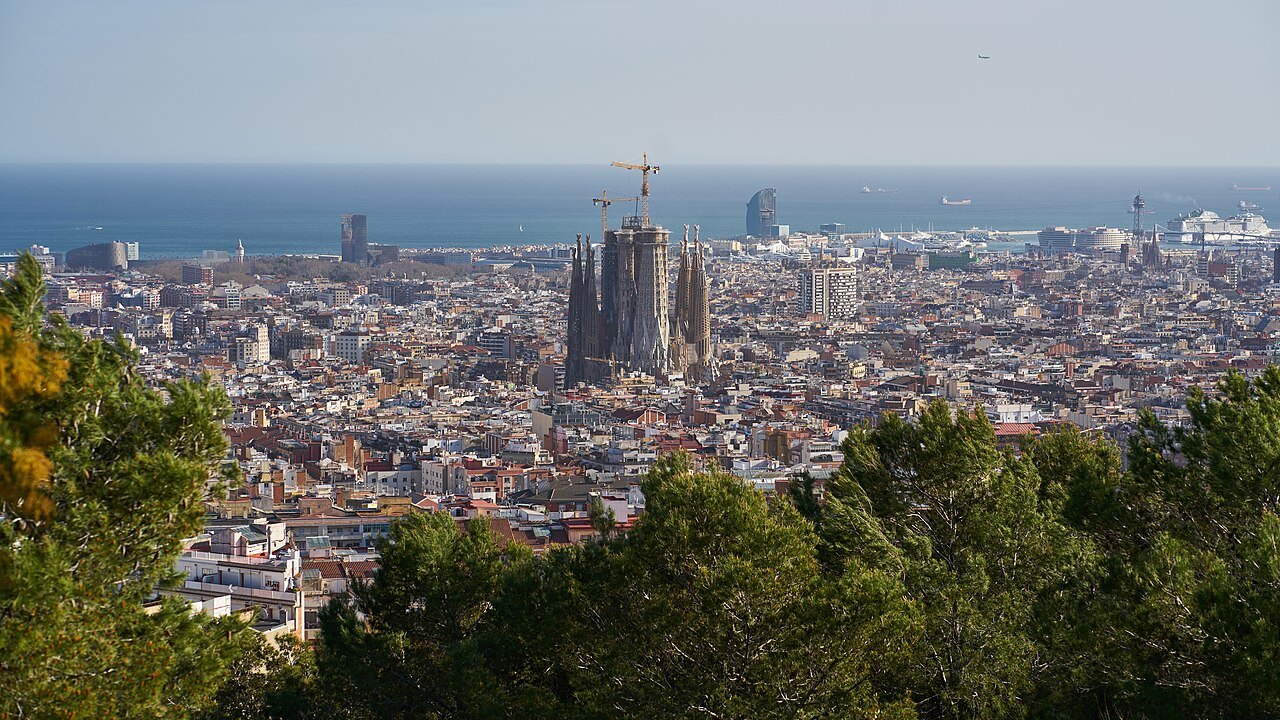
Not quite. The central Tower of Jesus Christ reached structural completion on 20 February 2026, when the final piece was installed, and Pope Leo XIV blessed it on 10 June 2026, the date chosen to coincide with the centenary of Antoni Gaudí's death. At a little over a hundred and seventy-two meters, it made the Sagrada Família the tallest church in the world, ahead of Ulm Minster in Germany, which stands at about a hundred and sixty-one and a half meters.
But the central tower is one part of a larger design. The interior of the tower is expected to be completed in 2028, the Glory façade is unfinished, and decoration was projected, in a 2017 estimate, to be complete by 2030 or 2032. So the building is complete in its main structure and still a work in progress in its details.
What has been built
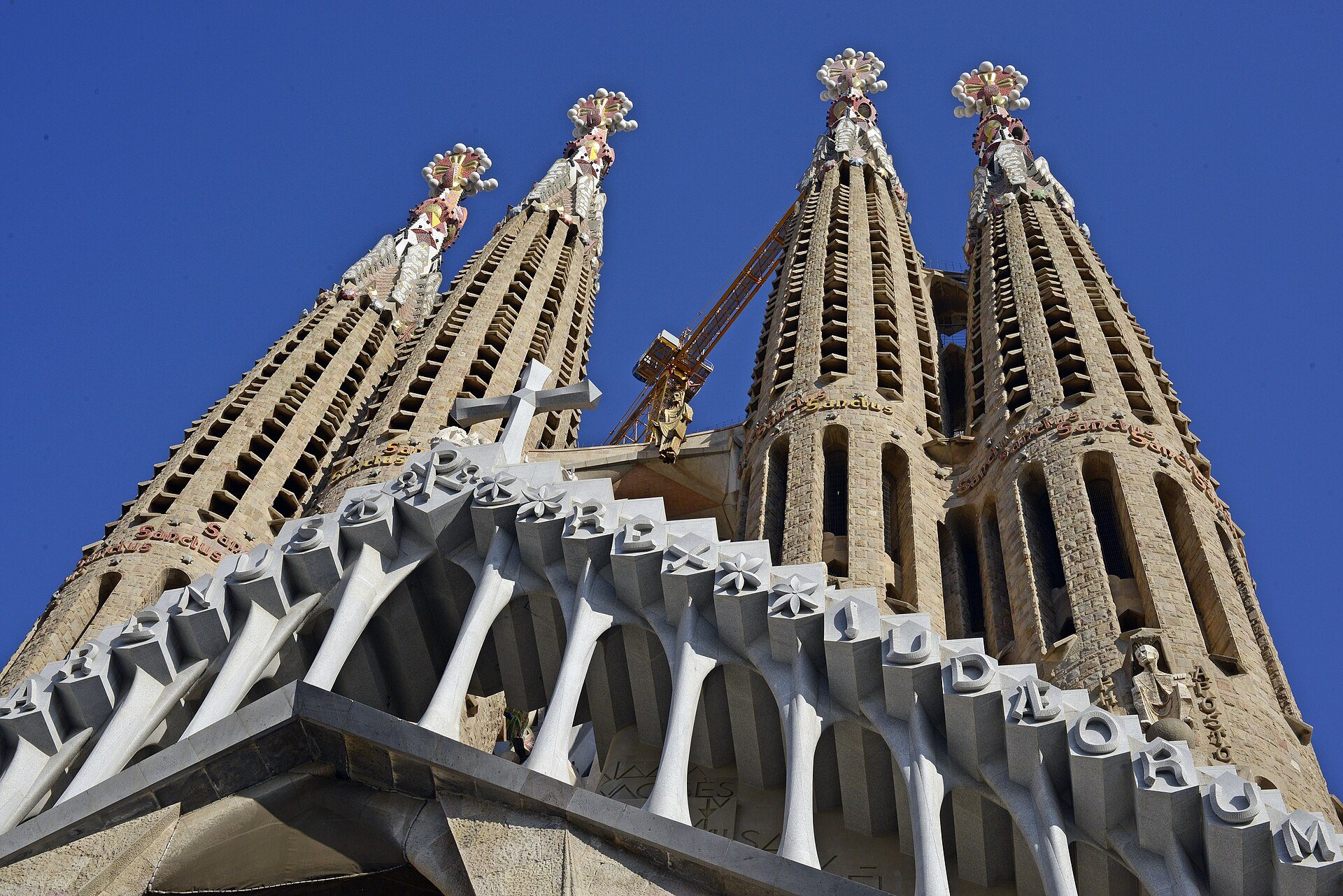
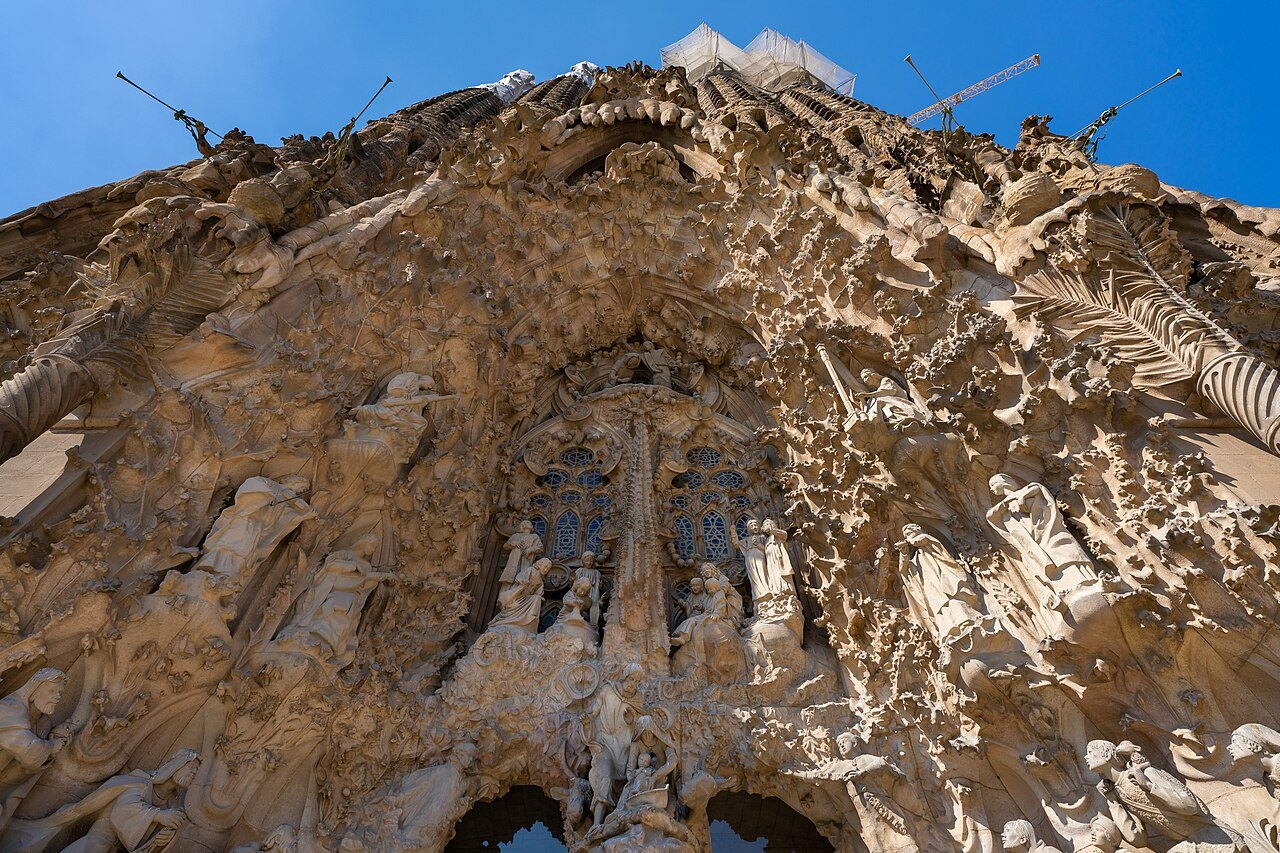
The church is designed with three great façades and eighteen spires. Of the three façades, two stand: the Nativity façade on the east, built between 1893 and 1936 and carrying the most direct Gaudí influence, and the Passion façade on the west, built from 1954 to designs Gaudí made in 1917, whose steeples were finished in 1976 and whose sculpture by Josep Maria Subirachs began in 1987. The Glory façade on the south is the one still being built, started in 2002.
Of the eighteen spires, fourteen have been completed as of 2026. They are the four apostles at the Nativity façade, four apostles at the Passion façade, the four Evangelists, the Virgin Mary and Jesus Christ. The four spires still to come are the four apostles of the Glory façade.
What the Glory façade means
The Glory façade is the largest and most monumental of the three. It faces south, to the sun at its zenith, and it will be the principal entrance, giving access to the central nave. It is dedicated to the celestial glory of Jesus and represents the road to God: death, final judgment and glory, with hell for those who deviate from God's will.
Gaudí made a model of this façade, but it was destroyed in 1936, and fragments of it were used as the basis for the design. In September 2008 the bronze doors by Subirachs were installed; they carry the text of the Lord's Prayer in Catalan in high relief, with a line from it in fifty languages. To reach the portico, thirteen feet above street level, a large staircase is planned over Carrer de Mallorca, and the architects have said that the completion may require the partial demolition of the block of buildings across the street.
Why it has taken so long
The Sagrada Família has relied from the start on private donations. Its founder, the bookseller José María Bocabella, wanted an expiatory temple funded by gifts, and work began on 19 March 1882. When Gaudí died in 1926 the building was between fifteen and twenty-five percent complete. He is said to have remarked that his client was not in a hurry.
War took its toll as well. In July 1936 anarchists set fire to the crypt and broke into the workshop, destroying much of Gaudí's original plans and models. Work resumed in the 1950s with reconstructed plans, and after 2020 the pandemic slowed it further. In 2014 it had been expected that the church would be finished by 2026, the centenary of his death, and that goal is now met for the tower but not for the whole.
How the work speeds up
Building methods have changed. In the twentieth century the stone was carved by hand, whereas now computer-aided design and numerically controlled milling machines shape the stone off site. The construction uses post-tensioned stone panels, pre-assembled before being added to the main structure, which has structural and operational advantages.
Jordi Bonet began bringing computers into the project in the 1980s, and the architects since 2012 have been Jordi Faulí with Mark Burry as executive architect and researcher. The stone, originally from Montjuïc, grew fragile as quarrying went deeper, so since 2018 the type of stone needed has been sourced from a quarry in England.
The money
The annual construction budget is financed by visitors' entrance fees, and the building has depended on private donations since the beginning. That is why ticket purchases are part of how the basilica is built, and why the official site is the place to find the rules of entry.
The basilica is a church as well as a monument. On Sundays and holy days an international Mass is celebrated, open to the public until the church is full, and on 7 November 2010 Pope Benedict XVI consecrated it and proclaimed it a basilica in front of six and a half thousand people, with fifty thousand more outside.
What is left to see
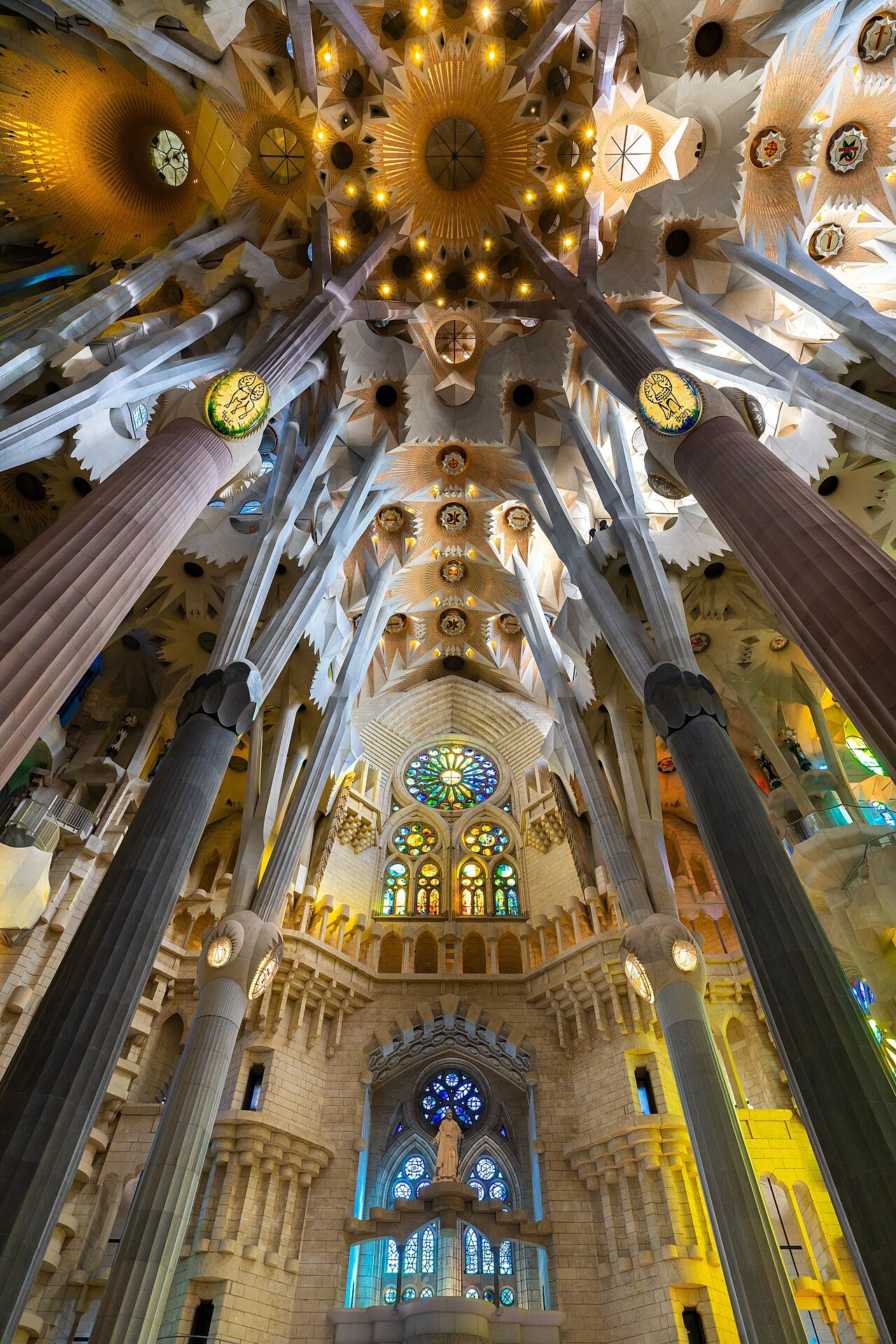
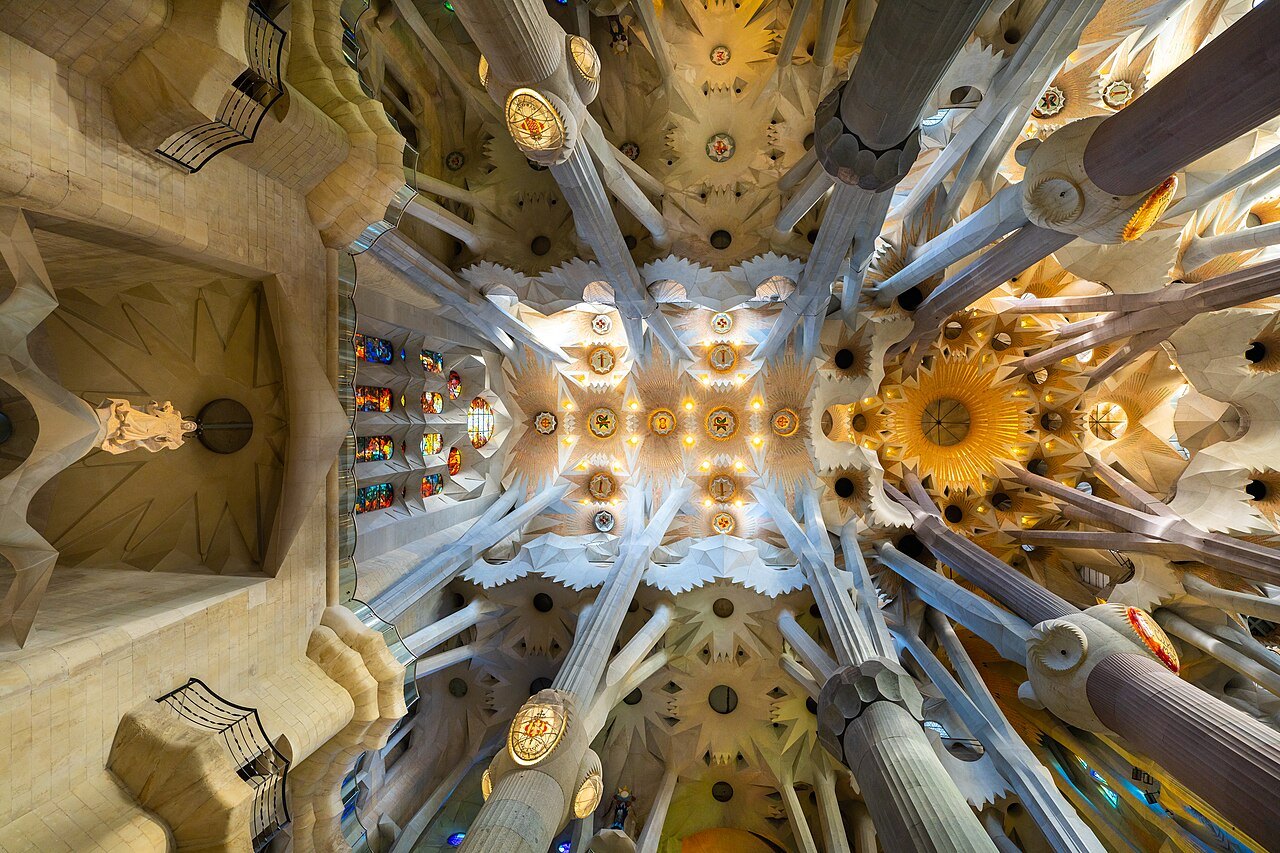
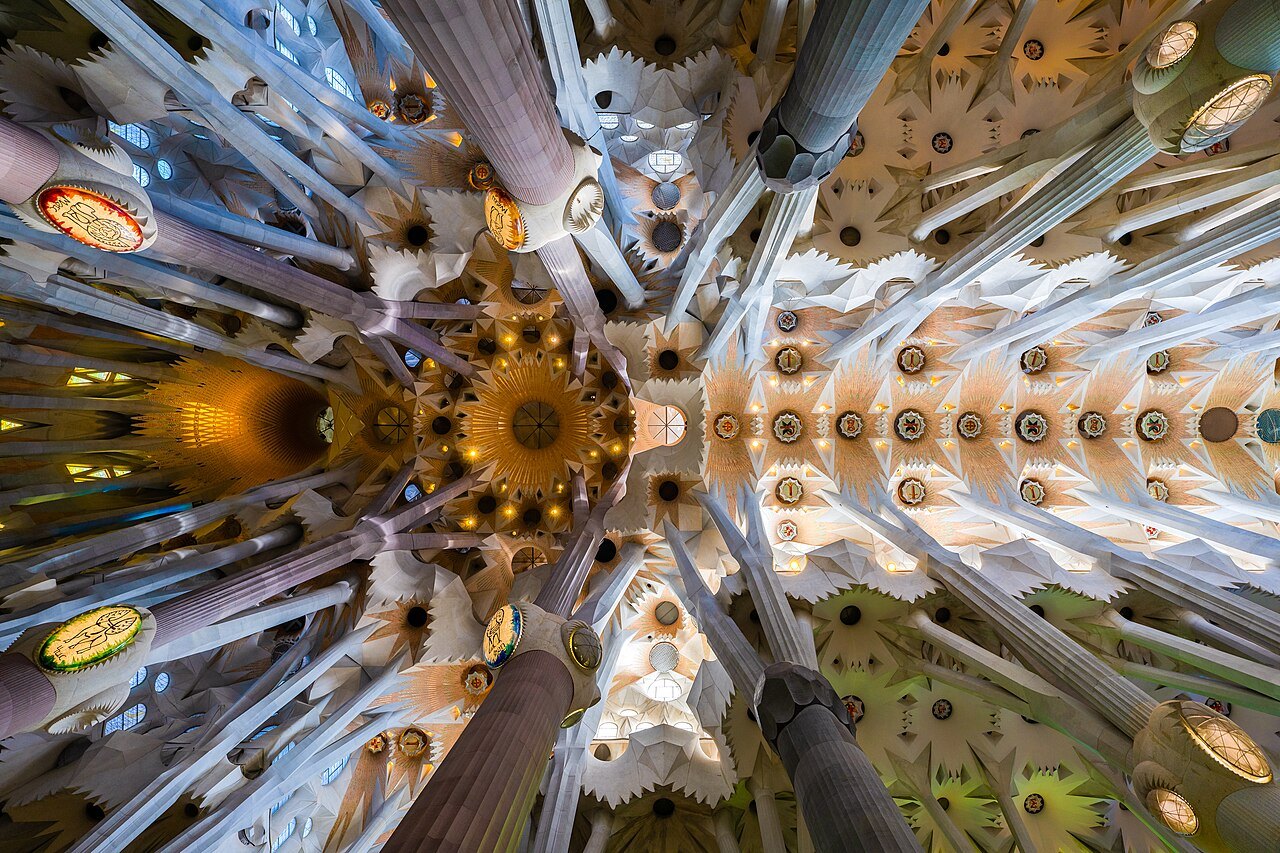
Visitors today see the finished nave, the forest of branching columns, the Nativity and Passion façades and the towers, as well as a working site. The Glory façade is the visible gap, and the tower of Jesus Christ is complete on the outside, though its interior is expected to take until 2028.
The best order for a first visit is to see the outside first, from the Nativity façade to the Passion façade, and then the interior. Two things will not change: the church is unfinished in a living way, and the building site is part of the visit. A future trip will show something that a past one did not, which is a good reason to see it more than once.
The controversies
Not everyone has welcomed the way the building is being finished. In 2008 some well-known Catalan architects argued for halting construction out of respect for Gaudí's original designs, which were only partly preserved. The present design rests on reconstructed versions of plans that burned in the fire, as well as on modern adaptations.
The route chosen for the high-speed train tunnel, which began construction in March 2010 and has carried trains since 2013, also drew objections from the basilica's own engineers and architects, who said there was no guarantee that the tunnel would not affect the stability of the building. The Ministry of Public Works said it posed no risk.
More from the journal
Read next
- Park GüellHow did Gaudí design with hanging chains?Antoni Gaudí worked out the curves of his vaults by hanging weighted strings and chains and turning the result upside down. How the method worked, where it was first used and where to see it in Barcelona.Read the piece →
- Casa BatllóWhat is the Block of Discord?The Illa de la Discòrdia is a block on the Passeig de Gràcia where three Modernista masterpieces, by Domènech i Montaner, Puig i Cadafalch and Gaudí, stand side by side. How the rivalry began and what each house shows.Read the piece →
- Getting HereHow do you get from Barcelona airport to the center?Barcelona-El Prat Airport lies about fifteen kilometers southwest of the center and has a metro, a commuter train, express buses and taxis. What each one is, which terminal it serves and how to choose.Read the piece →