Is the Gothic Quarter really Gothic?
WHAT IS MEDIEVAL, WHAT IS ROMAN, AND WHAT WAS BUILT FOR 1929
Much of Barcelona's Gothic Quarter was restored or newly built in neo-Gothic style between the 1880s and the 1960s. What is medieval, what is Roman underneath, and how to tell them apart on a walk.
Read on
The answer in full
The honest answer
Partly. The Gothic Quarter, Barri Gòtic or El Gòtic, is the oldest part of Barcelona, with the remains of the Roman wall and several notable medieval landmarks, but much of its present fabric dates from the nineteenth and early twentieth centuries. In the late nineteenth and early twentieth centuries the quarter was transformed from a somber neighborhood into a tourist attraction by a massive restoration timed for the 1929 International Exhibition, and neo-Gothic restoration and construction continued as late as the 1960s.
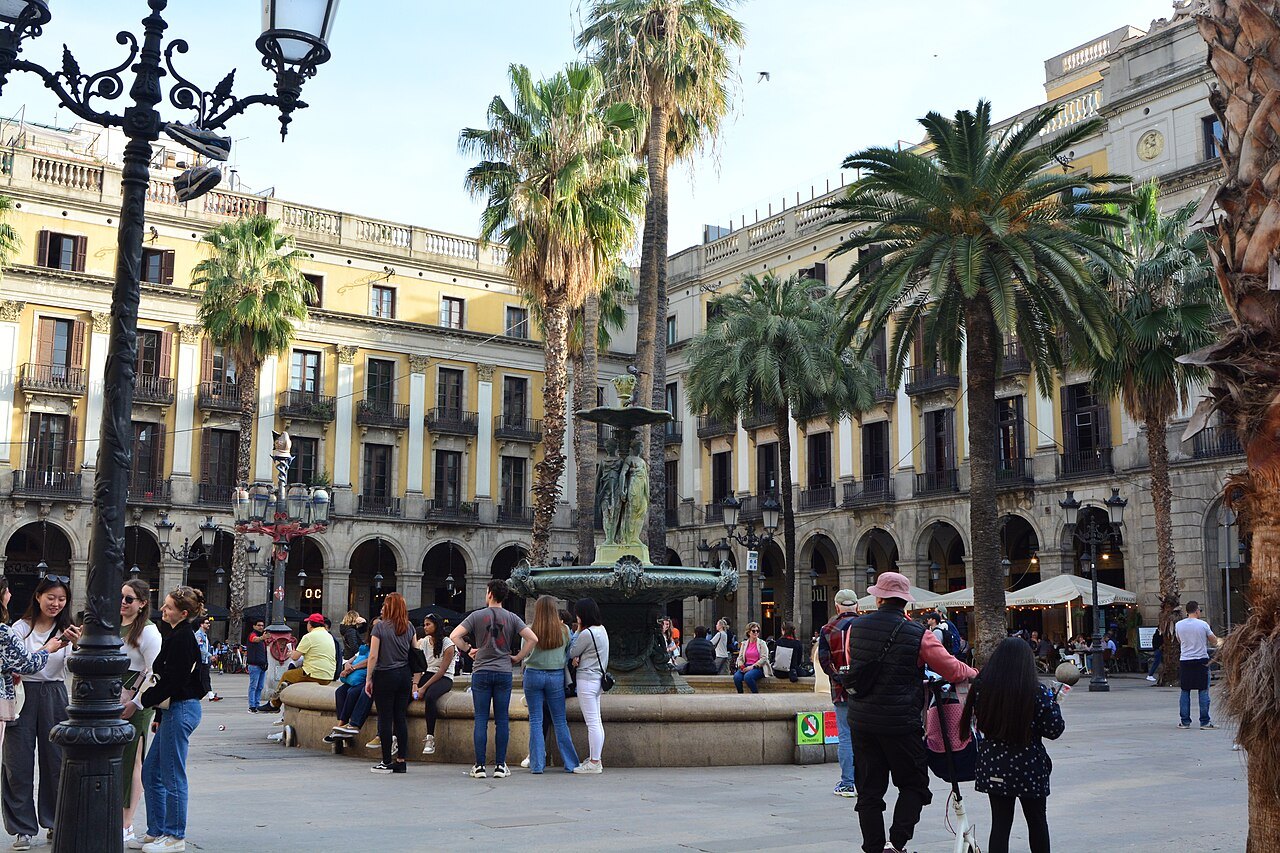
So a number of its landmark Gothic buildings are not medieval. They are buildings that were restored, completed or newly designed in Gothic style, which is a different thing and, as heritage, a fascinating one.
Barcino underneath
Beneath the Gothic is something older. The city began as a Roman colony, Barcino, whose street grid is still visible in the layout of the historic center, and important Roman remains are displayed beneath the Plaça del Rei as part of the city history museum. Some fragments of the Roman walls were incorporated into the cathedral.
The first walls around the settlement date to the third century, when the city's walls were built after the barbarian invasion of 263, and the Roman city stood on the small hill called Mount Tàber. The medieval city grew over and around it.
What was added to the cathedral
The cathedral is the best example of the mixture. Its Gothic structure was built from 1298 to 1448, but its facade is a neo-Gothic work built between 1882 and 1913, to a design of Josep Oriol Mestres and August Font i Carreras, based on a fifteenth-century design by a master called Carlí. Until then, the front was a plain surface common to Catalan churches.
A private benefactor offered to pay for the facade and the central tower in the late nineteenth century, and his children completed the work in 1913. Whoever stands in the square in front sees a medieval cathedral with a modern face.
Other rebuilt pieces
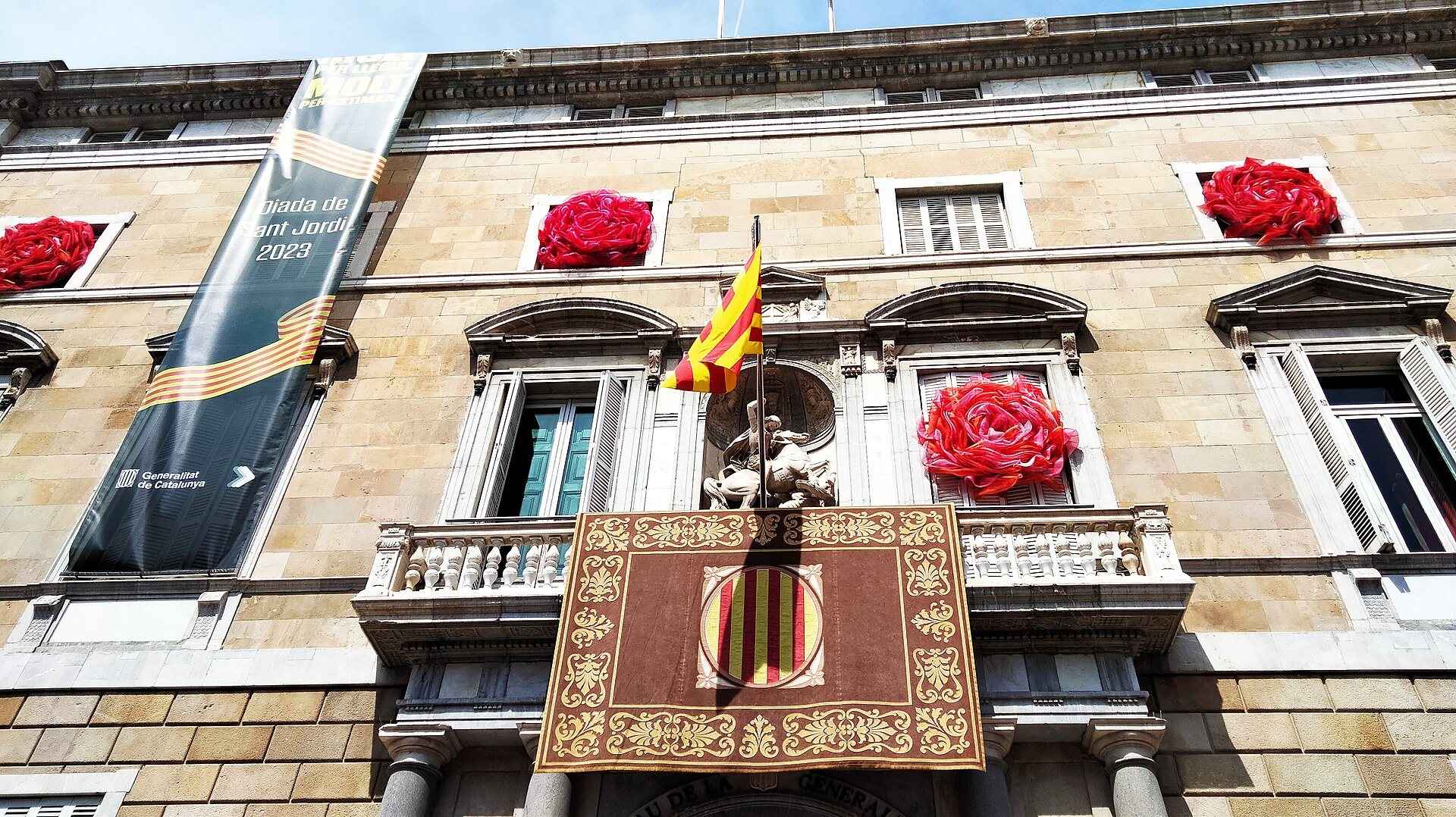
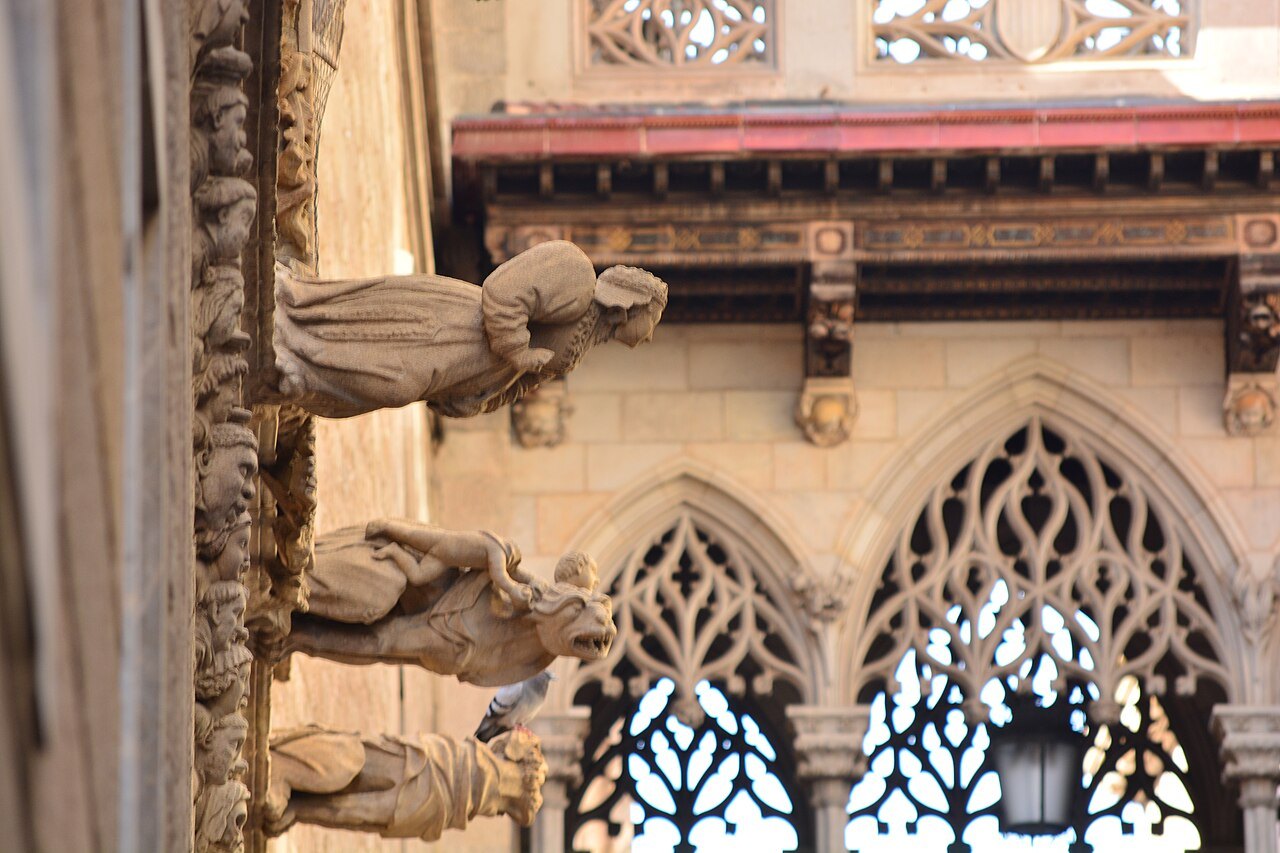
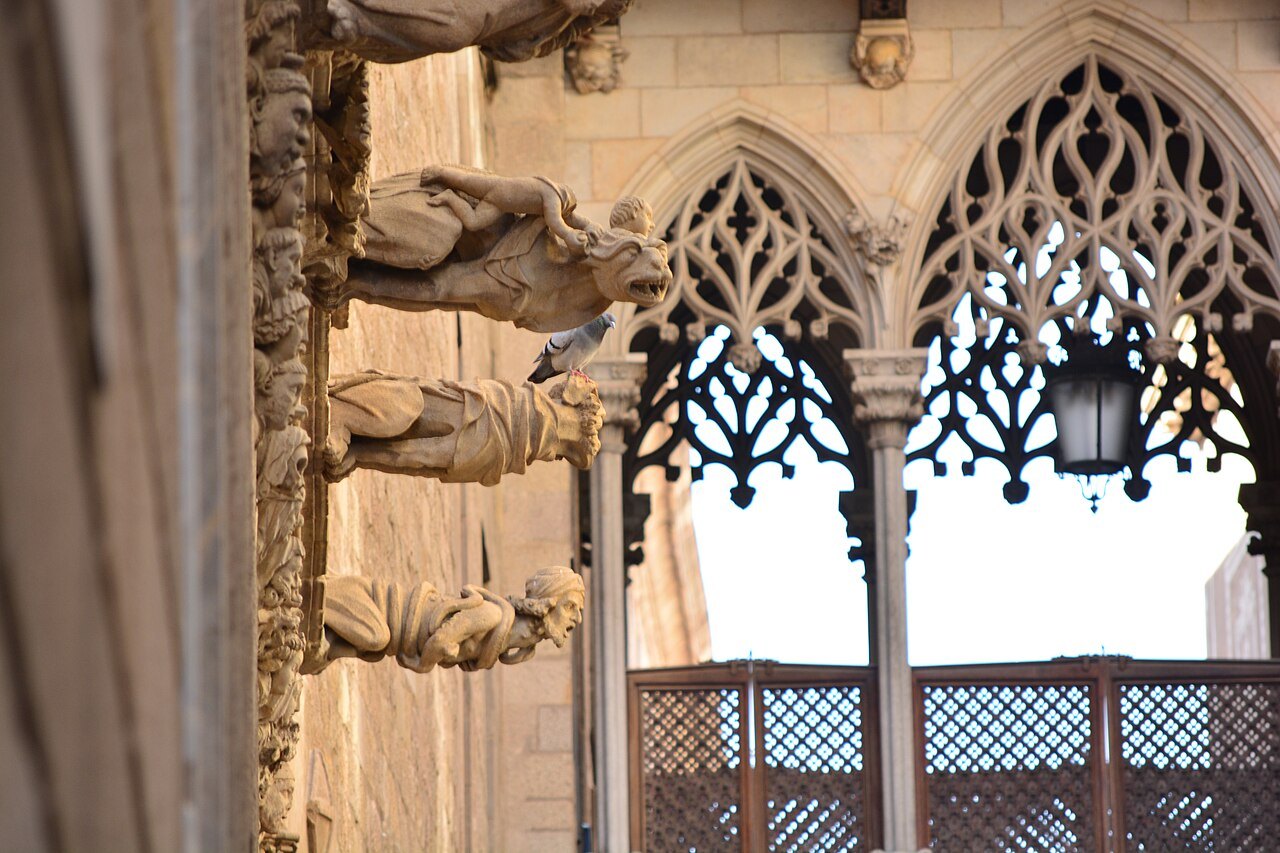
The Centre Excursionista de Catalunya on Carrer Paradís was given Gothic windows, battlements and merlons by Lluís Domènech i Montaner in 1922, on a building of uncertain origins. The Flamboyant-style bridge that crosses Carrer del Bisbe between the Palau de la Generalitat and the Cases dels Canonges was newly built in 1928 by Joan Rubió.
Casa Padellàs, now the headquarters of the Barcelona City History Museum, was built about 1500 on Carrer Mercaders and was moved to the Plaça del Rei in 1931, with its interior rebuilt. The Aguilar Palace, now the Museu Picasso, was restored by Adolf Florensa in 1959, with galleries with arches and Gothic windows added, and the Pignatelli Palace, now the Royal Artistic Circle, was restored in 1970 with Gothic windows retrieved from municipal warehouses.
Why it was done
The restoration, carried out from 1927 to 1970, served several purposes. It was a statement of Catalan identity, since the medieval period was the age in which Catalonia was a Mediterranean power. It also let the city and Catalonia present themselves to the world in a positive light at the 1929 exposition.
Over forty structures were remodeled in Gothic style, and the model for them was the Catalan house, which shaped the rest of the district. The cathedral neighborhood was reconstructed around the rebuilt facade, which gave Barcelona a historic image linking heritage and tourism.
What is truly medieval
Not everything was invented. The cathedral's Gothic nave, cloister and crypt are authentic, built between the thirteenth and the fifteenth centuries. The district of El Call, the medieval Jewish quarter, lies within the Gothic Quarter along with the former Sinagoga Major. The Palau de la Generalitat and Barcelona City Hall face one another across the Plaça Sant Jaume.
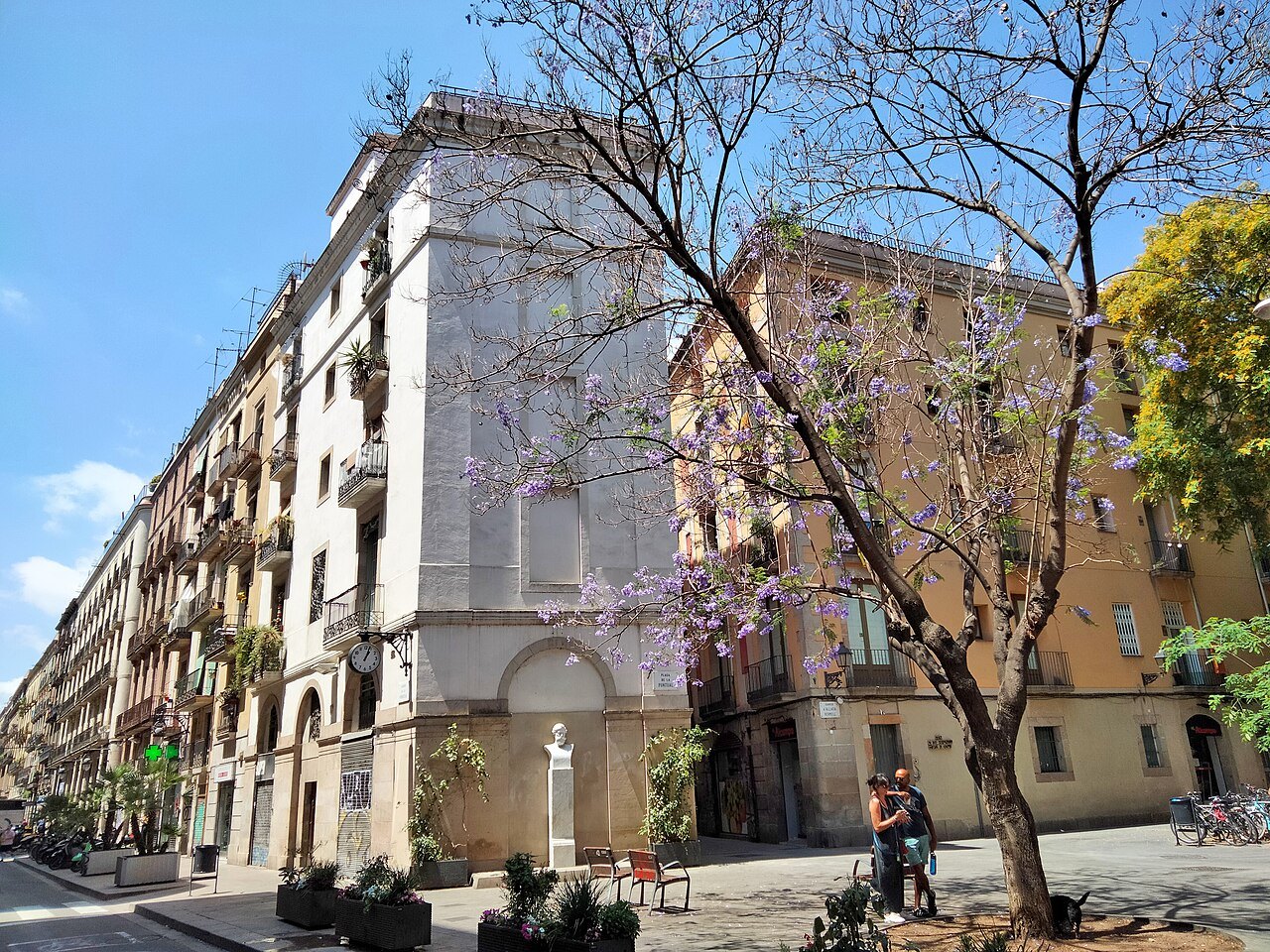
Nearby, outside the quarter but part of the same medieval story, Santa Maria del Mar in the Ribera is a pure example of Catalan Gothic, built between 1329 and 1383, and the Drassanes, the shipyards at the foot of the Rambla, are medieval too.
The Roman center
The Roman town was redrawn as a military camp around Mount Tàber in about the year 15 before the common era, and the forum stood roughly where the Plaça de Sant Jaume is today. That is the same square now occupied by the seat of the Catalan government and the city council, so the center of power has stayed within a few steps of the same spot for two thousand years.
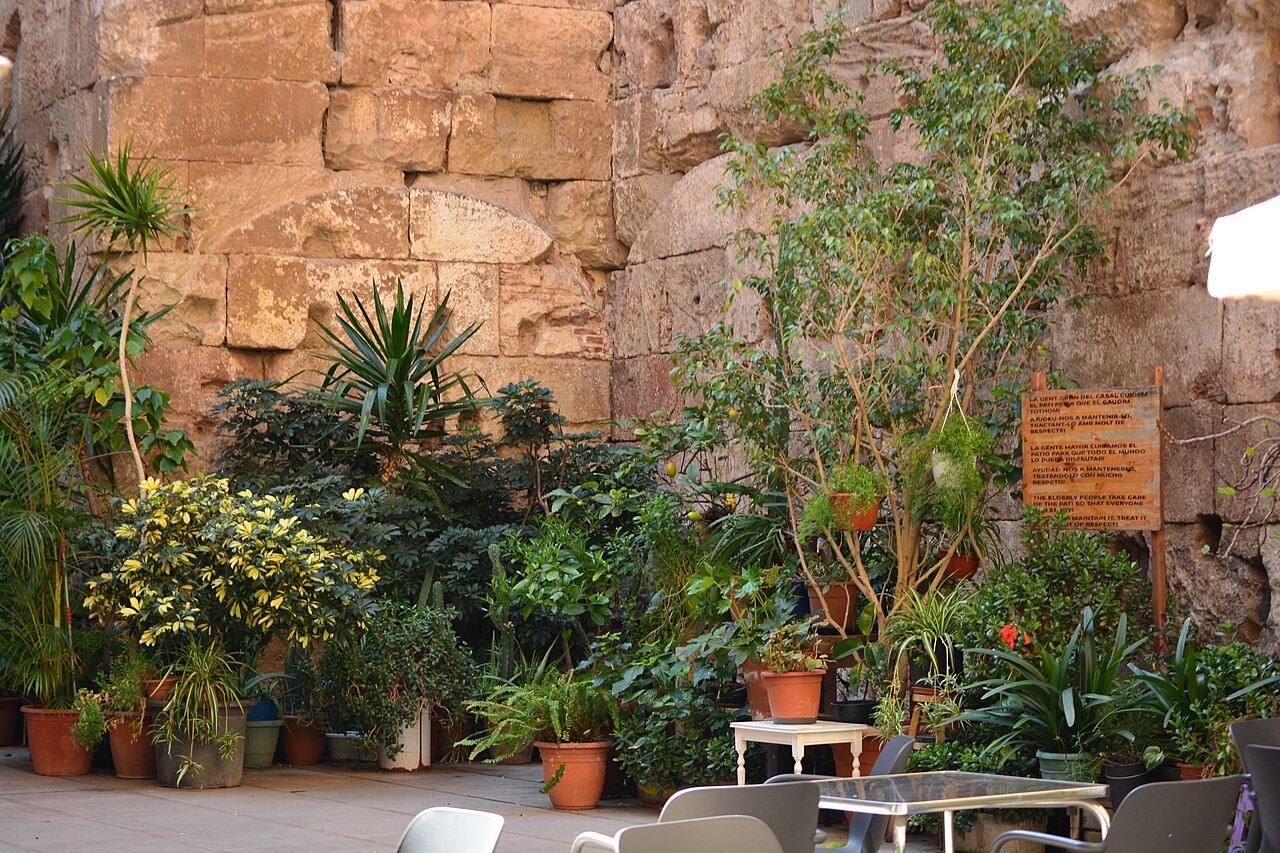
The grid of the Roman town can be traced in the straightness of some streets in the quarter, though it is easiest to see on a map, and the museum below the Plaça del Rei lets you walk through the Roman streets themselves. The same underground collection also shows parts of an early Christian and Visigothic bishop's complex, a baptistery of the fourth century, a basilical hall of the fifth, and a cross-shaped church and bishop's palace of the sixth or seventh, which makes the quarter, in effect, a stack of five or six cities.
How to read the walk
Use the dates. A facade with a date from the twentieth century, or a building described as moved or rebuilt, is a restoration, and the plaques and museum panels often say when a building was restored or relocated. A bridge or window that looks suspiciously perfect for its setting may be a neo-Gothic addition, as the bridge on Carrer del Bisbe is.
The pleasure of the quarter is to see the layers. A Roman wall in a cathedral, a medieval lane, a 1928 bridge and a 1960s restoration can all be seen from a single corner, and each tells part of the story of how Barcelona has used its past.
Is it still worth it?
Yes. A restored district is not a fake one, and the Gothic Quarter is still where Barcelona began, with Roman, medieval and modern layers on the same lanes. What matters is to know which is which, so that you appreciate the original stonework as well as the 1920s skill that completed it.
The page on the Gothic Quarter describes the district in more detail, and the page on the cathedral explains the building at its heart.
More from the journal
Read next
- Where to StayWhy does the Eixample have chamfered corners?Barcelona's Eixample is a grid of square blocks with the corners cut off. The reasons are sunlight, ventilation, visibility and carriages, and the engineer who planned it was never paid for the work.Read the piece →
- Casa BatllóWhat is the Block of Discord?The Illa de la Discòrdia is a block on the Passeig de Gràcia where three Modernista masterpieces, by Domènech i Montaner, Puig i Cadafalch and Gaudí, stand side by side. How the rivalry began and what each house shows.Read the piece →
- Park GüellHow did Gaudí design with hanging chains?Antoni Gaudí worked out the curves of his vaults by hanging weighted strings and chains and turning the result upside down. How the method worked, where it was first used and where to see it in Barcelona.Read the piece →