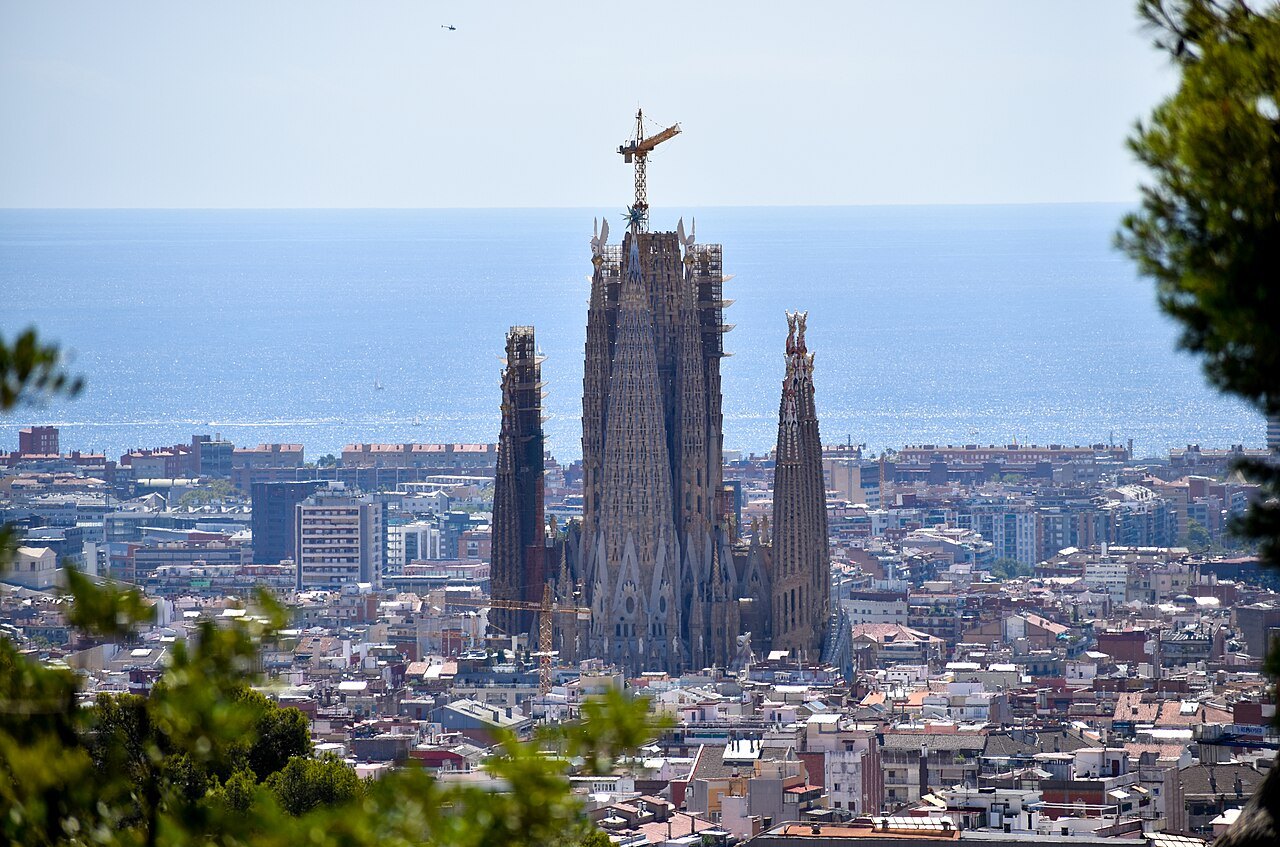
What is the magic square on the Passion façade?
A PUZZLE CARVED IN STONE
How a five-hundred-year-old number grid ended up on the Passion façade, and why its sum was changed to thirty-three.
Read on
The answer in full
Where to Find It
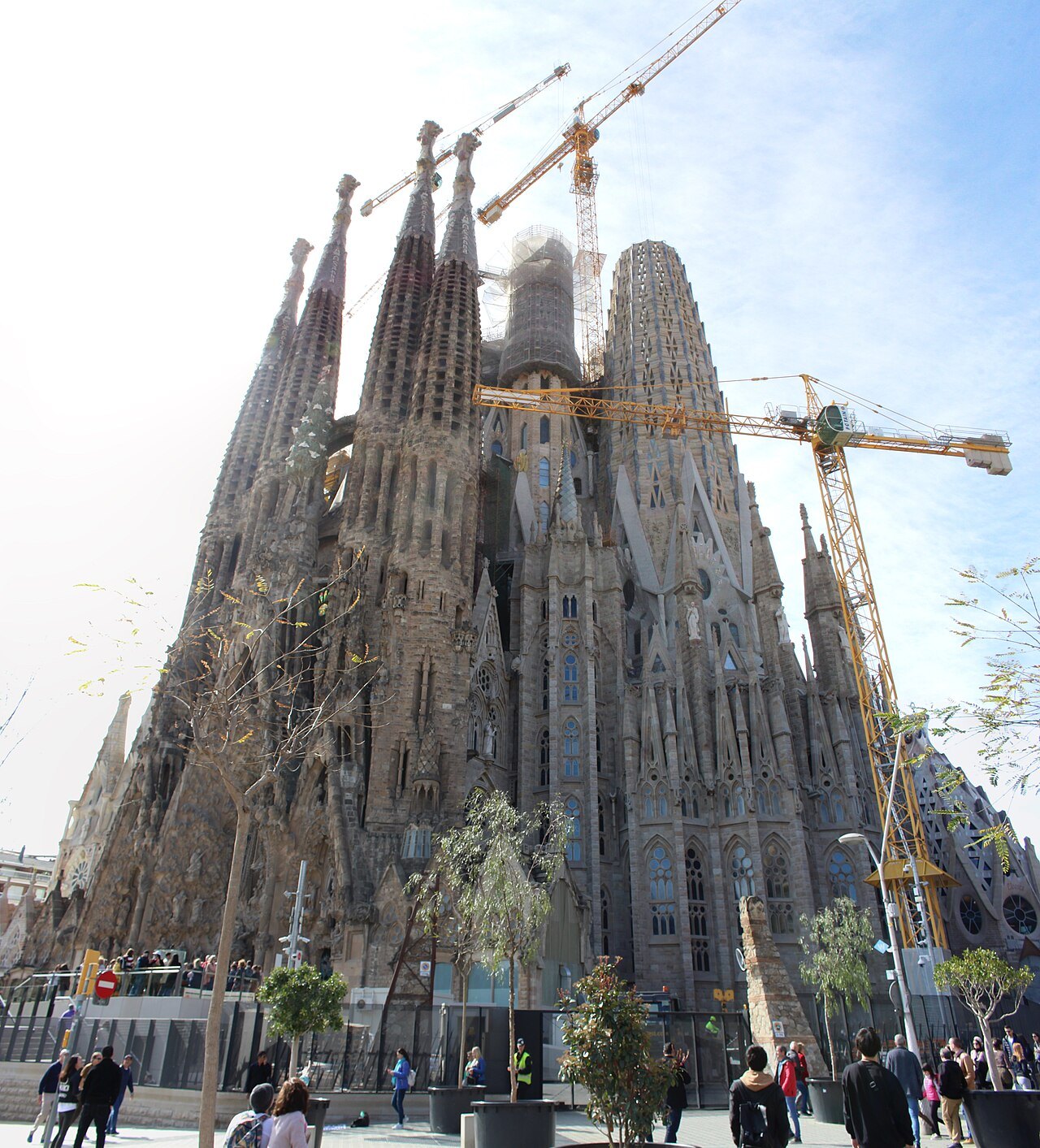
The Passion façade is the western front of the basilica, built to the drawings Gaudí made in 1917, though builders did not break ground until 1954 and did not finish its four steeples until 1976. The magic square belongs to a later layer of the façade: it was carved as part of the sculptural program that Josep Maria Subirachs began in 1987, decades after the stonework around it was already standing.
Look for it set into the stone close to the scenes of Christ's suffering that crowd this front of the church. It takes the form of a small grid of sixteen numbers, four rows by four columns, easy to miss amid the harsh angles and stretched figures around it, but worth pausing for since it is one of the few purely intellectual puzzles built into the basilica's otherwise narrative stonework.
A magic square is simply a grid of numbers arranged so that every row, every column and both diagonals add up to the same total. This one has sixteen cells, the classic four-by-four format, and the visitor does not need to do any arithmetic on site to appreciate it; the discipline of its symmetry is the point, not the sum itself.
A Square Borrowed from a Renaissance Print
Subirachs did not invent this pattern. His source was a famous engraving from 1514, a four-by-four magic square that has fascinated mathematicians and artists for five centuries because of how many ways its numbers can be summed and still agree with one another. Transplanting that print onto a Catholic basilica was Subirachs's own decision, made as he worked through Gaudí's instructions for a façade devoted to suffering and judgment rather than to birth and plenty.
The borrowing is a reminder that the Passion façade, unlike the Nativity façade finished largely under Gaudí's own direction, is substantially the work of a twentieth-century sculptor interpreting an architect who had died decades earlier. Subirachs read Gaudí's surviving sketches and his recorded wishes, then chose his own means, including a five-hundred-year-old numerical puzzle, to carry them out in stone.
Visitors who want the background on Modernisme more broadly, and on how later architects have carried forward or departed from Gaudí's intentions across the city, can read the overview at Gaudí and Modernisme, which sets this kind of sculptural decision in the wider story of the style and the period that produced it.
Why the Rows Add to Thirty-three
The 1514 original is built so that its rows, columns and diagonals all sum to thirty-four. Subirachs adjusted the numbers on the Passion façade so that the same lines add instead to thirty-three, the number traditionally given for the age of Christ at the time of the Crucifixion. The change is deliberate and small: most of the grid keeps the spirit of the Renaissance square while its total is retuned to fit the theme of this façade.
That single alteration turns a piece of Renaissance number theory into a specifically Christian device, anchored to the age most commonly assigned to Christ at his death. It sits appropriately on the façade devoted to the Passion, the sequence of events from the Last Supper to the Crucifixion, rather than on the Nativity façade across the building, which tells a different part of the story.
Anyone who wants to verify the sums or learn exactly which numbers were changed from the original should check with the basilica's own visitor information or official site, which covers the sculptural program in more depth than a single carved panel can.
The Façade Around the Square
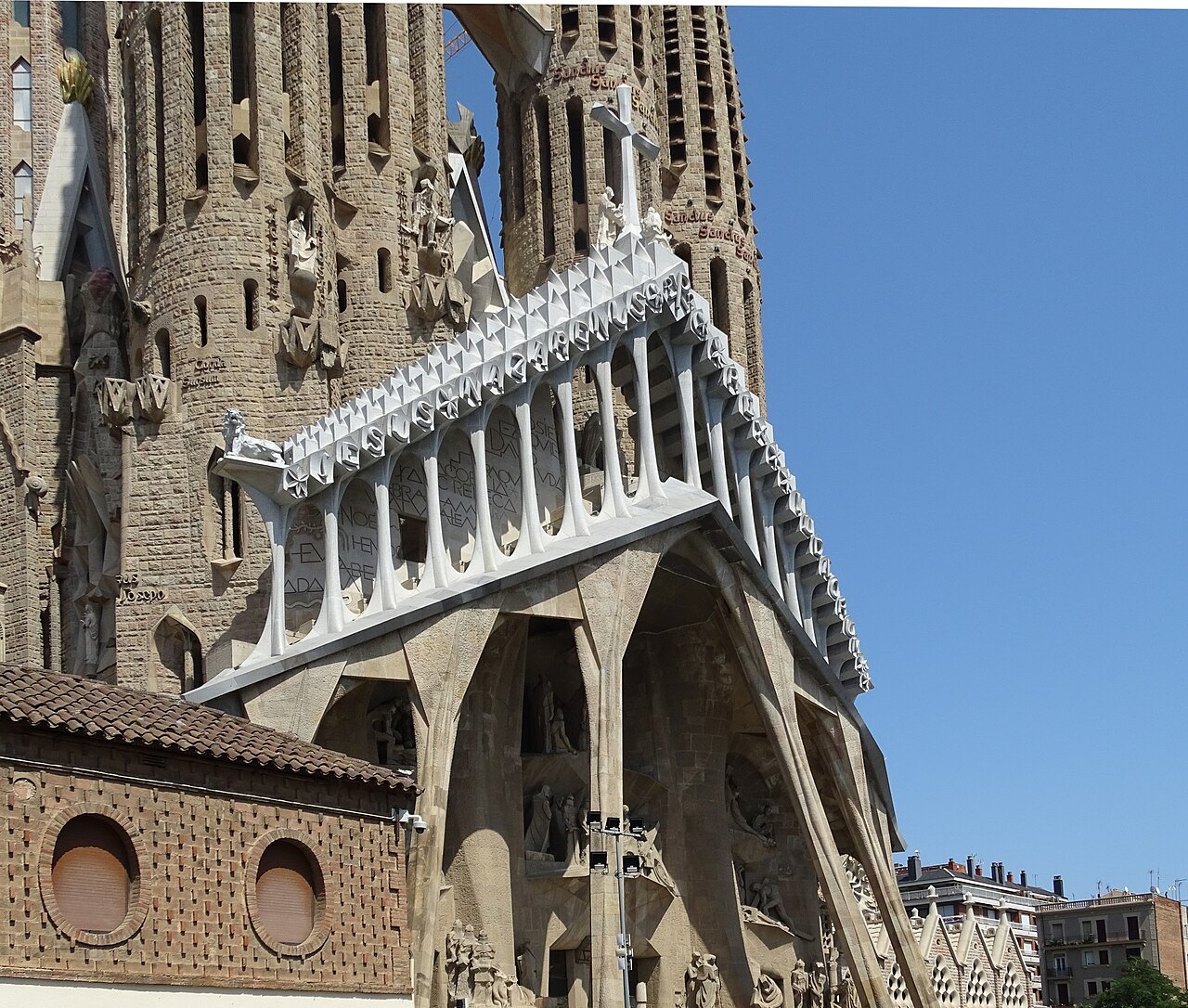
The magic square sits within a façade built to unsettle rather than to charm. Its six inclined columns are carved to resemble strained muscles, leaning as if under load, and its pediment is formed from eighteen bone-shaped columns that rise to a cross wrapped in a crown of thorns. Gaudí is on record wanting the onlooker to feel fear when they stood before this front of the church.
Harsh light and hard shadow were part of the intended effect, which is why the Passion façade faces west, toward the setting sun, in contrast with the Nativity façade's position facing the sunrise. Subirachs's spare, angular figures suit that late light, and the magic square, cool and mathematical, reads as one more sign of a façade built around restraint rather than abundance.
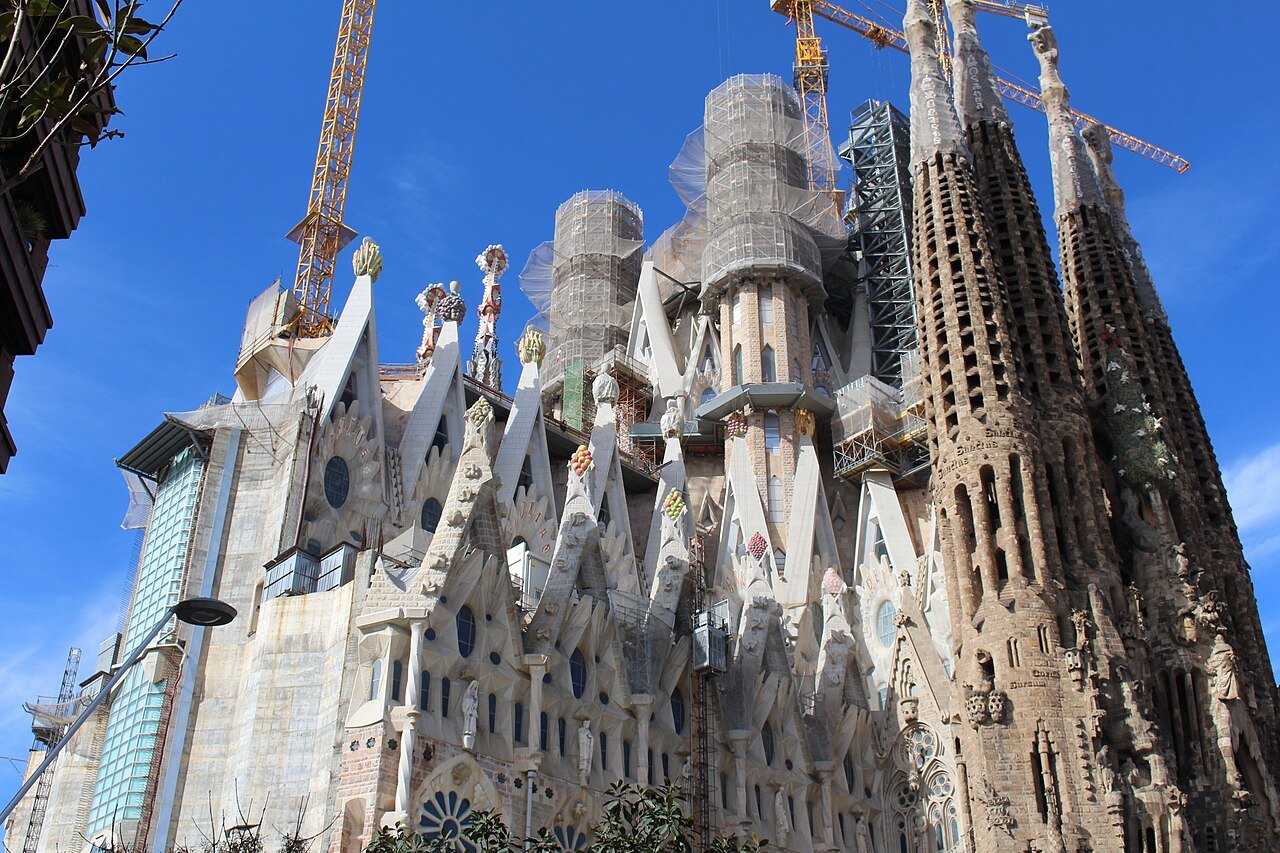
None of this is accidental decoration. Every element on this front of the building, from the tormented figures to the austere grid of numbers, was chosen to carry the weight of the Passion story, just as the opposite front of the building, finished decades earlier, was built to carry the weight of birth and hope instead.
Two Façades in Argument
The Nativity façade, built between 1893 and 1936 under Gaudí's own supervision, teems with carved life: tortoises at the base of its columns, chameleons standing for change, a Tree of Life rising above the central door. The Passion façade answers it with scarcity, tension and a single abstract puzzle in place of any of that natural abundance, a deliberate argument in stone between one half of the building and the other.
Walking the exterior once, from the Nativity side around to the Passion side, is the clearest way to feel that argument, since photographs rarely capture how different the two fronts feel in person: their carving, their light, and the pace at which the eye is asked to move across each one.
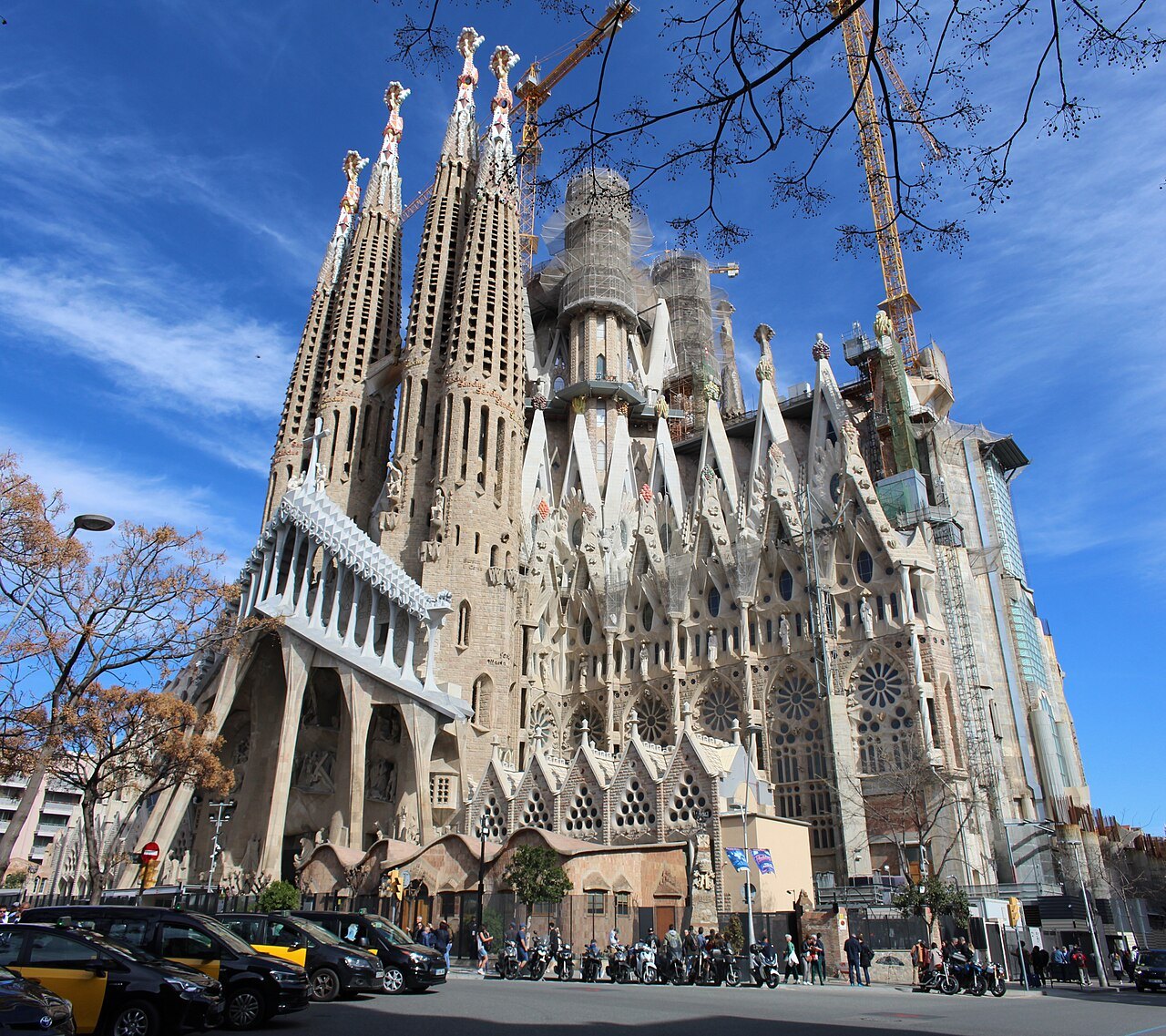
The Glory façade, still under construction and meant to become the main entrance, will eventually complete the set, showing the road to God through death, judgment and glory. Its bronze doors, installed in 2008, already carry the Lord's Prayer in Catalan and a plea for daily bread in fifty languages, a third mood again distinct from both the Nativity and the Passion fronts.
Visiting the Passion Façade
The Passion façade can be studied from the street without a ticket, since it forms the exterior wall of the basilica facing away from the rising sun. Visitors planning to go inside as well, to see the stone forest of columns and the colored light beyond this façade, should check current arrangements with the basilica's own ticketing system well ahead of a visit; details on reserving entry generally are covered at Booking Ahead.
Visitors who want more detail on its background, including the engraving it draws from and the reasoning behind the altered numbers, should ask at the basilica's information points or consult its official site directly before or after the visit.
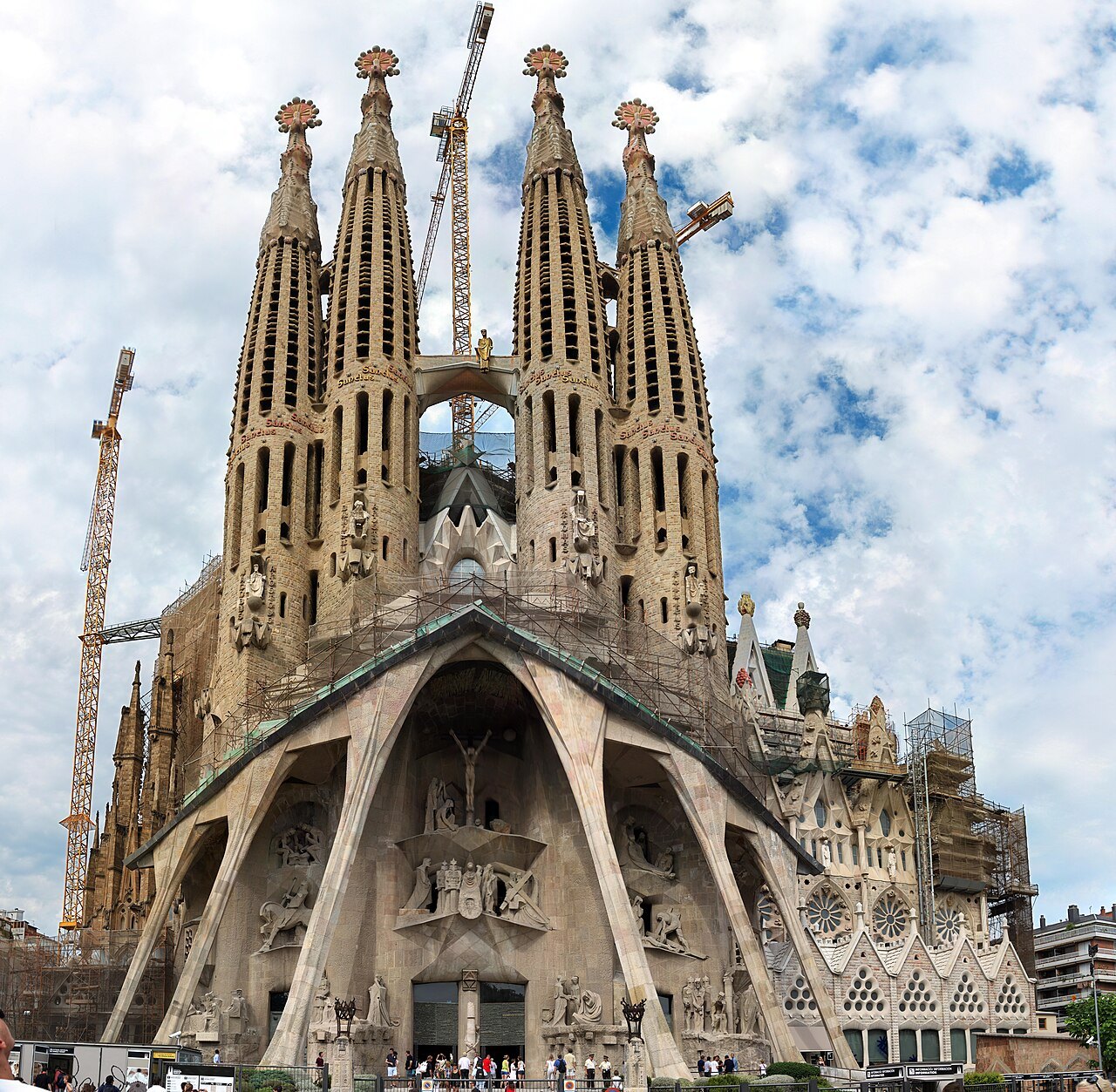
The basilica remains an active building site, with work continuing on the Glory façade and on the interior of the central tower, so the Passion façade is best treated as one stage in a longer visit that also takes in other sections of the building still under construction nearby, and worth timing accordingly.
More from the journal
Read next
- The Sagrada FamíliaWhy does the Sagrada Família have three façades?How the Nativity, Passion and Glory façades came to frame the Sagrada Família across more than a century of work.Read the piece →
- The Sagrada FamíliaIs the Sagrada Família finished?The central Tower of Jesus Christ reached its full height in 2026, but the Sagrada Família is not complete. What has been built, what has not, and why a basilica begun in 1882 is still a building site.Read the piece →
- Park GüellHow did Gaudí design with hanging chains?Antoni Gaudí worked out the curves of his vaults by hanging weighted strings and chains and turning the result upside down. How the method worked, where it was first used and where to see it in Barcelona.Read the piece →