Who was Josep Maria Subirachs, and why are his figures so angular?
GAUDÍ'S SUCCESSOR IN STONE
How the sculptor Josep Maria Subirachs translated Gaudí's own 1917 drawings into the hard-edged Passion façade.
Read on
The answer in full
A sculptor arrives decades later
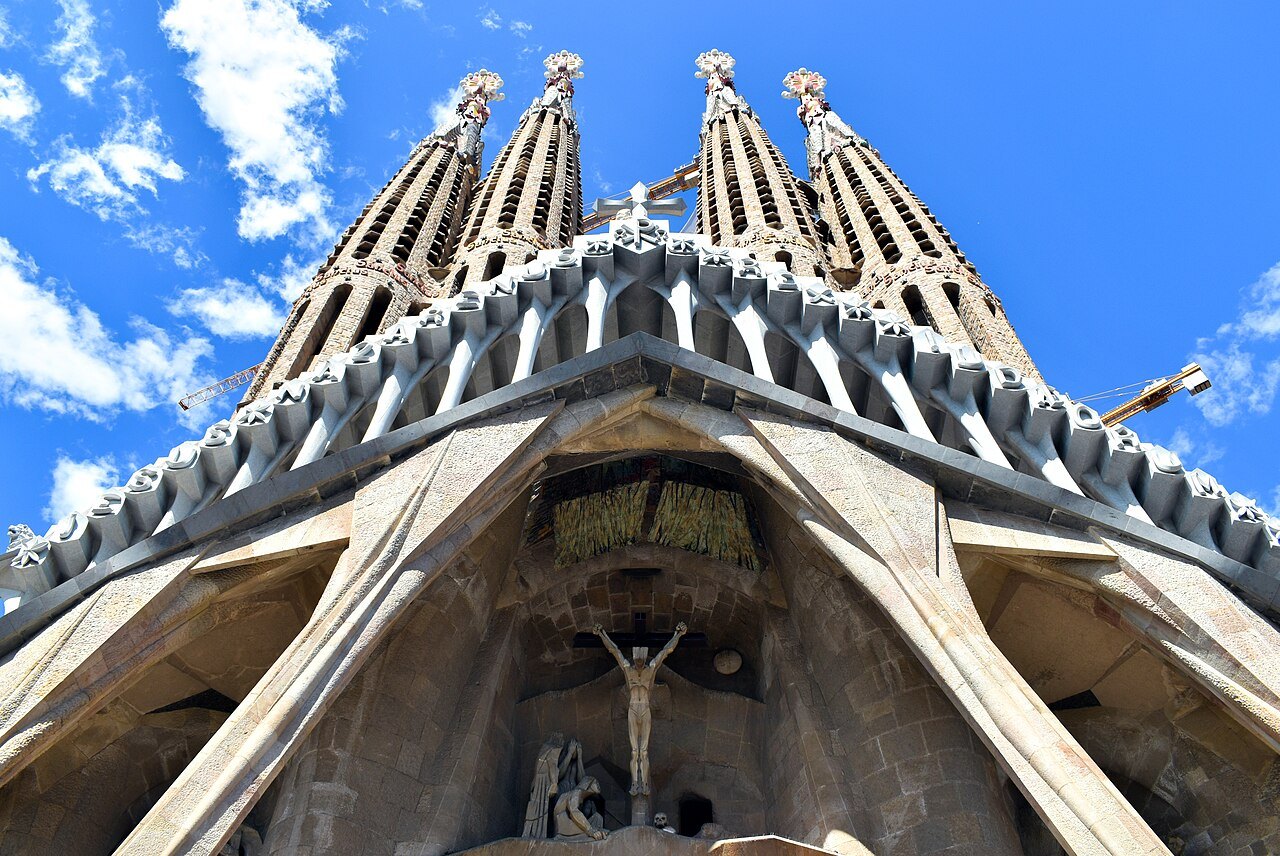
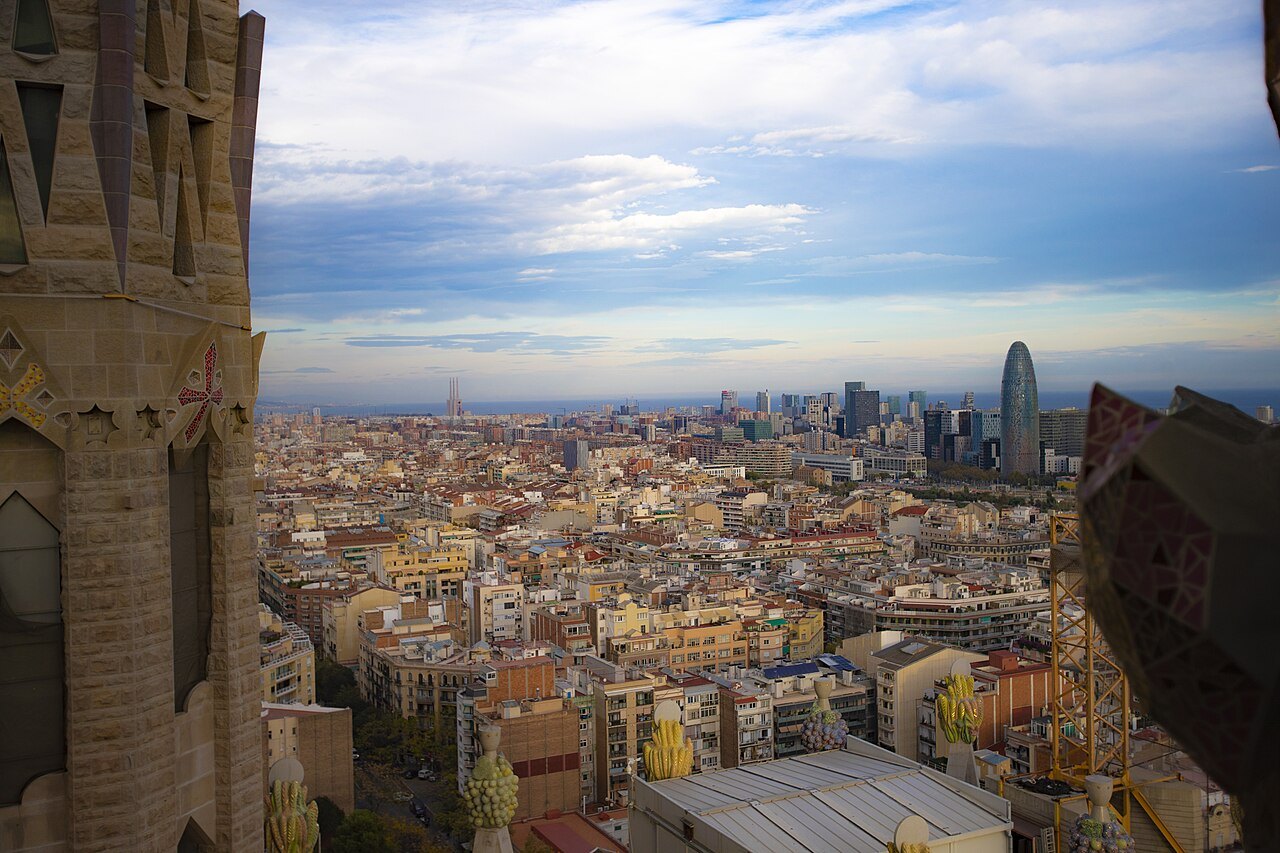
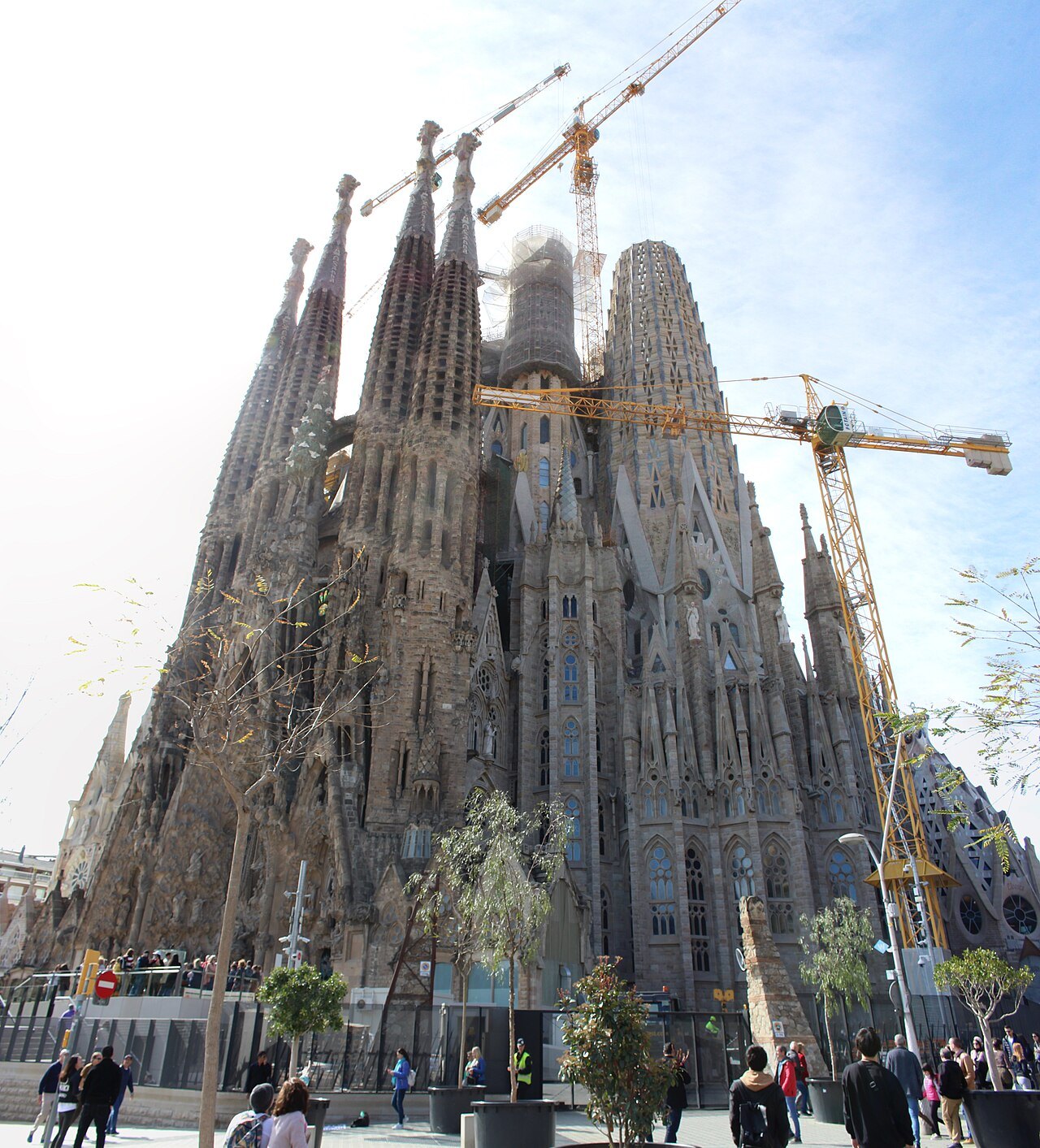
The Passion façade is largely the work of one sculptor, Josep Maria Subirachs, who began carving it in 1987, more than six decades after Antoni Gaudí died in 1926. By then the façade's stone shell already stood: builders had begun it in 1954 and finished its four steeples in 1976. Subirachs inherited an empty frame and the job of filling it with carved figures.
What he had to work from was a set of drawings Gaudí made in 1917, long before construction reached this side of the building, along with plaster models that survived or were reconstructed after a 1936 fire destroyed the workshop. Subirachs had a brief to interpret, not a blank commission to invent.
The work ran for years rather than months. Scenes from the Last Supper to the burial of Christ had to fill niches Gaudí had already fixed in stone, and Subirachs carved within that grid rather than around it, producing one continuous narrative despite the many decades separating structure from sculpture.
Visitors moving from the Nativity façade to the Passion façade often assume two different buildings stand before them. They are right to notice the gap: style, mood and sculptor all differ sharply. The reason lies less in personal taste than in the instructions Gaudí left behind for this one façade.
Instructions Gaudí left behind
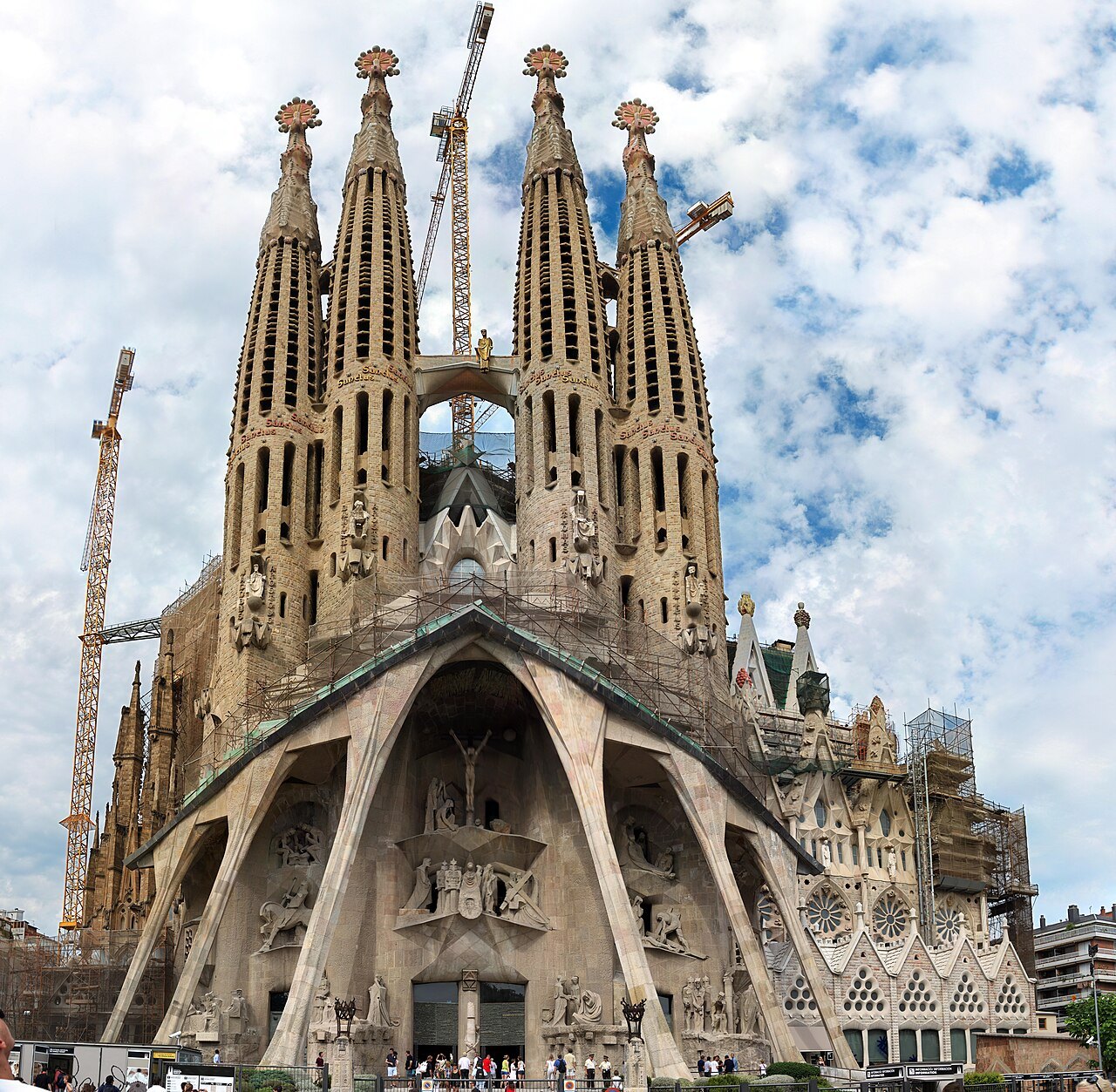
Gaudí wanted the Passion façade to frighten rather than comfort anyone who stood before it. His 1917 drawings called for harsh light and hard shadow, the opposite of the warm, crowded ornament he gave the Nativity façade decades earlier. Subirachs worked from those instructions directly, which is why the result reads as deliberately severe.
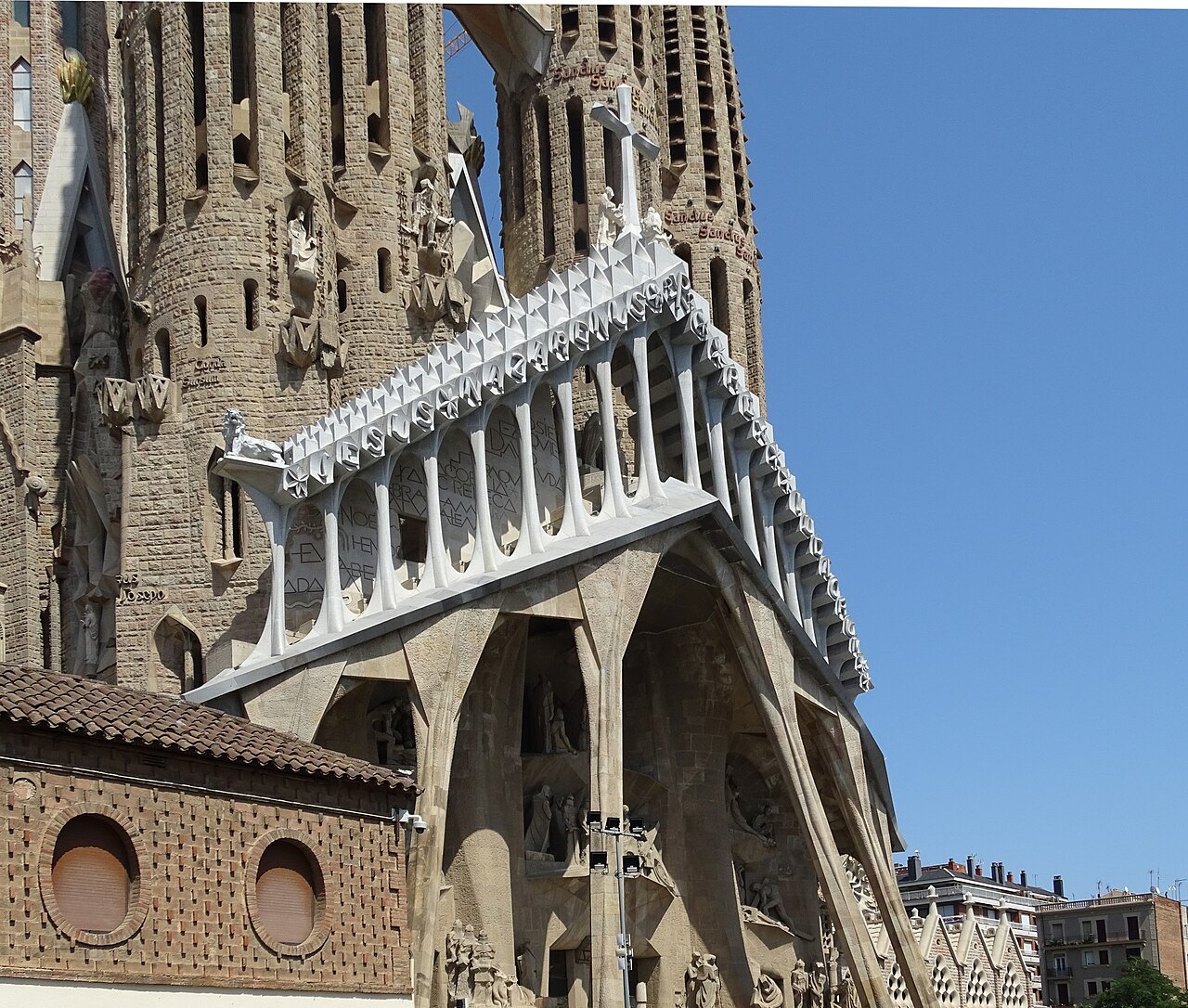
Six columns lean inward across the façade, carved to resemble strained muscles under load. They tilt rather than stand upright, echoing the bone-and-sinew logic that Gaudí used throughout the basilica's structure, but turned here toward suffering and tension instead of the ordinary growth and life found elsewhere in the building.
Above the carved scenes, a pediment of eighteen bone-shaped columns rises toward a cross wearing a crown of thorns. The bone shapes do double duty: they hold up the roofline structurally while reading, at a glance, as a skeleton, a fusion of engineering and narrative that Gaudí used across the basilica but pushed hardest here.
Set against the tortoises, chameleons and tree of life carved on the opposite façade, the Passion façade carries almost no ornament for its own sake. Every edge is meant to cut rather than charm, and that severity, more than any personal signature, explains why Subirachs's figures look so visibly angular.
Why the figures look so angular
Subirachs's characters are reduced to flat planes and straight edges, their faces cut down to a few sharp lines rather than modeled in the round. Where the Nativity façade crowds its surfaces with carved leaves, birds and animals, the Passion façade strips each figure down to a single essential gesture.
That geometry sets the façade apart from the curved, almost liquid forms associated with Catalan Modernisme, the movement that shaped Gaudí's early career. Subirachs was carving in a harder, more abstract idiom decades later, but kept to the brief Gaudí had set down rather than imposing his own era's taste.
The angularity also suits the subject matter. Scenes of betrayal, flagellation and crucifixion read starkly in flat, simplified stone in a way softer modeling would blunt. The hard lines leave little room for sentiment, which appears to be exactly what Gaudí's 1917 drawings had originally called for in the first place.
Visitors often find the Passion façade unsettling in a way the Nativity façade is not, and that reaction is by design. Gaudí asked for fear; Subirachs delivered it in a vocabulary of hard edges, inclined columns and bone-shaped stone that has little precedent elsewhere on the rest of the building.
A magic square hidden in stone
Carved low on the Passion façade is a four-by-four grid of numbers known as a magic square, based on a widely known engraving from 1514. Subirachs altered a couple of its original figures so that every row, column and both diagonals now add up to the same final number, thirty-three.
Visitors who stop to check the arithmetic find it genuinely works: every row, every column and both diagonals total thirty-three. The square sits among a cluster of carved symbols on this façade that reward slow looking rather than a quick circuit on the way through to the main doors.
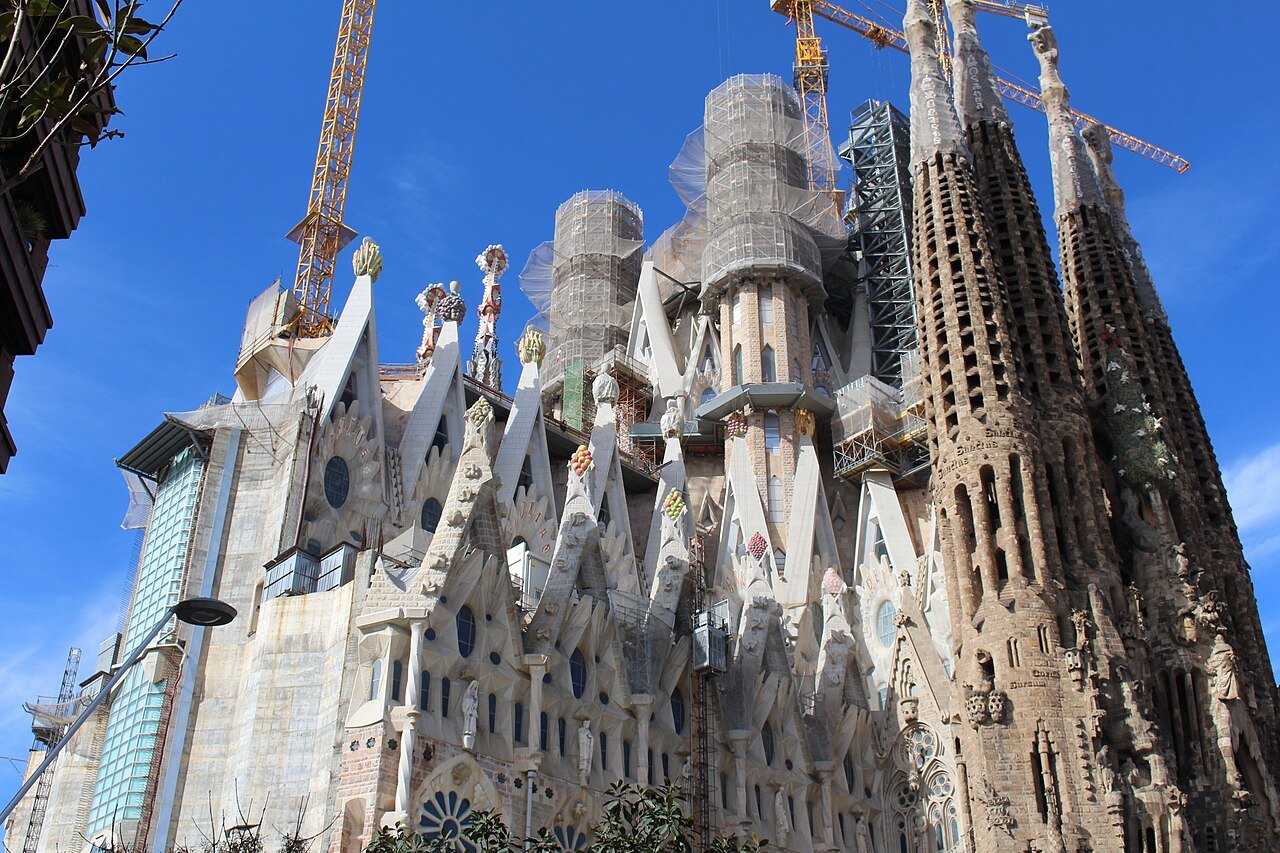
Like the rest of the sculpture here, the square is deliberately plain to look at: thin incised numerals on a flat stone panel, with none of the floral carving found elsewhere on the Nativity side. The content is cerebral rather than decorative, in keeping with the mood built across the whole façade.
The square's full history, and the specific numbers Subirachs changed from the original 1514 print, are worth more attention than a single glance allows during a visit; the topic is covered in depth elsewhere on this site, and is worth reading closely before standing in front of the panel itself.
The bronze doors on the Glory façade
Subirachs's other major contribution sits on the south side of the building, at the Glory façade, where his bronze doors were installed in September 2008, more than twenty years after he first began carving the Passion façade. Across their surface runs the Lord's Prayer set in Catalan, raised in high relief.
Around that central text runs a plea for daily bread repeated in fifty languages, a detail that returns, in bronze, to the idea behind the whole building: an expiatory temple funded entirely by donations, meant as an offering rather than a monument to any single architect or sculptor alone.
The Glory façade is meant to become the building's principal entrance, showing the road to God through death, judgment and glory. Construction on it began in 2002 and continues; a planned staircase over Carrer de Mallorca will eventually carry images of vice, a counterpart to the virtues shown elsewhere too.
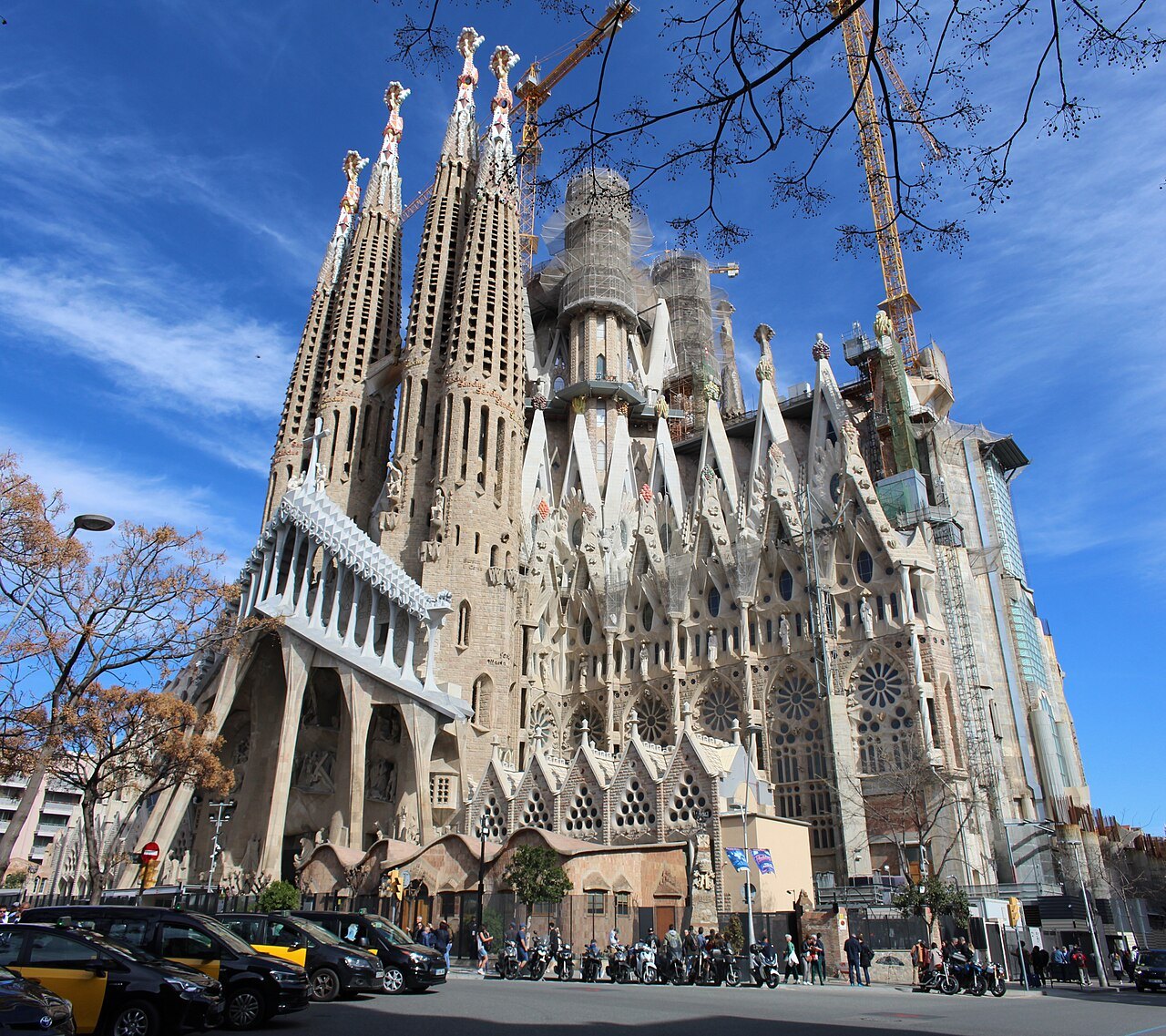
Because work continues here and on the interior of the central tower, this part of the building changes between one stage of construction and the next in ways the older façades no longer do. Anyone planning a visit around a specific feature should check current arrangements with the basilica's official site beforehand.
Walking the façades in order
A useful way to see Subirachs's work is to walk around the building once from the outside, starting at the Nativity façade and finishing at the Passion façade, rather than heading for the entrance. The contrast is sharper on foot than in any photograph, since the two façades were carved sixty years apart by two very different sculptors.
A covered passage rings the whole building, threading through the narthex of each portal, an invention of Gaudí's that lets a visitor move between façades under cover. Following it in order makes the shift from curved stone to angular stone feel deliberate rather than accidental, a built-in contrast rather than a coincidence of timing.
Before heading inside, the lake across the street gives the best view of the towers together, including the central Tower of Jesus Christ, completed in 2026, and is worth a short detour before or after circling the façades on foot, time well spent comparing the Nativity and Passion sides directly.
For tickets, current access and the basilica's Sunday Mass arrangements, check its official site directly, since these depend on an ongoing construction schedule that changes from year to year. The Sagrada Família guide covers the building's broader history, and booking ahead explains how to plan the visit itself in advance.
More from the journal
Read next
- The Sagrada FamíliaWhat is the magic square on the Passion façade?How a five-hundred-year-old number grid ended up on the Passion façade, and why its sum was changed to thirty-three.Read the piece →
- The Sagrada FamíliaWhy does the Sagrada Família have three façades?How the Nativity, Passion and Glory façades came to frame the Sagrada Família across more than a century of work.Read the piece →
- The Sagrada FamíliaIs the Sagrada Família finished?The central Tower of Jesus Christ reached its full height in 2026, but the Sagrada Família is not complete. What has been built, what has not, and why a basilica begun in 1882 is still a building site.Read the piece →