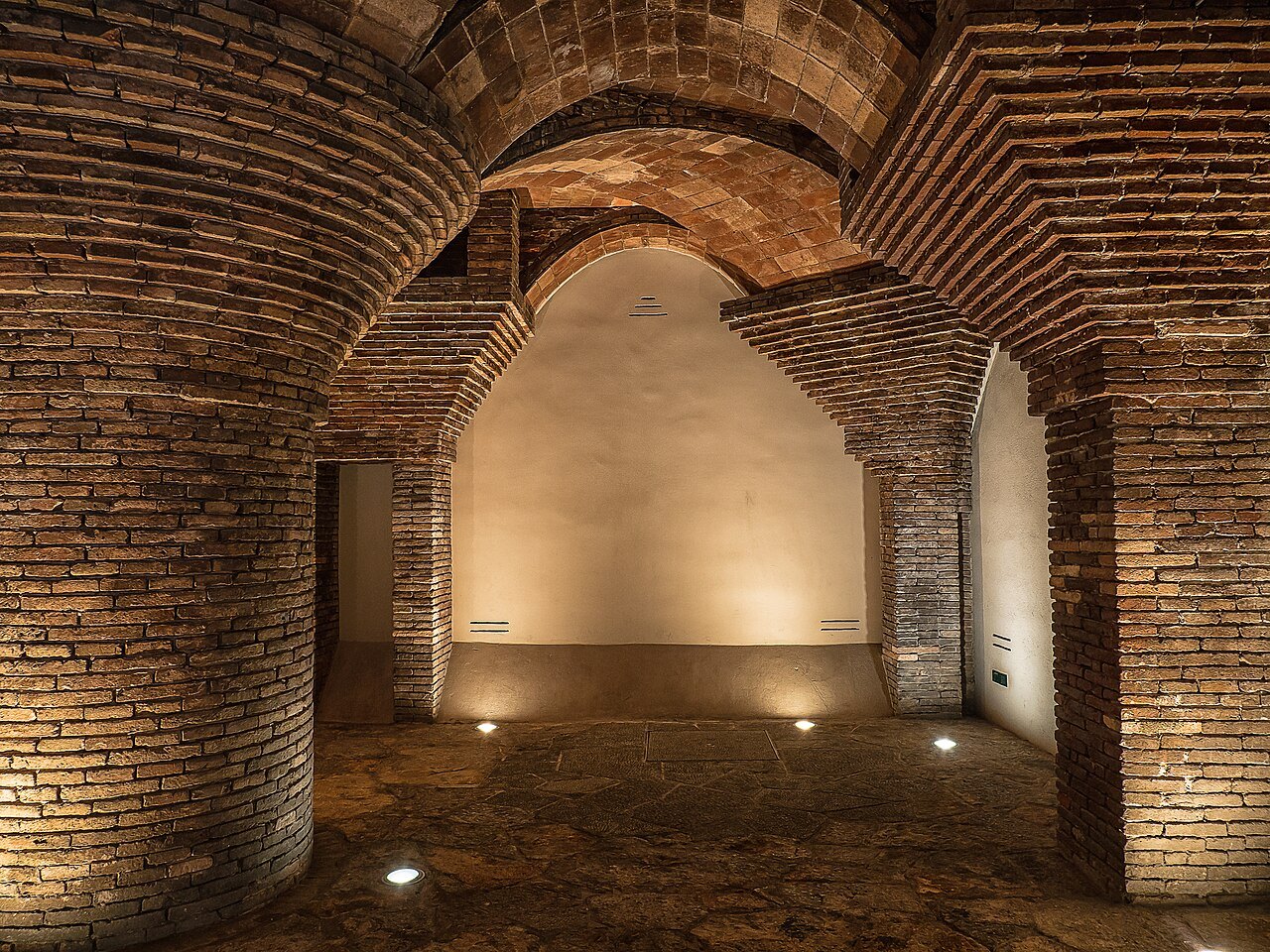
What did the 1888 Universal Exhibition leave Barcelona?
A FAIR THAT SHAPED A PALACE
The 1888 Universal Exhibition gave Barcelona a deadline, a stream of guests, and this Gaudí palace.
Read on
The answer in full
A deadline set by the fair
The palace standing today on Carrer Nou de la Rambla owes part of its urgency to a looming world's fair. Eusebi Güell wanted a new residence near the family's existing Rambla houses, bought the plot in 1883 and the building next door in 1886, assembling land until the setting matched the scale he wanted for the project Antoni Gaudí was drawing.
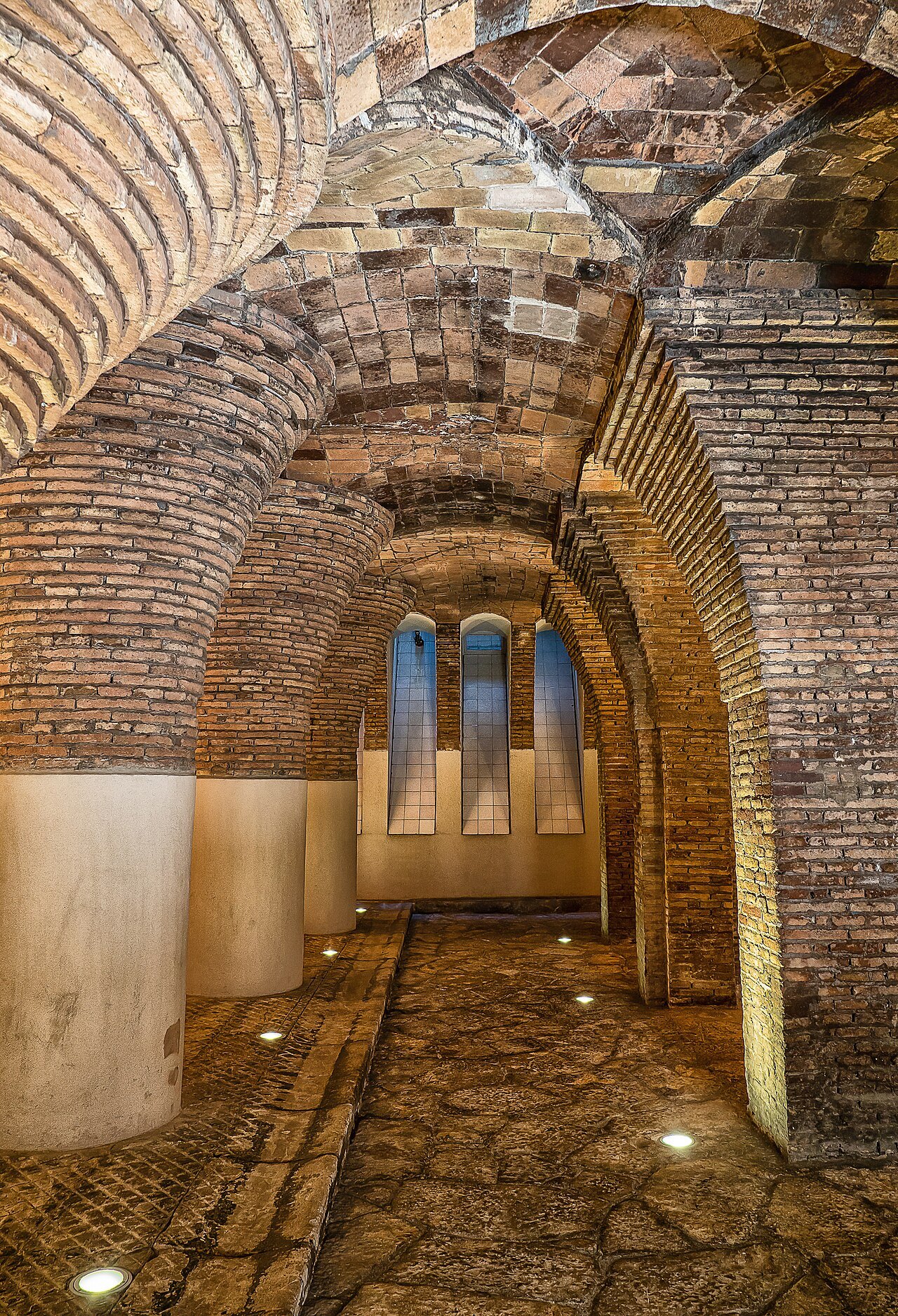
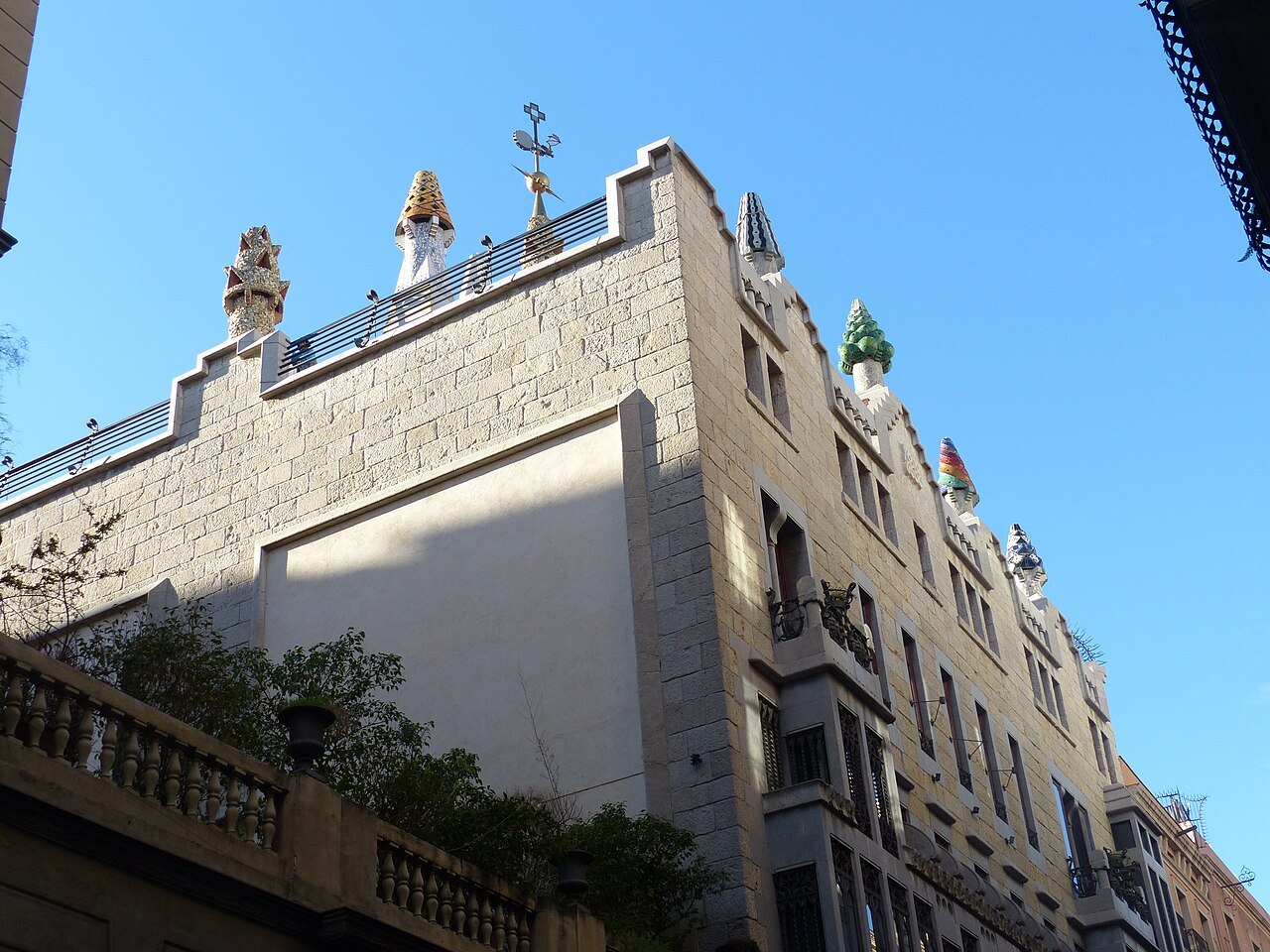
The final design is dated the tenth of June 1886, and the building permit was requested a month later, on the twelfth of July. The municipal architect, Antoni Rovira i Trias, filed a negative report: city rules required facade galleries in iron and glass, and Gaudí had submitted carved stone instead, a direct challenge to the rulebook. The planning commission set the objection aside on the twenty-fourth of July, and the permit came three days after that, possibly helped along by Güell's standing at the city hall.
Gaudí answered the deadline with more than twenty facade studies and a large team: the decorator Francesc Vidal i Jevellí for furniture and glass, the builder Agustí Massip for stonework, and Francesc Berenguer assisting the design. The building carries 1888 on its facade, the year it opened to coincide with the Universal Exhibition, although the interior decoration kept going until 1890.
Guests the fair brought to the door
Carriages reached the house through front iron gates shaped as a parabolic arch, the metalwork twisted into patterns that recall seaweed and, in places, a horsewhip. A bronze phoenix sits between the two leaves, an emblem of the cultural and economic renaissance Catalonia was living through at the time, and the same bird that a visitor to the gate still meets first.
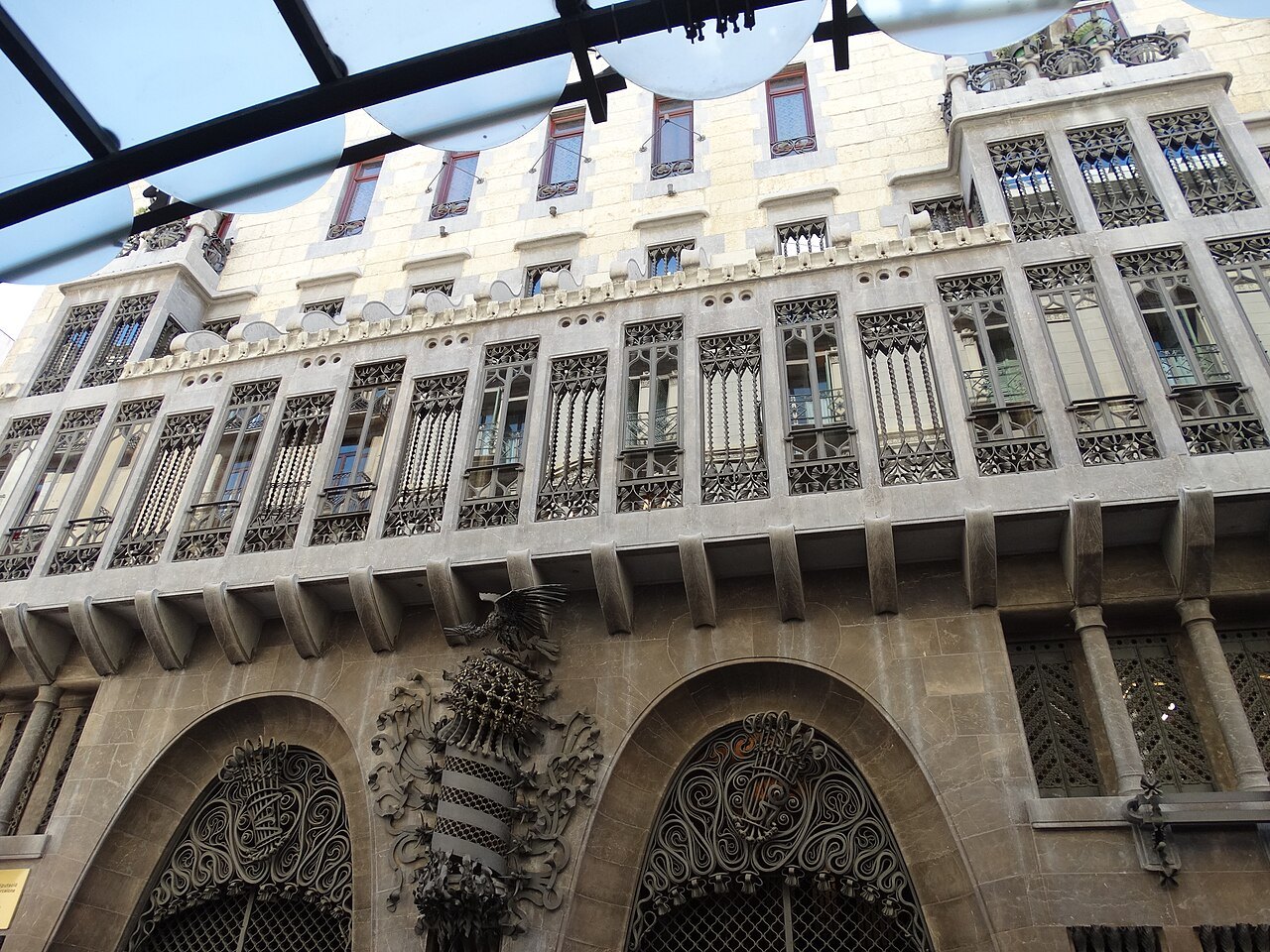
Horses and carriages could be led down a ramp to a stable in the basement, where staff also had their quarters, while guests climbed directly to the receiving room above. The sequence - street, stable, ceremony - reads as a plan built around social order as much as around architecture.
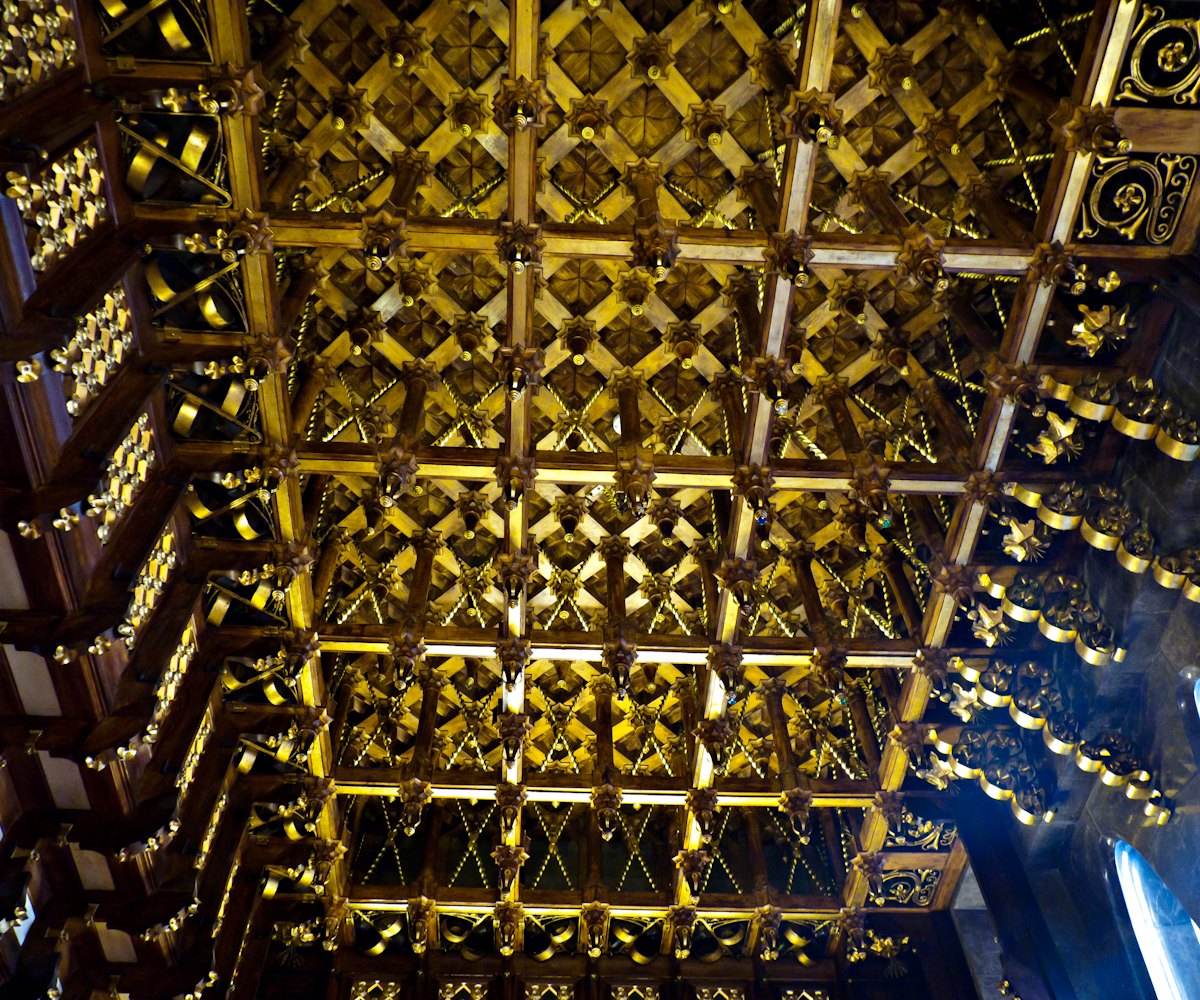
Inside, the main room's tall ceiling is pierced with small holes that, lit from outside at night, imitated a starlit sky over the gathering below. High in the walls, hidden windows let the Güell family look down on arriving guests before greeting them, time enough to adjust their dress if the occasion called for it.
Because the opening fell in the same year as the Universal Exhibition, the palace drew exhibition-grade company to its doors: the queen regent Maria Cristina of Habsburg, King Umberto I of Italy, and the American president Grover Cleveland are all recorded among the guests who passed through those gates during 1888.
What came after the opening
The fair closed, but work on the house did not stop at once. New chimneys appeared in later alterations, and in Eusebi Güell's own bedroom a fitter added decorative ironwork bearing the initials I and E, for Isabel and Eusebi, dated 1895, a small private marker added years after the public unveiling.
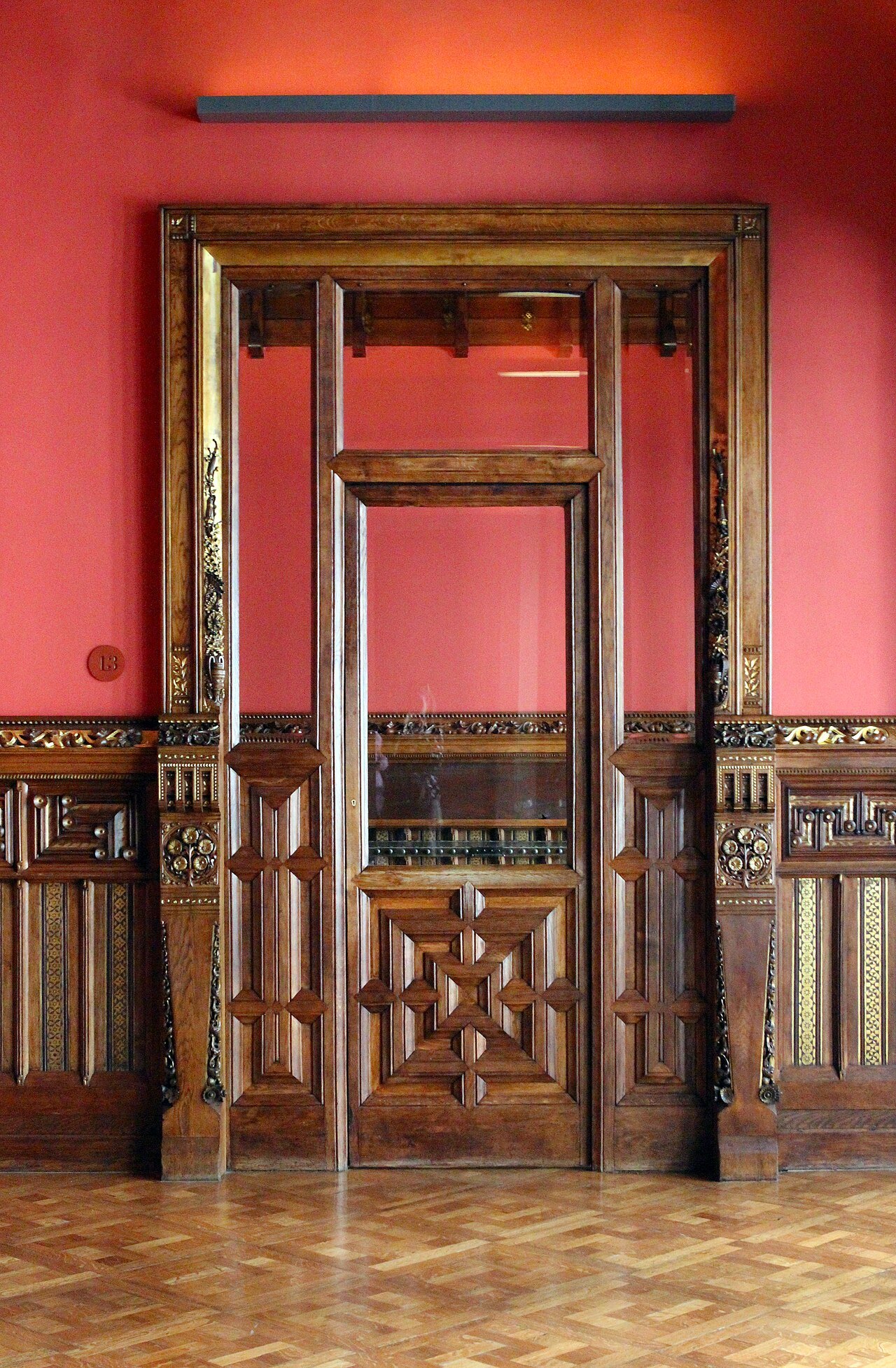
Scholars place the palace within Gaudí's orientalist phase, roughly 1883 to 1888, drawing on the art of the Near and Far East, India, Persia and Japan, together with Hispanic Islamic traditions, chiefly Mudéjar and Nasrid. The same building already hints at the structural inventions that would occupy Gaudí for the rest of his career.
Recognition followed decades later: the Spanish state listed the building as a historic-artistic monument in 1969, and UNESCO added it to its list of the Works of Antoni Gaudí in 1984, citing its influence on twentieth-century construction. Visits were suspended entirely in 2004 once weak stone in the original fabric began to crack, and the restoration finished in April 2011.
The man behind the project
Eusebi Güell i Bacigalupi, first Count of Güell, was one of the leading industrialists of his generation, as well as a politician, scientist and writer, who studied law, economics and applied sciences in Barcelona, France and England. His father Joan Güell i Ferrer, an indiano from Torredembarra, had built a fortune in Cuba and backed ventures at home; Eusebi himself founded the Colònia Güell workers' settlement and took an active part in Catalan cultural life, including the Jocs Florals poetry contest.
He met Gaudí in 1878 after admiring a glove-shop display case the young architect had exhibited at the Paris Universal Exhibition, a fair with its own echo in this story. The friendship that followed made Güell Gaudí's principal patron, backing the crypt of the Colònia Güell, the Güell wine cellars, the Güell Pavilions, Park Güell, and this palace.
Güell's politics and science interests ran alongside the patronage: the family's Rambla houses, the Palau Moja owned by his brother-in-law, and the ambition to match or surpass that nearby mansion all shaped the scale of this commission, a private measure of standing as much as a family residence for entertaining Barcelona's elite.
The street outside the gates
The mansion stands in El Raval, a district of very mixed fortunes when Güell built here, and the contrast between a palatial interior and a crowded street remains part of what makes the place arresting. The site sits on Carrer Nou de la Rambla, a few steps from La Rambla itself, close enough to combine the visit with a walk toward the old city's Gothic quarter.
Read against Gaudí's later commissions, the palace is the sculpted, secretive opening act: its enclosed interior gives way to the open rooms he designed elsewhere in the city, and the ironwork of its gates points toward the ironwork he reused and refined in later houses. For anyone building a wider walk through Modernisme, this is a natural place to start.
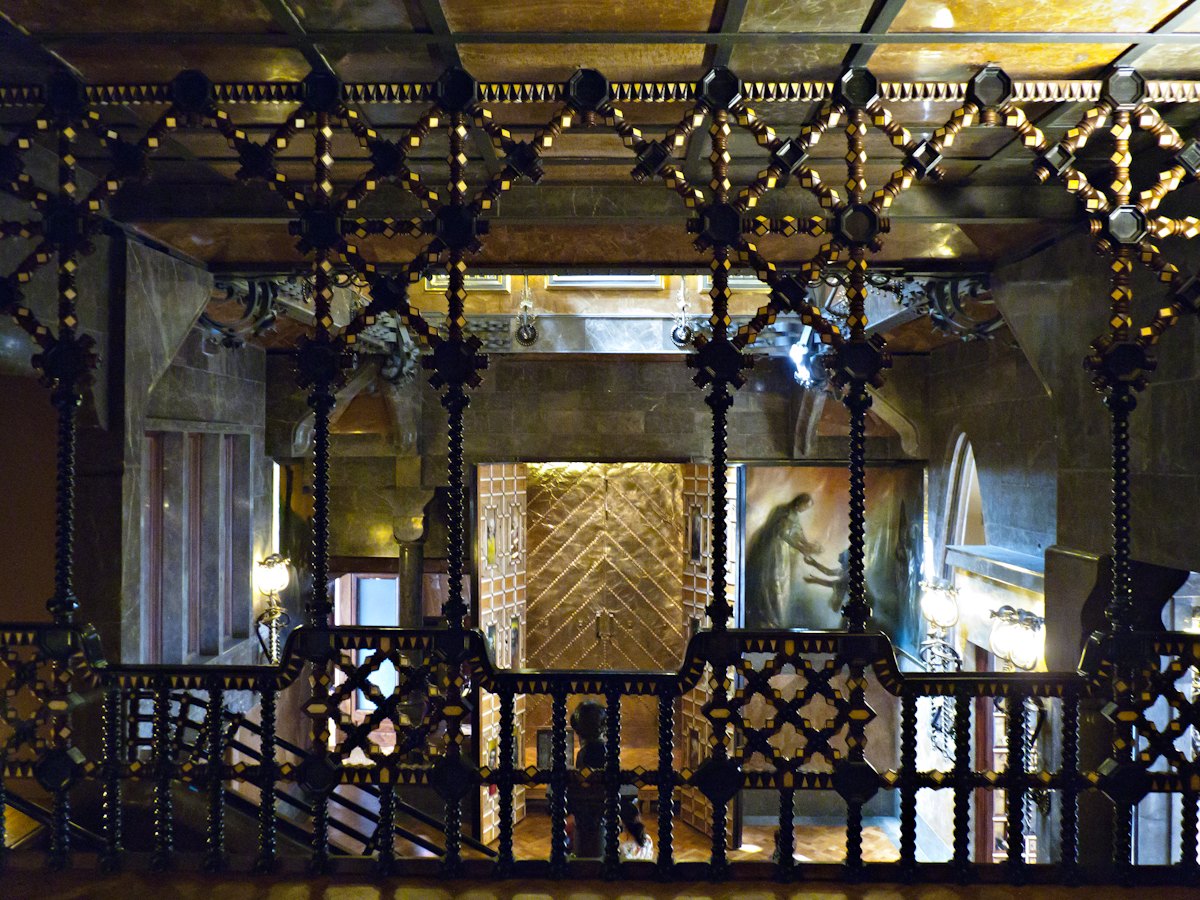
The building has had a life beyond architecture too: Michelangelo Antonioni filmed the first meeting between his two leads here for The Passenger, one more layer on a house that was already built to be looked at from odd angles, hidden windows and a ceiling pierced like a night sky.
Planning a visit
Because the palace sits on a narrow street rather than a square, and because its rooms run from a basement stable level up through a reception floor to a roof terrace, visitors who need step-free access should confirm in advance what is possible, directly with the palace itself before setting out.
Entry arrangements, including any time-slot system, group size limits and the route through the rooms, are set by the palace itself, so check current terms with its official site before traveling, and see booking ahead for general advice on reserving tickets for Barcelona's house museums in good time for a visit.
For the wider context of Güell, Gaudí and the Barcelona that staged the 1888 fair, pair this visit with a broader look at other house museums nearby, or with an itinerary that threads the Eixample and the old city together across a single day, since the palace sits close to both neighborhoods.
More from the journal
Read next
- Palau GüellWho was Eusebi Güell, and why did he hire Gaudí?Why industrialist Eusebi Güell commissioned Gaudí to build his Rambla-area mansion.Read the piece →
- Casa Milà (La Pedrera)What is a self-supporting stone facade?How Casa Milà's load-bearing stone skin freed its floor plans, balconies, and roof from straight walls.Read the piece →
- Casa Milà (La Pedrera)Why did Barcelona call Casa Milà a quarry?How mockery, city fines and a dropped religious scheme turned Gaudí's roughest building into La Pedrera, "the quarry."Read the piece →