Where is the Roman wall in the Gothic Quarter?
TRACING BARCINO'S OLD WALL
Where to find Barcelona's Roman wall remains, from the underground city museum to stones built into the cathedral.
Read on
The answer in full
Two Places to Look
The Roman wall that once encircled Barcino, the colony that preceded modern Barcelona, survives today in two very different settings inside the Gothic Quarter. One stretch lies underground, preserved as part of a city museum. The other sits in plain sight, built into the stone of a much later building. Both reward a visitor willing to look past the obvious layer of lanes and squares.
Finding either stretch takes patience, since the quarter's labyrinthine plan of small streets and tucked-away squares was not designed with sightlines in mind. Regular traffic is barred from most of the area, so the search is best done on foot, following the lanes as they narrow, open onto a square, and narrow again before reaching either site.
Treat the two sites as a pair rather than a single stop. Together they show that the Roman defenses did not vanish outright; they were absorbed, first into later buildings erected over the centuries and eventually into a museum built specifically to preserve what remained beneath the modern street level.
Underground at Plaça del Rei
The most substantial stretch of Roman Barcino, including fragments of the city wall, is displayed beneath the Plaça del Rei, incorporated into the Barcelona City History Museum. Visitors descend from the square into excavated remains that show the colony's street grid, workshops and defensive wall, a layer of the city that predates every Gothic facade above it.
Because the remains sit underground, visiting means following the museum's own route rather than wandering freely through an open site. The Plaça del Rei above is worth a look in its own right, its warm stone walls and open staircase forming one of the quarter's most recognizable corners, quite apart from what lies beneath it.
Check the museum's own information for details on visiting the underground route before setting out, since the practical arrangements for seeing this part of the collection differ from simply walking into the square above it. Confirming the arrangements directly with the museum in advance avoids an unnecessary detour on the day.
Fragments Built Into the Cathedral
Not every trace of the Roman wall sits inside a museum basement, out of sight. Some surviving fragments were incorporated directly into the fabric of the Barcelona Cathedral, where older Roman masonry sits beneath and beside Gothic and neo-Gothic stonework added many centuries later, two building periods sharing the same old wall.
Walking around the cathedral's flanks, rather than only approaching its famous front, is the way to notice this layering. The facade itself was built between 1882 and 1913 by Josep Oriol Mestres and August Font i Carreras, so the oldest stone on the building sits well away from the entrance most visitors photograph first.
Spotting the Roman sections takes a slow circuit of the building rather than a single glance, since the masonry is not separately labeled the way museum displays are. Comparing the texture and coursing of the lower, older stone against the dressed Gothic-style blocks above is the simplest way to tell one period from the other.
The contrast is worth lingering over because it summarizes the whole quarter in miniature. A single building carries stonework spanning roughly two thousand years, from the Roman defenses folded into its base to the neo-Gothic details finished in time for the 1929 International Exhibition, the two eras layered together rather than one simply replacing the other.
Barcino, the Roman Colony
The wall belonged to Barcino, the city's Roman name, itself shortened from the fuller Faventia Julia Augusta Pia Barcino. The geographer Pomponius Mela listed it among the small towns of the district, and later writers describe the colony prospering thanks to its fine setting and an excellent harbor close at hand.
The colony minted its own coins, and some struck during the reign of the emperor Galba survive today, evidence of a functioning town with its own civic identity rather than a minor outpost. The wall that once protected that town is the same one whose fragments turn up now beneath the square and inside the cathedral.
Thinking about the wall's line means picturing the edge of a far smaller settlement than today's Gothic Quarter. The Roman town occupied only the core of what later became the old city, with the medieval lanes and later districts growing up well beyond its original boundary over many centuries, in every direction.
Barcino's status as a working colony, with its own mint and a defended perimeter, helps explain why later generations kept building on the same spot rather than starting elsewhere. The site had already proved itself as a settlement, and each later period layered new construction over what the Romans had established.
Reading the Grid in the Streets
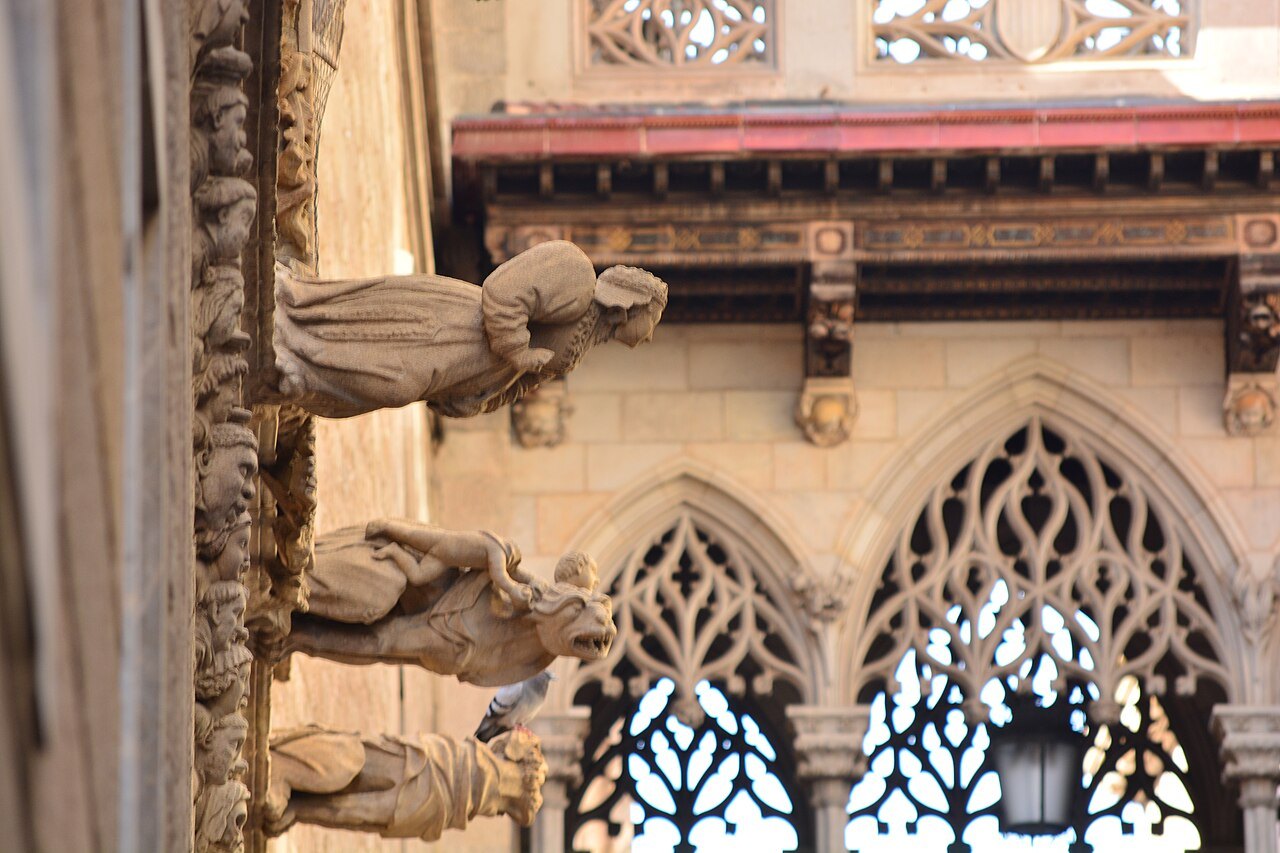
Even where the stone itself has not survived, the Roman plan still shapes the whole surface of the quarter. The typically Roman grid pattern remains visible in the layout of several Gothic Quarter streets, an underlying order beneath the irregular, winding appearance that later centuries added on top of it.
Looking for this grid means paying attention to the straighter stretches near the cathedral and the museum, where blocks still align more closely than in the tangled lanes further out. It is a subtler kind of evidence than a visible wall fragment, but it rewards anyone tracing the plan against a map of the modern streets.
This layering, a Roman grid under medieval lanes under nineteenth and twentieth century restoration, is part of what makes the quarter worth reading rather than only strolling through. Noticing it, rather than admiring only the squares, is a good part of the point of walking this part of the city.
Planning Your Walk
The quarter is served at its edges by the metro stations Jaume I, Liceu and Drassanes, all useful starting points for a walk toward the Roman remains. Entering from La Rambla by one of the small side streets, or from Via Laietana, lets the lanes lead naturally toward the Plaça del Rei and the cathedral.
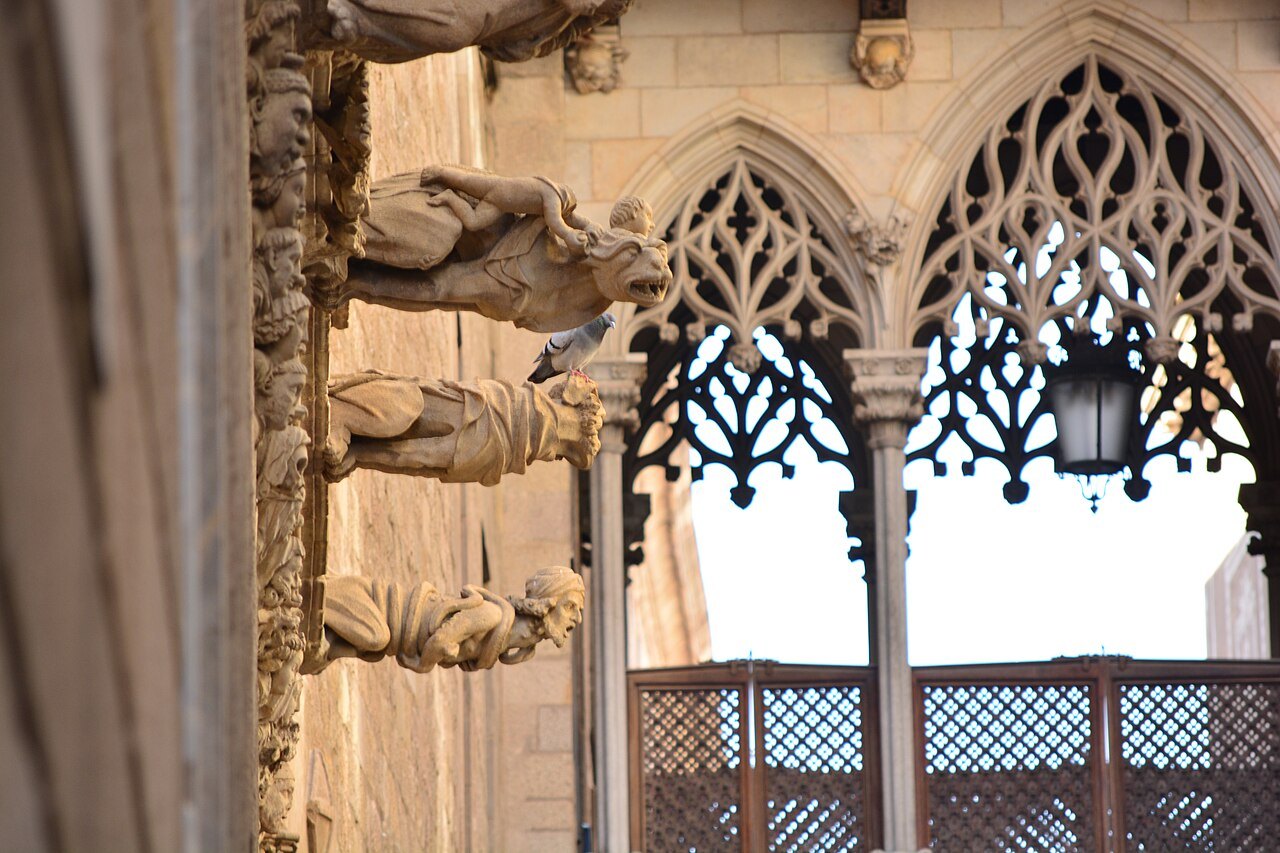
Because through traffic is restricted in most of the area, exploring on foot is both the simplest and the most practical approach, with service vehicles and taxis allowed to enter as exceptions. Comfortable shoes help, since paving is uneven in places and the route between the two Roman sites runs along narrow, stepped lanes.
Pair the wall fragments with a look at the cathedral itself and with the quieter lanes of El Call, the former Jewish quarter, for a walk that covers two thousand years in a small area. Checking the City History Museum's own site for practical details on the underground route is worth doing before setting out.
El Call and Two Thousand Years of Use
El Call, the medieval Jewish quarter, lies within the Gothic Quarter, close to the former Sinagoga Major. Its tight lanes are some of the oldest in the district, and walking them slowly, away from the cathedral square, rounds out a quiet visit built mainly around the Roman wall fragments described above.
Together with the Roman remains and the cathedral, El Call shows that the quarter has been a place of trade, worship and government for roughly two thousand years. The Roman grid, the medieval lanes and the nineteenth and twentieth century restorations all share the same few streets, so most corners show at least two periods at once.
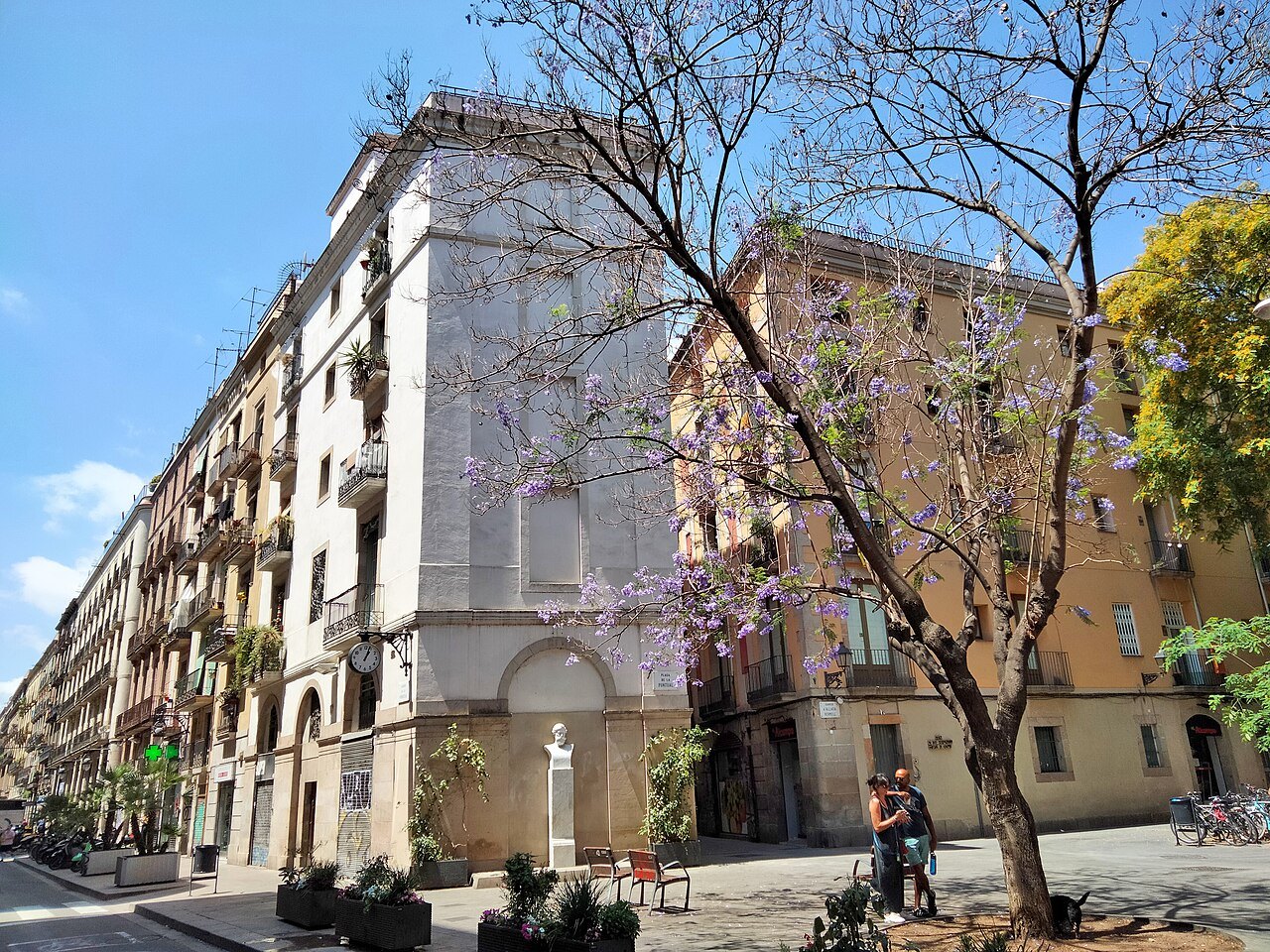
Sorting out which stone belongs to which century is half the pleasure of a walk here, and the wall fragments are the clearest starting point for that exercise. Once a visitor has learned to spot Roman masonry under the cathedral or beneath the square, the rest of the quarter's layered history becomes easier to read.
More from the journal
Read next
- The Gothic QuarterIs the Gothic Quarter really Gothic?Much of Barcelona's Gothic Quarter was restored or newly built in neo-Gothic style between the 1880s and the 1960s. What is medieval, what is Roman underneath, and how to tell them apart on a walk.Read the piece →
- Barcelona CathedralWho was Saint Eulalia, and why are there geese in the cloister?Why Barcelona Cathedral keeps thirteen geese in its cloister, and the legends behind its patron saint Eulalia.Read the piece →
- Park GüellHow did Gaudí design with hanging chains?Antoni Gaudí worked out the curves of his vaults by hanging weighted strings and chains and turning the result upside down. How the method worked, where it was first used and where to see it in Barcelona.Read the piece →