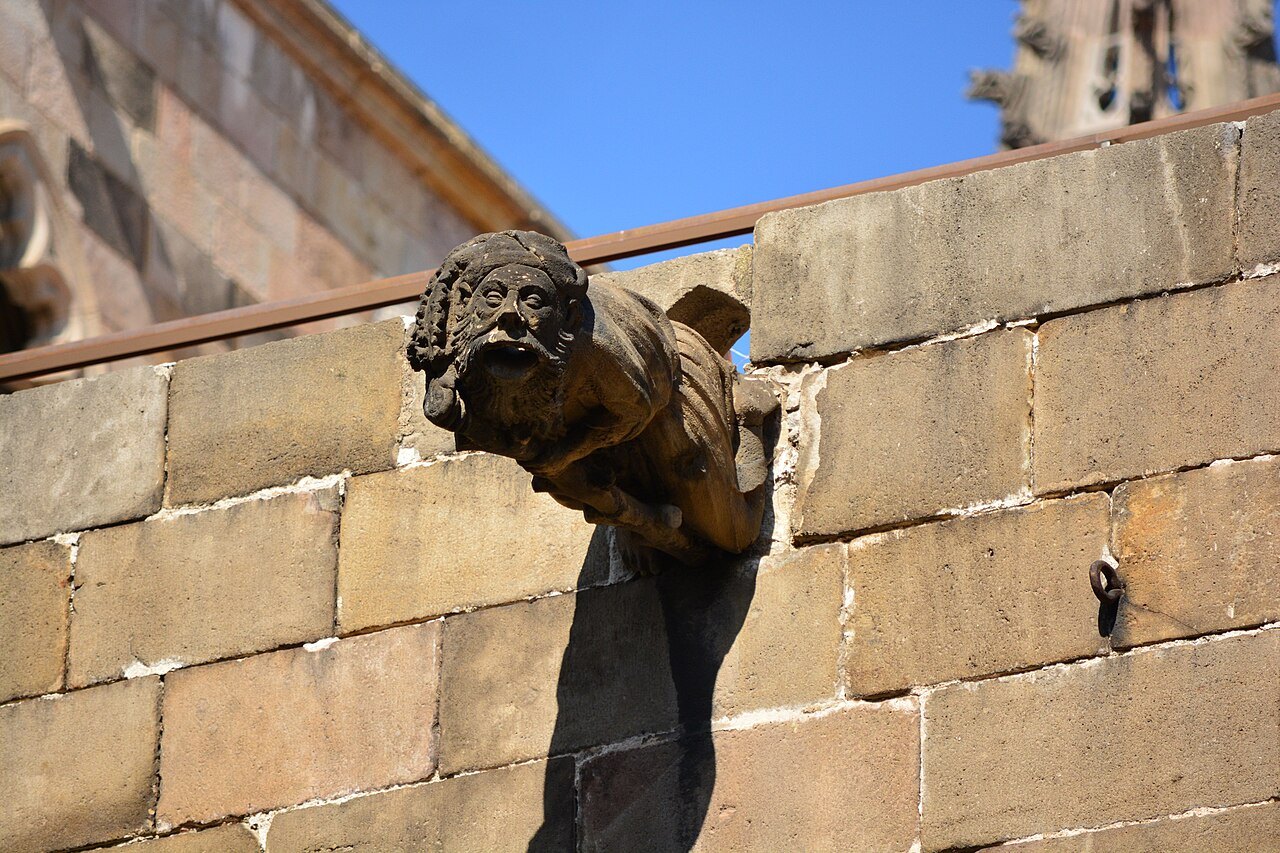
Who was Saint Eulalia, and why are there geese in the cloister?
SAINTS LEGENDS AND LIVING GEESE
Why Barcelona Cathedral keeps thirteen geese in its cloister, and the legends behind its patron saint Eulalia.
Read on
The answer in full
A Martyr of Roman Barcelona
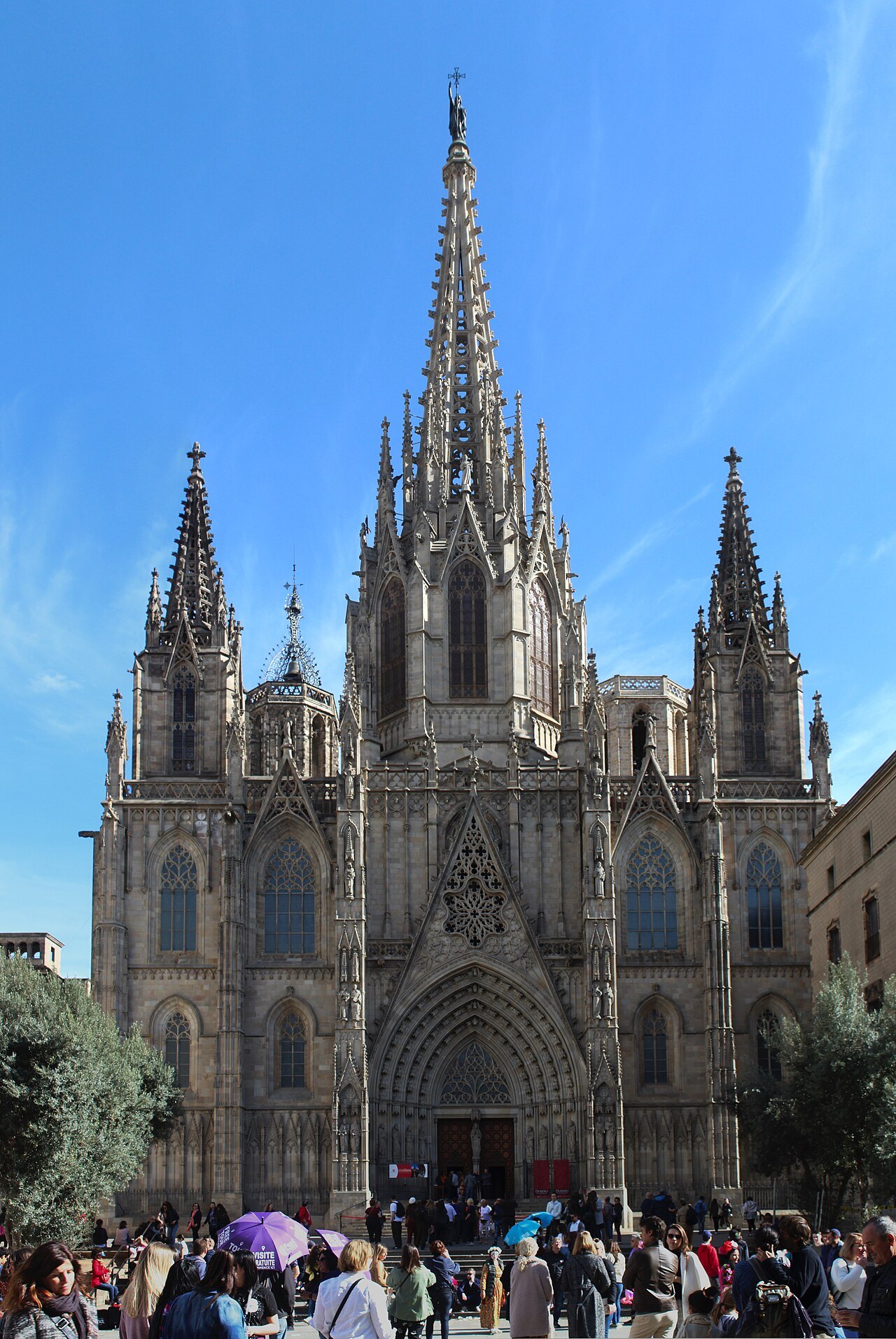
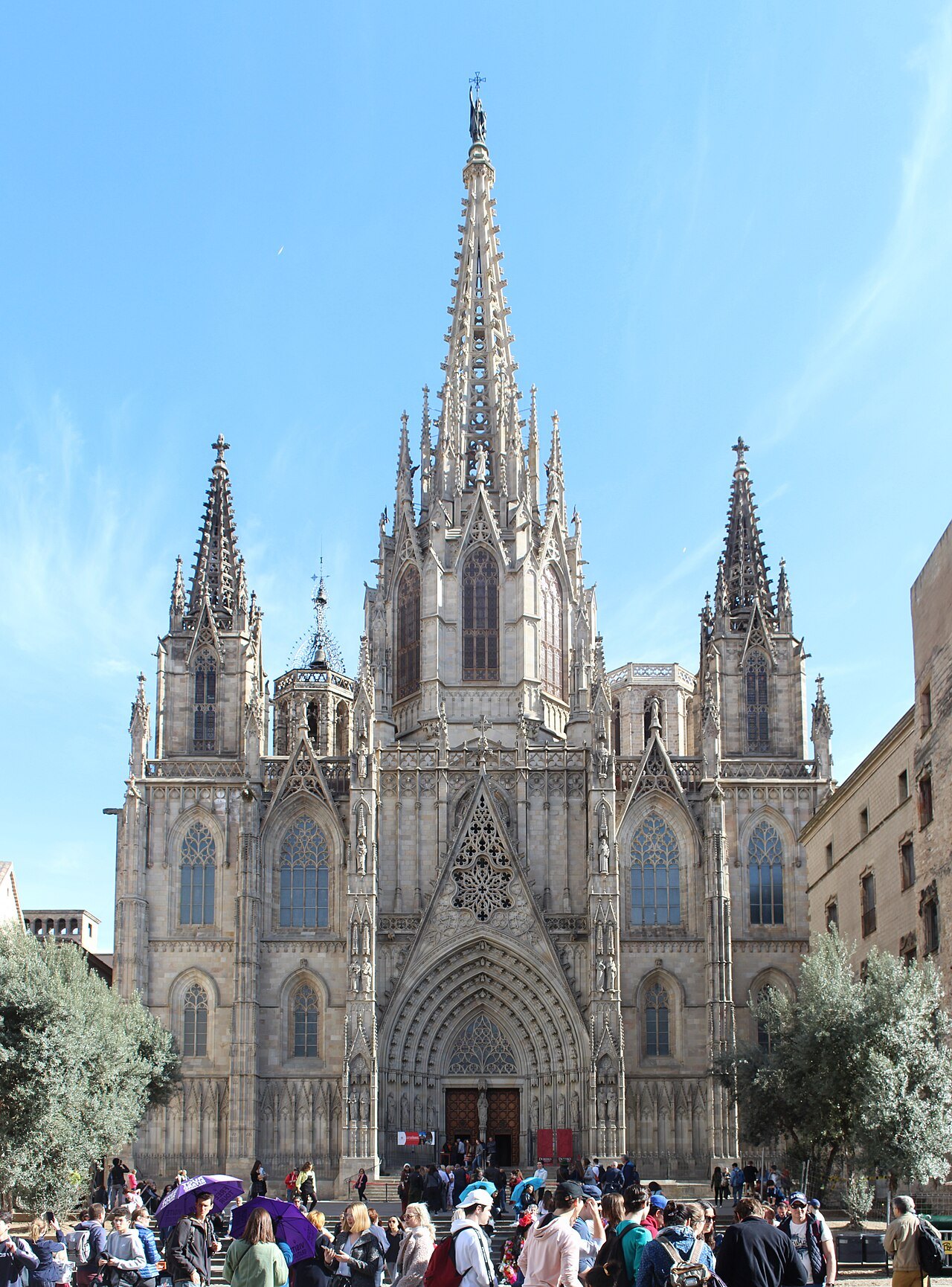
The cathedral's full dedication is to the Holy Cross and to Eulalia of Barcelona, a co-patron saint of the city. The building rose on a site where a Christian community had gathered since late antiquity, and the name Barcelonans still use for it, La Seu, simply means the see, the seat of the bishop.
According to Catholic tradition, Eulalia was a young virgin martyr who suffered during Roman times in the city. No contemporary record proves the details of her life, and what survives is a set of devotional stories, told and retold for centuries, that shaped how the cathedral and its neighborhood are decorated and remembered today.
The ground beneath the cathedral and the surrounding Gothic Quarter was once Roman Barcino, and fragments of Roman walls are built directly into the cathedral itself. Visitors curious about that older city, and about how much of the quarter's medieval look is careful restoration rather than original fabric, can read more at The Gothic Quarter, which traces the neighborhood's Roman, medieval, and twentieth-century layers side by side.
Two Legends of Her Death
One story holds that Eulalia was exposed naked in the city's public square as punishment, and that a miraculous snowfall, out of season in mid-spring, fell to cover her. The detail of snow in spring was read by later generations as a sign of divine protection, and it became one of the fixed images in her cult, repeated in paintings and processions connected to her feast.
A second story says the Romans forced her into a barrel studded with knives and rolled it down a steep street. That street still carries her name, the Baixada de Santa Eulàlia, a short walk from the cathedral through the Gothic Quarter, and it remains one of the clearest physical traces of her legend in the modern city.
Both stories belong to Catholic hagiography rather than verified history, and the cathedral itself presents them as tradition, not documented fact. Visitors wanting firmer dates should turn instead to the building's recorded timeline, the Romanesque cathedral consecrated in 1058 and the Gothic cathedral begun in 1298, both anchored in written history rather than legend.
Relics in the Crypt
Eulalia's relics are entombed in the crypt beneath the high altar, which is raised above the main floor of the nave. That elevation lets visitors standing at ground level look directly down into the space where her tomb lies, a deliberate piece of the cathedral's design, meant to connect the congregation above with the saint entombed below, a visual link the cathedral still uses to explain her presence to visitors.
The crypt sits over the layered remains of earlier churches on this site, including a fourth-century baptistery and a fifth-century basilical hall. Those remains are displayed underground in the Barcelona City History Museum rather than inside the cathedral itself, so anyone wanting to see them should plan that as a separate stop.
The cathedral holds other tombs besides Eulalia's: Saint Raymond of Penyafort, Count Ramon Berenguer I, and his third wife, Almodis de la Marche, along with several bishops. One of them, Arnau de Gurb, is buried in the Chapel of Santa Llúcia, which he had built during his time as bishop of Barcelona.
Thirteen Geese in the Cloister
The cloister, finished in 1448 as the last part of the Gothic building, keeps a living tradition of its own: thirteen white geese, cared for inside its arcaded garden alongside palm trees and a central fountain. They are among the most photographed residents of the cathedral complex, settled near the fountain where water runs through stone channels built into the cloister floor.
The number is explained by a simple piece of tradition: Eulalia is said to have been thirteen years old when she was martyred, and the geese are kept at that number as a quiet, living memorial to her age at death, a detail passed down through the cathedral's own tradition rather than any written record.
The practice has no documented starting date in the cathedral's own records, and guides may offer slightly different versions of the story. Visitors curious about the geese's history, or about how they are cared for, should ask cathedral staff directly rather than rely on a single account during a quick visit to the cloister.
The cloister today mixes devotion with tourism: a gift shop now operates inside it, and electric candles have replaced traditional ones at some of its altars. Phones are restricted in the Chapel of Lepanto and certain other chapels, a rule worth noting before reaching for a camera inside a working place of worship.
The Dancing Egg
On the feast of Corpus Christi, the cathedral keeps another custom: the dancing egg, an eggshell balanced so it bobs on a jet of water from a fountain, usually set up in the cloister near the geese. The sight draws visitors who plan their trip around the feast specifically to see it.
Corpus Christi falls on a different date each year, tied to the church calendar, so anyone planning to see the dancing egg should check the current date with the cathedral or with the city's event listings well before traveling, since no fixed date can be given in advance for a moving religious feast.
The tradition sits alongside the geese as one of the cathedral's living customs rather than a museum display, part of why the building still feels used rather than simply preserved. It is one of several small rituals that distinguish a working cathedral from the static monuments described elsewhere in The Sights.
Visiting the Cloister
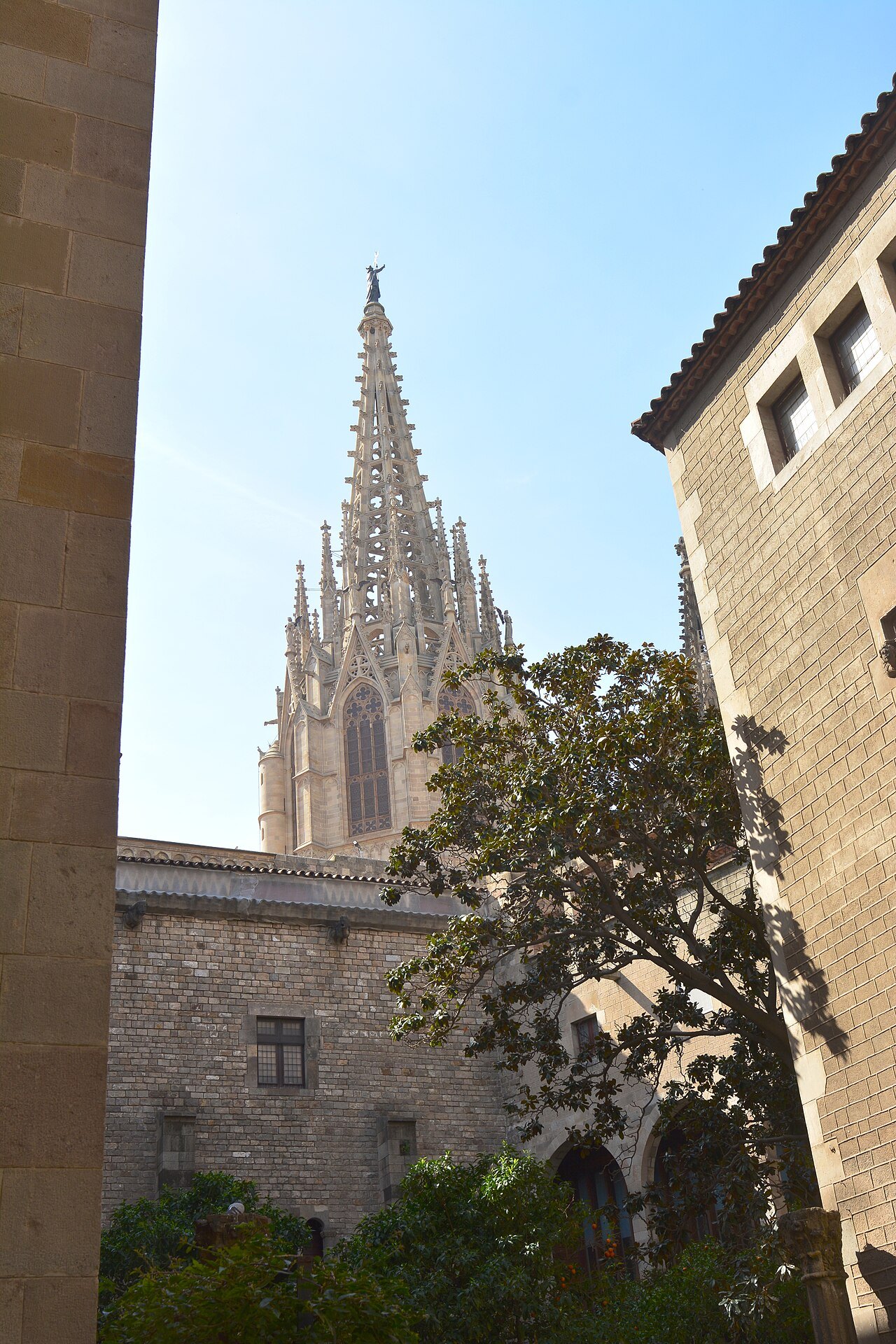
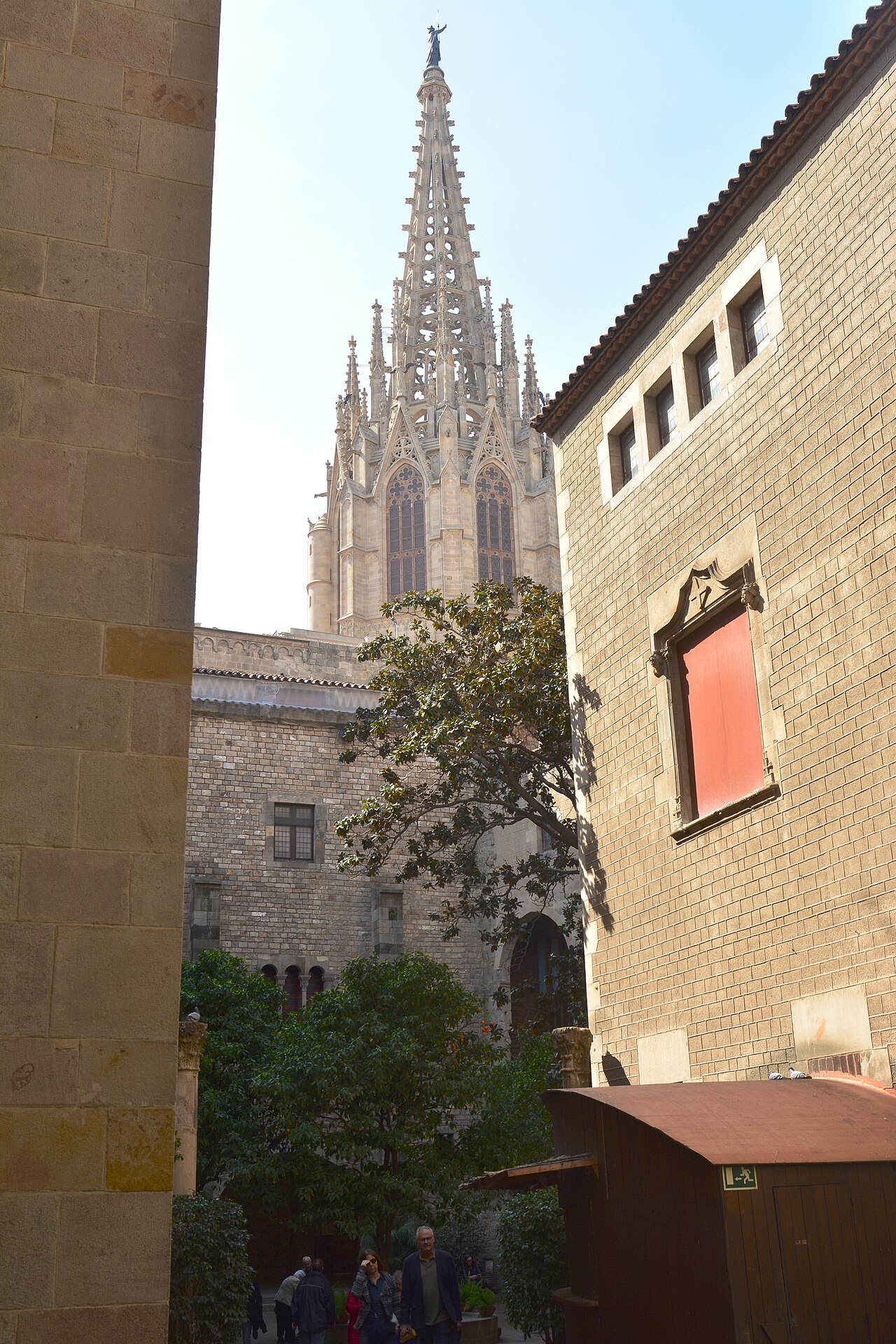
The cloister is reached from inside the cathedral and is one of its most photographed corners, with slender Gothic arches, a garden of palms, and the fountain where the geese are kept. It was the last part of the building finished, completed in 1448 after work that began in 1298, a span of roughly one hundred fifty years across which construction moved from the east end toward the west front.
Because the cathedral mixes an active place of worship with a steady flow of visitors, rules on photography, dress, and silence apply more strictly in some chapels than others; phones are restricted near the Christ of Lepanto. Visitors should check current arrangements directly with the cathedral before arriving for a visit.
For context on the neighborhood around the cathedral, it helps to know that much of the Gothic Quarter was restored between 1927 and 1970 to create its historic look, a detail worth keeping in mind while wandering the surrounding lanes on foot, especially along the narrower streets just behind the apse.
Anyone combining the cathedral with other sights in the old city, or wanting to confirm current visiting conditions and any photography rules before setting out, can check Booking Ahead for general guidance on planning ahead at Barcelona's major monuments and churches, including advice on crowds and timing for popular stops in the Gothic Quarter.
More from the journal
Read next
- The Gothic QuarterIs the Gothic Quarter really Gothic?Much of Barcelona's Gothic Quarter was restored or newly built in neo-Gothic style between the 1880s and the 1960s. What is medieval, what is Roman underneath, and how to tell them apart on a walk.Read the piece →
- The Hospital de Sant PauHow was Sant Pau restored?How the modernista pavilions of Sant Pau were restored and turned into a cultural site visitors can explore.Read the piece →
- Park GüellHow did Gaudí design with hanging chains?Antoni Gaudí worked out the curves of his vaults by hanging weighted strings and chains and turning the result upside down. How the method worked, where it was first used and where to see it in Barcelona.Read the piece →